Facebook to charge $11.99/month for this service
'Meta Verified', a paid subscription on Facebook and Instagram, offers a verified badge
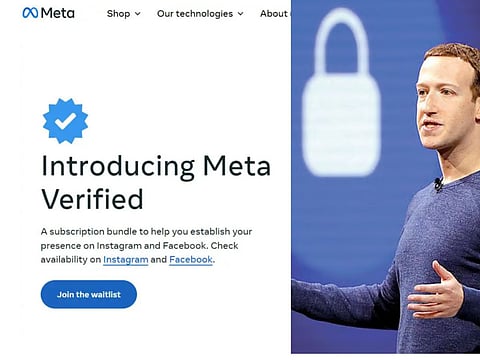
Meta, owner of Facebook, is currenty experimenting with limiting non-verified users to just two organic posts with external links per month.
Beyond that, users may have to pay a fee.
Starting December 16, "Meta Verified" subscription is require for unlimited sharing.
Here's the backstory, in easy Q&A format:
Q: What is 'Meta Verified'?
Meta Verified is a paid subscription service on Meta platforms like Facebook and Instagram that offers a verified badge (similar to X Premium | or Twitter Blue), impersonation protections, and (in theory) enhanced account support and features for creators and businesses who subscribe.
This shift aims to prioritise "native" content, i.e. the user never leaves the Facebook ecosystem, reduce clickbait from low-quality sites, and keep users longer on the platform rather than driving traffic elsewhere.
Q: When is it rolling out?
The test began this week for select profiles in "professional mode," with notifications warning of limits from December 16. It's limited now, but analysts predict broader changes by 2026, transforming Facebook into a brand-building hub over a traffic driver.
Q: How much is the charge?
Meta Verified pricing starts around $11.99/month (web) or $14.99/month (app) for individuals.
Costs vary by region and plan (Standard, Plus, Premium, Max), with higher tiers offering more features like increased support and impersonation protection, while business plans have different structure.
Check within your Facebook or Instagram app for exact local pricing is best.
Q: Why now, and what's the future impact?
Years of "deprioritising" links evolved into monetising them, boosting platform retention amid declining referral traffic.
Experts foresee adaptation: pay up, go native, or diversify — heralding a controlled, ecosystem-focused Facebook era.
Q: What are the implications for news organisations?
#1. Verified badge is not the same as ‘Meta Verified’
Many established news outlets already have platform-verified accounts due to Facebook/Instagram’s existing verification systems. These legacy verified accounts are different from the newer Meta Verified paid subscriptions.
Verified badges given before the paid program remain intact without requiring a subscription.
So existing news organisation verification status isn’t automatically tied to having a Meta Verified subscription.
#2. Link posting limits could indirectly affect news sharing
Meta is still testing limits on how many external links users can post unless they subscribe to Meta Verified; non-verified profiles may be restricted to only two link posts per month on Facebook, as per Hypebot.
While news orgs themselves are currently not included on this test, the policy could indirectly affect how users share news articles — because friend/reader accounts without Meta Verified might struggle to share links widely, The Guardian reported.
If similar tests expand later to include more professional pages, the result could be:
Lower organic distribution of news links without paying the subscription
Reduced referral traffic back to news sites, adding stress to publishers already contending with lower social-platform referral rates, The Guardian added.
3. Algorithmic prioritisation unchanged
Meta Verified does not automatically boost the algorithmic reach of posts; it mainly affects verification and certain account privileges, not how widely content is recommended in feeds.
4. Impersonation protection and brand safety
One benefit for organisations considering Meta Verified is stronger brand protection:
Impersonation safeguards that make it harder for fake accounts to mimic the news brand, in theory.
Potentially better customer support access (though reported support quality is mixed).
This can be valuable for newsrooms concerned about fake accounts spreading misinformation using their name, especially in highly contentious political or crisis environments.
5. Support reliability issues
Although Meta markets Meta Verified as offering access to priority support, some subscribers report that support responses can be slow, unhelpful, or ineffective — even for serious issues like account bans, as per Gadgets 360.
For news organisations, that means: Meta Verified doesn’t guarantee fast or effective problem resolution during account or posting issues.
Here's a summary of what it means for news organisations or when Facebook users regularly post external news links:
| Feature | Impact on News Orgs |
|---|---|
| Verified Badge | Most big outlets already verified; Meta Verified not required for badge |
| Link Posting Limits | Could indirectly reduce how users share news content |
| Feed Visibility | Meta Verified doesn’t boost algorithmic distribution |
| Impersonation Protection | Useful for brand safety |
| Customer Support | Mixed quality; not a guaranteed fix for issues |


