What’s your iftar preference during Ramadan?
TWT speaks to six readers to find out if they like to eat the evening meal at home or outside
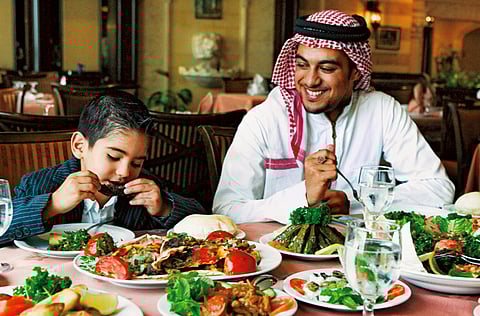
People like eating out, especially during Ramadan. The weekend tabloid! spoke to six readers from different nationalities and cultures to find out if they prefer to eat iftar at home or at restaurants.
We discovered that many look at it as an opportunity to sample different preparations. Some of the readers split their iftars between home and restaurants, with preference for eating out over weekends.
Bassel Nadim, 38, a Syrian national, said: “I usually stay out for iftar only during weekends in Ramadan, with family or friends, with preference for four or five star hotels.”
He lives with family in Dubai and prefers having iftar at home during the week. “At times, I take a quick iftar and attend Ramadan evenings [at restaurants], where I eat a complete dinner. Some of the places that I go for iftar are in the Dubai Marina or the Dubai Creek area.”
Another reader, Amina Konate, from Cote d’Ivoire, West Africa, said: “Most of my iftars are spent outside during weekends, while it is about twice or so during the week in Ramadan.”
Konate, 25, eats out with friends at Indian and Lebanese restaurants. At times, she also likes to eat iftar at a friend’s place.
Sharf Al Deen Aju also loves spending iftars with friends at restaurants. An Indian national, Aju, 42, said: “Once or twice in a week, my iftars are spent eating out.” He moved to Dubai a month ago from Abu Dhabi.
As Ramadan moves into its third week, apparently there is an increase in the number of people eating out.
Sumith Sachdeva, manager of Mahec, a restaurant at Le Méridien airport, Dubai, said: “During the first week, iftar is very slow since people are mostly eating at home. After eight to 10 days, people start eating out and that is when the restaurant starts filling up.
“We are a restaurant that offers an Indian iftar. We receive a mix of nationalities during Ramadan, which includes Indians, Pakistanis and Sri Lankans.” He said that during Ramadan, the restaurant receives 30 to 40 guests on weekdays and 50 to 55 on weekends.
Naqi Abbas, the restaurant manager at Café Arabesque in Park Hyatt Dubai, added: “We get 125-130 people every day for iftar in Ramadan.”
While many may choose to eat out or at home, they mostly do so with their families. But there are also those who eat iftar alone, out of choice or because circumstances force them to do so.
Adel Yousuf Al Attar, 41, an Emirati, prefers eating out during iftar. He said: “I have iftar outside, every weekend.” He is at present looking for a job and lives alone in Dubai. However, during the month of Ramadan, he visits his mother who lives in Ajman.
A Lebanese reader, Natalie Koreh, 27, eats iftar out most of the time, too.
She said: “I eat iftar out every other day in the month of Ramadan.” She lives alone in Dubai and prefers to eat out for iftar as it is the most convenient option.
A similar situation exists for Zohaib Azhar, who eats iftar at restaurants for at least 25 of the 30 days of Ramadan.
Azhar, 28, a Pakistani national, added: “I may eat iftar at a mosque after prayers. However, I usually prefer vegetarian food or restaurants in hotels. Since I live alone, I like a simple iftar.”
Suman Shafi is an intern at Gulf News

