Mangoes: tasty and healthy
This delicious fruit boosts our ability to combat cancer, heart disease and improves eye health
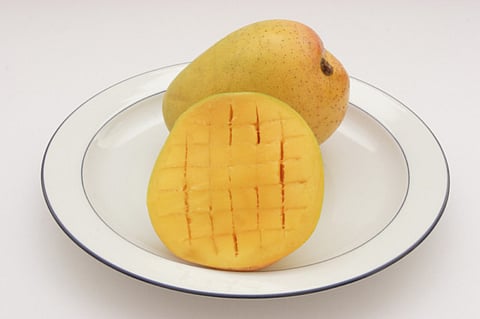
Faced with the enticing fragrance of Alphonso mangoes, nagging concerns about food miles and air freighting have a tendency to fly out the window.
The Indian Alphonso and the Pakistani Langra and Chaunsa mangoes, when they appear May onwards, are utterly irresistible.
Uneven in colour, with imperfections on the skin, they come tissue-wrapped inside snug little boxes bedecked with sub-continental tinsel and exotic cargo labels worthy of Indiana Jones.
These subcontinental mangoes are picked mature and are usually rewardingly ripe. Select those that are soft, not squashy, and use their scent as an indicator of eating quality.
Why mangoes are good for you
Mangoes contain a store of phenolic and carotenoid compounds (gallotannins, alpha-carotene, beta-cryptoxanthin and more) that seem to offer some protection against several types of cancer. Vitamin A and beta-carotene in mango can boost your eye health, while vitamin B6 helps control homocysteine in the blood. High levels of this amino acid are associated with increased risk of heart disease and stroke. The soluble fibre in mangoes slows down the release of sugar into your blood, but mangoes are sweet, so not the best fruit choice for weight-watchers.
Recipe
CARDAMOM LABNEH WITH MANGO AND ROSEWATER
You’ll need a new J-cloth or clean muslin to make this labneh, a fresh cheese made by straining yoghurt, preferably overnight. It has many sweet and savoury uses and makes a good fresh accompaniment to fruit. Serves 4.
Ingredients
1/2 tbs soft brown sugar
8 cardamom pods, deseeded and crushed to a powder
Zest and juice of 1/2 lime
300g Greek yoghurt
1 tbs honey
1 tsp rosewater
2 mangoes
30g shelled pistachios, roughly chopped
Procedure
Combine the sugar, cardamom and lime zest, then stir into the yoghurt.
Scald some muslin or a new J-cloth in boiling water and leave to cool. Wring it out, then use it to line a sieve big enough to hold the yoghurt. Place the sieve over a bowl and tip the yoghurt into it. Tie up the cloth and give it a squeeze. Leave to strain overnight, or for a full day if you have the time. Give it a squeeze occasionally.
Make the syrup by bringing 100ml water and the honey to a boil. Simmer until the mixture thickens, leave it to cool, and then add the lime juice and rosewater.
Peel the mango, carefully slicing the flesh from the stone and cutting it into lengths. Lay the slices in a dish and pour over the cooled syrup.
To serve, turn the labneh out of the sieve and cut into quarters. Top with mango slices and syrup, then scatter a few pistachios on top.
Guardian News & Media Ltd


