Indian publishing moves up the value chain
Dinesh Goyal on print, digital and India’s rising global publishing role
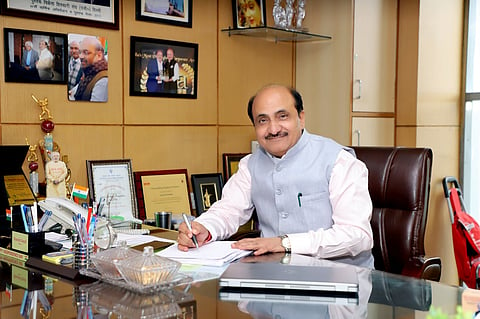
1. As Chairperson of the Books, Publications and Printing Panel at CAPEXIL, how do you see India’s publishing and printing sector evolving on the global stage?
India is no longer just a cost-efficient printing destination—it is fast becoming a global knowledge manufacturing hub. The sector is undergoing a structural shift, moving beyond scale and affordability towards quality, innovation, and integrated solutions.
India publishes over 90,000 new titles annually and remains one of the largest producers of English-language content globally, which gives it a natural advantage in international markets. The print industry itself is valued at over USD 25 billion, with exports steadily expanding across Africa, the Middle East, Southeast Asia, and parts of Europe.
From a CAPEXIL perspective, the most significant shift is towards value-added exports. Indian companies are no longer offering just printing services—they are delivering end-to-end publishing solutions, including content development, design, digital integration, and global distribution. This positions India as a strategic partner rather than a backend service provider.
Sustainability is another defining trend. Indian printers are increasingly adopting eco-friendly inks, FSC-certified paper, and energy-efficient processes, aligning with global ESG expectations—particularly in markets like the GCC and Europe.
Over the next decade, India will not just participate in global publishing supply chains—it will help define them.
2. What strategic shifts has Goyal Books made to stay competitive in an era defined by digital disruption and changing content consumption habits?
At Goyal Books, we have always believed that the future lies in integrating print with digital, rather than choosing one over the other. Digital disruption is not a threat—it is a multiplier of value.
We have adopted a hybrid publishing model where every major print product is supported by digital assets—interactive content, QR-enabled learning resources, e-learning modules, and teacher support tools. This is particularly relevant in education, where blended learning has become the norm.
At the same time, we have strengthened our core in content development. Our focus is on creating curriculum-aligned, pedagogically sound material by working closely with educators and subject experts. This ensures that we are not just distributors, but creators of meaningful academic content.
On the operational side, we have invested in modern printing technologies that allow for shorter print runs, faster turnaround times, and greater customisation—critical for serving diverse international markets.
Our strength, however, lies in execution. Delivering the right content, in the right format, at the right time—especially across complex international markets—is where real differentiation happens.
We have also expanded our global footprint, with a strong focus on high-growth regions such as the Middle East, Africa, and South Asia, while using data-driven insights to continuously refine our offerings.
3. How can Indian publishing strengthen its position in key international markets like the UAE and the Middle East, particularly in education and knowledge exports?
The UAE and the wider Middle East represent one of the most dynamic opportunities for Indian publishing, particularly in the education sector. The region’s diverse student base and strong focus on academic excellence create sustained demand for high-quality learning resources.
To strengthen its position, Indian publishing must focus on alignment and localisation. Content must cater not only to Indian curricula like CBSE, but also to international frameworks such as British, IB, and American systems, which are widely followed in the region.
There is also growing importance of bilingual and culturally relevant content, particularly Arabic-English material, which enhances accessibility and engagement.
However, in markets like the UAE, content alone is not enough. Speed, accuracy, and reliability are equally critical. The ability to deliver the correct editions, on time, and at scale is often the real differentiator.
Partnerships are equally important. Long-term collaboration with schools, education groups, and regional stakeholders creates stability and trust, which are essential for sustained growth.
Digital integration is another key factor. Schools across the region are increasingly adopting technology-enabled learning, and publishers must offer comprehensive solutions that combine print, digital platforms, assessments, and analytics.
In the Middle East, publishing success is not just about content—it is about execution, consistency, and trust.
4. From a leadership perspective, what has been your approach to scaling operations while maintaining quality, credibility, and long-term partnerships?
Scaling in the publishing business requires discipline and clarity of priorities. For me, there are three non-negotiables: quality, trust, and long-term partnerships.
Quality is the foundation. Whether it is editorial accuracy, print consistency, or delivery timelines, maintaining high standards is essential to building credibility, especially in international markets.
Trust is what sustains growth. We focus on building long-term relationships with our partners by understanding their needs, adapting to their requirements, and consistently delivering on our commitments.
At the same time, scaling requires structured systems. We have invested in process standardisation, technology, and operational frameworks that allow us to expand efficiently while remaining agile.
People are central to this journey. We emphasise talent development, accountability, and a culture of excellence to ensure that growth is sustainable.
We also actively integrate technology and sustainable practices into our operations, aligning with global expectations and improving long-term efficiency.
Ultimately, in this business, reputation compounds faster than revenue. Every decision we make is guided by long-term credibility rather than short-term gains.


