Qatar provides a shining example
Qatar has been blessed by an energy windfall remarkable even by the Gulf's standards. But other, non-hydrocarbon sectors are being encouraged to be the guiding light for growth with stability
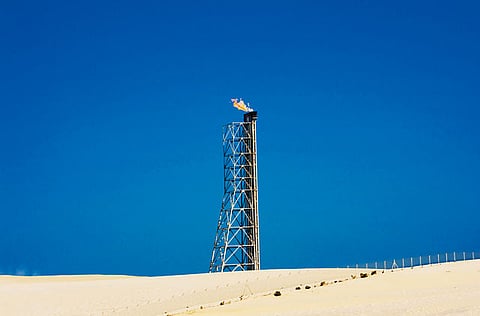
In a period of uncertainty in global financial markets, Qatar's economy is delivering an impressive growth rate, primarily driven by massive investments made in its hydrocarbon sector and measures taken by the government to insulate its economy from external shocks.
The GDP of the country grew by 8.7 per cent last year as against the 0.6 per cent contraction witnessed for the global economy and 2.4 per cent growth by the Middle East and North Africa region.
Qatar has been significantly resilient to the global economic slowdown owing to massive liquidity support provided by its government. Unlike many nations that had to cut their benchmark interest rates to support domestic liquidity, Qatar has managed to keep its repo and reverse repo rates at 5 per cent and 5.5 per cent respectively since mid-2008, which underscores the relative strength of its economy.
In turn, the country's sovereign wealth fund, Qatar Investment Authority, has played an aggressive role in providing liquidity support to its banking industry mainly through equity injection and purchase of real estate and equity investment portfolios of banks in Qatar.
In contrast to various developed economies that are expected to cut their fiscal spending in the latter half of the year to address spiralling budget deficits, Qatar has introduced an expansionary budget for the fiscal year 2010-11, with the outlay estimated at $32.3 billion (Dh118.7 billion), i.e. 25 per cent higher than last year's budget.
In an effort to attract more foreign investments, the budget has also set aside $9.7 billion for infrastructural works, which constitutes 30 per cent of total public expenditure.
Despite the increased spending, Qatar has budgeted a surplus of $2.7 billion, on the back of improved prices for oil and gas. In fact, the budget estimates a conservative oil price of $55 per barrel in the current year, which is around 27 per cent less than the average oil price of $76 recorded in the first half of the year.
Qatar is the largest exporter of Liquefied Natural Gas in the world, and production of natural gas overtook oil output for the first time during the second half of last year. The hydrocarbon sector is poised for further growth as the country is planning to increase the production of LNG to 77 million tonnes per year by early next year from around 60 million tonnes per year currently.
Meanwhile, the state-controlled Qatar Petroleum Company (Qapco), in which Total of France has a 20 per cent stake, has announced its plans to invest $12 billion to increase its petrochemicals production capacity by 67 per cent from 18 million tonnes per year to 30 million tonnes per year by 2014.
The banking sector has benefited from strong support by the country's sovereign fund and overall economic growth in Qatar during the last year. Consolidated banking assets grew by 16.5 per cent last year and the ratio of non-performing loans to total loans is around 1.7 per cent, which is well below the global industry average.
Qatar is also stepping up its efforts to reduce its reliance on hydrocarbon revenues by beefing up operations in other key sectors. In line with such efforts, Qatar Steel is increasing its capacity by 30 per cent and the newly-established Qatalum smelter will boost country's exports. On the tourism front, the Qatar Tourism Authority has set aside $17 billion to develop new hotels and leisure facilities, with an aim to grow the industry at a 20 per cent annual rate in the coming few years. Further, Qatar has submitted a bid to host the 2022 Football World Cup event, which emphasises its efforts to build industry and to emerge as one of the leading tourism destinations in the region.
Rising optimism
Trends in the Dun & Bradstreet (D&B) Business Optimism Index (BOI) Survey for Qatar reflect the high levels of confidence in the Qatar economy. The third-quarter survey reveals that the business units in both non-hydrocarbon and hydrocarbon sectors are more optimistic than they were in the previous quarter despite the fact that the survey was conducted in June when global financial markets were experiencing headwinds due to euro zone debt troubles.
Business units in the non-hydrocarbon sector are anticipating strong demand as the BOI for Volume of Sales parameter has increased by eight points to 49 whereas for New Orders the BOI has gone up by ten points to 49. The BOI for Selling Prices has also shown an improvement of 12 points over the previous quarter.
In line with improved expectations of demand levels and a healthy pricing scenario, the BOI for Net Profits is recorded at 46 as against 27 in the second quarter. The survey also reveals that a significant 31 per cent of the respondents are expected to invest in business expansion in the third quarter.
The hydrocarbon sector optimism has risen on the back of strong Selling Prices outlook, the BOI for which has jumped by 71 points in the third quarter. Indeed there were no respondents in the survey that anticipated prices to decline, which is significant, considering the survey was conducted during a period when the oil price was experiencing elevated volatility and had fallen by 20 per cent in the prior weeks.
This statistic suggests that the oil price in the international commodities market was oversold, and most industry players expected prices to strengthen in the third quarter. On similar lines, hydrocarbon firms are also expecting an improvement in Net Profits as the BOI for the parameter has risen to 25 as against 15 in the previous quarter.
D&B has assigned a country risk rating of DB2a to Qatar, which affirms low risk and a stable economic outlook.
Qatar is expected to continue its robust performance in the current year upon sound public sector demand and improving fundamentals of its banking sector. With inflation anticipated to stay low, and massive investments made by the government to build a world-class infrastructure, Qatar has emerged as one of the strongest economies in the region.
Index
The D&B Business Optimism Index measures the pulse of the business community and serves as a benchmark for investors. It results from a quarterly survey of business expectations, which has emerged as a leading indicator of turning points in economic activity in the designated countries. The survey respondents are asked if they expect an increase, decrease or no change regarding the following parameters:
- volume of sales
- net profits
- level of selling prices
- new orders received
- level of stock
- number of employees.
Source: Dun & Bradstreet
The writer is Analyst, Dun & Bradstreet South Asia Middle East Ltd.


