Influential qualities: Heavy industry at work
Industries Qatar is at the forefront of the country's efforts to develop its growth potential
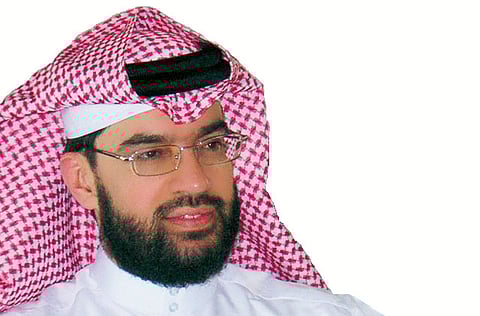
In general terms, how do you feel Industries Qatar (IQ) either reflects or gives momentum to the Qatari economy, and what is your basic assessment of how the business has generally corresponded to economic trends following the global financial crisis?
Industries Qatar is currently the only window investors — both local and foreign — have to Qatar’s burgeoning heavy industries sector.
IQ has interests in three of Qatar’s largest heavy industry segments, that is, in petrochemicals, fertilisers and steel.
Naturally, we do not represent all heavy industries, as there are other companies, such as Qatalum, that also play an important role in the economy. But, since its IPO in 2003, IQ has been the single largest company in Qatar by market capitalisation.
As such, we have influenced the local economy in numerous ways — through our dividend distributions (we have distributed more than 16.1 billion Qatari riyals (Dh16.2 billion) in dividends since 2003); our policy of maintaining cash in locally-based banks (currently we have 4.1 billion Qatari riyals in cash and cash equivalents, most of which is placed in local accounts); the employment of more than 4,000 people, our sponsorship and CSR activities, to mention a few examples.
Indirectly, we have also helped place Qatar on the international investment map. Along with the likes of the Qatar investment Authority, IQ is well known and enjoys high recognition in financial circles. Also, given the size of the IQ group, its listing attracted significant capital inflows to the Qatar Exchange. This, in turn, supported the state’s objective of developing the domestic capital market.
With respect to how the business has tracked economic trends, IQ’s fortunes are intrinsically linked to global commodity prices, such as low-density polyethylene (LDPE), methyl tertiary butyl ether (MTBE), urea and steel rebar. The business is also affected by macroeconomic forces, such as unemployment, interest rates, GDP levels, etc., but these have a somewhat secondary impact on the business, after commodity prices.
Over the last decade, we witnessed an unprecedented inflationary run, which peaked in the middle of 2008 and troughed in the end of 2008/beginning of 2009. Prices for our key petrochemical products have improved steadily since then, while steel prices have only recently picked up (i.e. since the first quarter of the year). However, we are still seeing weakness in global fertiliser prices.
Given that IQ’s performance is to a large extent dependent on global commodity trends, can you comment briefly on group performance and outlook specifically in that respect? In particular, what segments of IQ have been seeing signs of recovery and which may continue to drag?
During this year prices for our key petrochemical products continued the strong recovery started in early 2009. In the year to date, prices for LDPE and MTBE have increased by an average of more than 60 per cent versus their trough 2009 figures. We believe that this growth is primarily due to strong demand linked to the global recovery, and delays in some competitor start-ups. Until recently the steel segment was showing somewhat lacklustre growth. However, in the second quarter of this year we benefited from strong international rebar prices, due to resurgent regional steel demand coupled with increases in iron ore prices (itself possibly linked to the change in pricing regime).
In the fertiliser segment, international prices have stagnated since the end of 2008. Average inflation since the price floor has been a modest 8 per cent.
In terms of our outlook, we expect fertiliser prices to remain at current levels for the medium to long term. We believe that unless there is a significant change in the Russian/Ukrainian natural gas pricing agreement or material, sustained increases in agricultural production and/or commodity prices, fertiliser prices will continue at current low levels. The outlook for our petrochemical and steel products is more positive, as we expect global demand, in the case of LDPE and MTBE, and regional demand, for steel rebar, to remain strong.
It is important to note, however, that demand for the group’s products remained strong throughout the financial crisis. Other than a short shut-down towards the end of 2008 in the steel segment and shut-downs for planned and unplanned maintenance, all of our plants in all segments have operated at full capacity. It is normal for the group to record average utilisation of more than 100 per cent.
Already a highly-diversified group, IQ has indicated that it will launch a number of new products. Would you tell us about the nature of these products and the rationale for such expansion in their respective markets?
Our corporate strategy is predominantly based on organic growth, through investing in new facilities, new products or expanding current plants.
Our capital expenditure for the first half of this year alone was almost 2.5 billion Qatari riyals. To date this year, we have launched one new product, namely linear low density polyethylene (LLDPE), and we intend to launch a second, melamine, in the third quarter. In addition, the group has invested more than 100 million Qatari riyals in the acquisition of associates.
The rationale behind these products is obvious — IQ needs to widen its product portfolio in order to not only diversify its revenue streams, but also to more fully exploit the natural gas feedstock available to us.
Unlike many companies in the highly capital-intensive sectors (petrochemicals, fertilisers and steel) that IQ is also active in, the group reports that its capital expansion plans have remained in place despite the global economic downturn. Can you comment on the most significant projects and their importance to the group?
None of the three main reasons why competitors have postponed or cancelled capital expansion plans, viz. funding concerns, lack of feedstock availability and/or poor demand expectations, apply to IQ.
Funding for the two, large, partly debt-financed projects, namely the Ras Laffan Olefins Cracker (RLOC)/Qatofin and Qafco 5, was secured before the financial crisis, and at very competitive rates. Other than that, the group has operated on a moderate- to low-gearing basis. The other large, confirmed projects (LDPE-3 and Qafco 6) are 100 per cent equity financed.
In terms of feedstock availability, this is guaranteed before we confirm and/or announce a project. It is worthwhile noting that all of our plants have secured feedstock on a long-term basis. And on the final point, we have full confidence in our sales and marketing networks and the quality of our products — together, they will ensure IQ’s products remain in demand.
From incorporation to date we have nearly doubled our production capacity. And, this was mostly due to our various capital expenditure programmes. Our current capital expenditure plans are critical to the group’s future success. In our 2010-14 business plan we highlight our expectation that group revenues will more than double by 2014, from 9.7 billion Qatari riyals to 20.9 billion, with 23.8 billion Qatari riyals of cumulative revenues expected to flow from new facilities and products over this five-year period.
In the petrochemical and fertiliser segments, we have four large projects: RLOC and the associated Qatofin plant, the new LDPE-3 plant, Qafco 5 and Qafco 6. With the commercial launch of RLOC/Qatofin in May 2010, IQ increased its saleable capacity of ethylene and added LLDPE to the product portfolio. The LDPE-3 plant will utilise much of the excess ethylene currently produced by QAPCO to produce more, added-value LDPE. Qafco 5 will produce additional ammonia and urea, while Qafco 6, in a similar vein to LDPE-3, will utilise much of the excess ammonia produced by QAFCO to produce more, added-value urea.
In the steel segment, we have a number of major projects, but these are undergoing final feasibility studies or are awaiting final board approval. In their present form, they will significantly increase the existing capacity, widen the range of products available for sale to include galvanised wire, PC strands and coil, and more than double steel segment revenues.
In view of those considerable capital expenditure plans, how has the group managed its funding requirements in light of the recent global credit constraints? Has it had to alter the type of finance, terms, etc., and what has been the impact on the group’s overall financial performance?
As noted earlier, not only has the group taken a conservative approach to gearing, but all debt was secured before the financial crisis. As such, we have not had to alter the type or terms of our financing.
IQ notably benefits from its relatively low-cost production for the group’s petrochemical businesses, like others in the region. Can you put this competitive advantage in context as compared to rivals in this sector, and what it means for securing future market share and profitability?
No comment.
Currently 70 per cent of the group is owned by Qatar Petroleum. Why so, historically and, are there any plans to broaden the ownership structure of the group?
There are currently no plans to increase either the number of floated shares, or the foreign ownership limit.
Some market analysts have taken a very reserved view of the stock, anticipating declining earnings per share in the next few years, and casting doubt on the valuation premium. How do you react to their reasoning?
IQ does not generally respond to market analysts or comment on stock market valuations or trends. However, I firmly believe in the durability of the group’s core fundamentals — feedstock cost advantage, secured access to natural gas, strong cash position, low-gearing structure and the organic growth strategy.
We expect earnings per share to grow from 8.86 Qatari riyals in 2009 to 14.39 by 2014, and, as previously mentioned, revenue to more than double to 20.9 billion Qatari riyals. These are the hallmarks of success, and I believe the best is yet to come from Industries Qatar.


