Driven by the desire to deliver
Interview with Selim El Zyr, President and CEO of Rotana
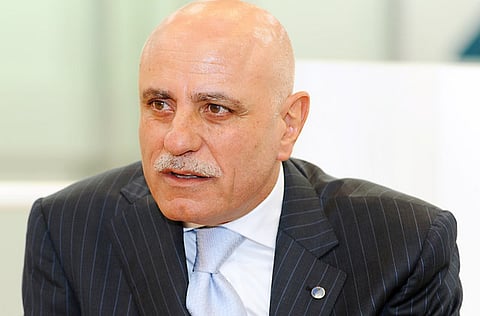
Rotana currently manages a portfolio of 70 properties throughout the Middle East and North Africa, with a committed expansion plan in place. Selim El Zyr, President and CEO of Rotana, has been recognised as the Middle East's most powerful hotelier and most influentialindustry professional in the first edition of the Hotelier Middle East Power 50.
To what extent has the Mena hotel market been impacted by the global economic downturn? Has there been a difference in tourist versus business (including conference) visitors?
In 2009 we saw reductions across all markets, which was in line with the overall world economic downturn. For Rotana, our Dubai properties were mostly affected, and it must be borne in mind that Rotana currently manages more hotels in Dubai and the Northern Emirates than any other single operator. Despite this, we have achieved our budgets and in many cases surpassed them.
Measures had to be taken. We have stayed confident while remaining realistic. Also, we were aware of what our competitors were and are still doing, we listened to our customers, and we were lean.
I strongly believe that the rates in the region (mainly Dubai) have adjusted to the demand and are now more attractive in terms of providing good value-for-money products and services, complemented by the destination.
Dubai has become less expensive in 2009 compared to previous years, and is once again an affordable destination.
Deloitte's analysis of STR Global data of hotel performances in the Middle East revealed that Dubai hotels' average revenue per available room (RevPAR) stood at $155.4 (Dh570.8) last year. It is important to recognise that the RevPAR of hotels in Dubai remains among the highest in the world, which is rewarding and certainly positive.
How do you see the outlook for the hotel sector in the Mena region? What is the risk of oversupply in the more developed markets? Will there be greater diversity in the type of hotel, e.g. growth of budget hotels?
The opportunities are presented across the Middle East. However, the main hot spots for Rotana are the Kingdom of Saudi Arabia, North Africa, Oman and Iran. We have reached out to guests from new markets in Eastern Europe, South America, and the Far East such as China and Malaysia and Hong Kong.
It is part of our strategic aim to have a property located in every key city in the Middle East and North Africa, and this goal is being steadily achieved through careful long-term planning and timely action. At this stage, we will not be moving our boundaries away from the Mena region.
The Middle East has remained largely static in hotel supply. Business travel and accommodation for the budget-conscious executive is an increasingly important market in the Middle East but remains grossly under-serviced. This is why Rotana launched Centro Hotels by Rotana back in 2006, which is an essential service hotel brand, and unique out-of-the-box solution for the mid-tier market.
We first pinpointed the essential requirements of today's young business and leisure travellers, who seek both style and finesses, yet at affordable rates. Subsequently we improved upon the services and the physical product (the design) catering to these requirements, against an international set of benchmarks.
The Rotana group has achieved rapid expansion throughout the Mena region since the company's formation in 1992. What have been the main milestones in the company's history so far? Can you explain the company's strategy in terms of the various hotel formats?
Since inception, the company has grown to be the region's largest hospitality management company, and a brand that is widely recognised. Rotana today is the result of a shared vision and many years of loyalty, dedication and hard work. Knowing who we are and what we are capable of is of great value. This solid foundation allows us to move forward with confidence, knowing that our future is assured.
The Rotana brand is driven by passion, personal warmth and the delivery of consistent quality standards, combined with a keen understanding of regional markets, commitment to research and significant investment in systems and people. Development of the brand is rigorously planned and meticulously managed across all operations.
Our properties are in the right locations and our level of service much sought after. Don't forget we are focused solely on the Middle East and North Africa; we know the region better than anyone. We worked hard to gain the trust of our customers in such a competitive region where most of the international chains were here two or three decades before we came in.
As to milestones, there are so many. Most recently, 2010 has seen the opening of Rose Rayhaan by Rotana, Dubai's latest landmark, certified as the tallest hotel in the world by the Guinness Book of World Records. Also, and for the fourth year in a row, Rotana was voted the Middle East's Leading Hotel brand.
Our alliances with airlines and international hotel chains where Rotana doesn't operate allow us to gain domestic market awareness and increase our network coverage.
Rotana business is broadly spread across the region. What are the company's criteria for setting up in particular locations? What are the group's plans for future expansion and how will they be funded?
Today Rotana has a portfolio of 70 properties, from four- and five-star hotels and resorts to hotel apartments. The Rotana name has become synonymous with a regional company managed by people who understand what the whole region is all about. Customers are attracted, and often revisit, drawn by the increasing choice of property in terms of location, type, budget and style.
In this age, change is the only means of survival, and an entity that cannot adapt fast enough will become obsolete. We are constantly pushing for innovation and development in all the departments.
We strongly believe in meeting the guest's ever-changing needs. This requires keeping the hotel owners aware of the continuous need for renovation on all levels.
Rotana is a management company and is a public-listed company. I must emphasise that the cost of any project is the responsibility of our owners that have entrusted us with their properties.
The challenge is not the strategy as such, as almost every successful organisation has its own strategy and Rotana's too is not so very different from them. What matters is the way the strategy is implemented.
For the next four years Rotana will open ten hotels per year. The execution and know-how are there; the objective is clear. It's all about location; it's the key to our success. You will find us where the demand is. As long as we are able to manage our growth in an efficient way, then we will take further properties, as we are extremely cautious on expanding strategically and efficiently.
Sign up for the Daily Briefing
Get the latest news and updates straight to your inbox


