Designing buildings in a post-crisis era
Celebrity architect Tony Ashai tells PW of the struggles he endured during the economic downturn and what he thinks of the renewed enthusiasm in the market
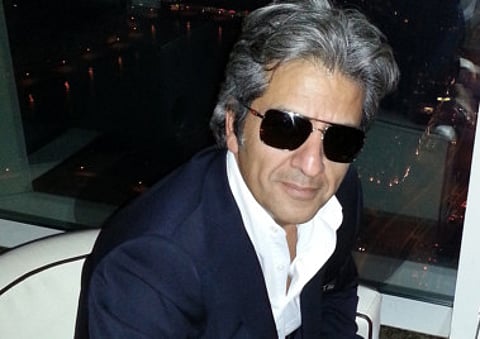
Dubai is not a new playing field for architect Tony Ashai, who was in the UAE during the heady times, designing prominent projects such as the Shah Rukh Khan Boulevard on Dana Island and Santorini’s masterplan on Al Marjan Islands in Ras Al Khaimah, as well as Dubai Lifestyle City to name a few.
He even had his own project, Ashai Towers. When things fell quiet, he took a break and went back to Los Angeles, where he designed homes for top celebrities. Property Weekly caught up with him for a chat on how he survived the global economic crisis and his new business strategy in the post-crisis era.
You didn’t seem to be entirely unprepared for the events that followed when we spoke last in April 2008. How did you survive?
Everyone knew back in 2008 that there was a bubble and that it was going to burst, but did not know exactly when. But I had a feeling, as I had one foot in the US and one in Dubai. The market slowed down there a year before Dubai, so I figured it was only a matter of time. Still, it was a bit of a shock when the Lehman Brothers crashed — the next day every client called me and asked “can you put my project on hold?” This was across the board here and in LA.
I was stuck with 40 employees here and 80 in LA. What do you do? I tried to keep them, but with no cash coming in I had to lay them off after a couple of months, bit by bit. So I kind of found myself on a forced holiday, but looking back it was a good thing as we were all heading into the direction of a mad rush. In the US, developers filed bankruptcy and here many disappeared.
When did you feel things were turning again?
About a year and a half ago, I started hiring again in LA and my old Dubai clients started calling me to do some drawings — they were carrying out some value engineering and thinking of relaunching projects. The credit is easing up and, with that, development. Only serious developers are here today thanks to government regulations restricting them.
So today, we’re more cautious about expanding and have half the employees than before — 60 — divided between Dubai and LA. We work with quality projects only, rather than growing too big. We had a lot of receivables outstanding from developers who disappeared, so today we work with select developers with good reputations.
Prices are already up by 20-40 per cent depending on where one looks.
Yes, but it’s going to stop. You may see a spike in real estate prices, but that is because it needs to adjust to a level where the cost of development and sales prices match. Many developments were sold for less than the development cost and the sales price figure needs to go past that, if not it doesn’t make sense to build.
Prices are simply coming back to the level where they should be. Will it go really fast beyond that? I don’t think so; off-plan prices will not surpass completed building prices, as it only makes sense to buy off-plan if it’s cheaper. So, I think it’s going to correct itself and stabilise when it reaches the right point. That’s my theory of what should happen, but of course I could be proven wrong.
You speak from your experience as a developer as well. What has happened to Ashai Towers?
We only sold 50-60 per cent in one of them, Ashai Tower 5 in Jumeirah Village South, and most buyers paid 10 per cent and some 20 per cent. The agreement was to pay 30 per cent before we would start construction, but when we sent invoices for further payments during the downturn, the reply from our buyers was, “Can you put the project on hold, we want to see what’s going to happen.”
We waited for a year, and by that time we had started construction. We tried to contact people, but 60-70 per cent had disappeared. Even today, there are some we can’t find. This is a serious problem for developers. If there is no way to reach them, how can you cancel them? I think today, the Real Estate Regulatory Agency (Rera) is coming up with some solutions to do this, if you can prove you couldn’t contact them. However, I didn’t want to forfeit anybody.
You’re still going ahead?
Yes, the land is 100 per cent paid and we started shoring and piling back then. In the meantime, I found an investor who wanted to build the tower and then buyers could pay on completion. He pumped in Dh5-6 million and we did some foundation piles, but then came 2010 and he thought the market wouldn’t recover and backed off. We were stuck again and Rera said it would cancel the project if we didn’t continue. We had no other option but to say, “Okay fine, cancel it.”
However, now that the market has turned, I am proposing consolidation to the buyers and I am getting new investors to build it. We can probably restart construction within two to three months. My goal is not to lose money — neither my own, nor the buyers’.
How are your developer-clients dealing with their projects today?
It’s a completely different attitude now. Before, all they wanted was a design of a building in speed mode, four days to put it in a newspaper and start selling. I already guessed then that these projects would never be constructed. Today, developers have realised that simply throwing different-sized apartments into a building, without looking at whether the space functions well in reality, doesn’t work. If you look at Dubai Marina, Jumeirah Lakes Towers (JLT) or any other development, the towers with good floor plans sell or rent for a higher price of up to 40 per cent.
So now developers are really conscious, looking at the floor plans in detail, asking for changes and giving time to design a good product. Everyone in the market has matured — developers, architects and government regulations, which is good for Dubai in the long run.
What about effective master planning of the city?
Urban design is an interesting one. Take Jumeirah Beach Road. The retail that is facing the water is doing great, those that are hidden in the podium receive much less attention. In an urban space, all retail should face outside to work well.
Similarly in JLT, we have a lot of lakes, but they realised it needed more greenery, a park for children to play, so one of the lakes has now been emptied to provide for that. If you look at Downtown Burj Khalifa, this master plan worked from the start; it is better than Business Bay for example.
Overall, the environment now is a lot better. Future designs are going to be a lot more mature, as the consultants here also have matured.
You’re currently working on several projects, such The Royal Estates, and Dubai Lifestyle City is going ahead. Any other project?
Yes. For example, the Burj Pacific by Pacific Ventures is already under construction. We took the apartments in the top six floors and are going to redesign them as Tony Ashai signature apartments, fully furnished. It has great views of Downtown Dubai and will probably be completed within two years.
We also have a deal with Orion. We will do a lot of design work with them over the next three to four years. And there are others in the pipeline I can’t mention yet, from master-planned residential communities to mosques. If everyone plays their cards right, over the next four to five years, the market will work.
I believe that The World project is another one that is going to start moving again and will be a big hit probably within a year or so. We have a couple of projects there and developers are talking about restarting.


