Because it's worth it
The global credit shock should be a prompt for redefining the product set and leapfrogging the competition, Soha Nashaat says
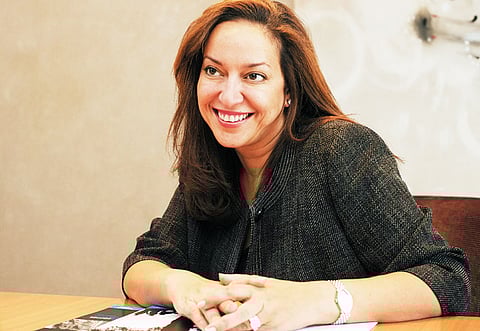
Gulf markets have been shaken by regional events as well as the global financial shock and its lingering effects. What is your impression of the impact on the mentality of high net worth individuals (HNWIs) locally as investors, regarding acceptable risk and expected rewards?
What never ceases to amaze is that it is a very predictable sort of pattern. When markets are frothy and everything is going well the pendulum always swings to what we call the greed element. And then after shocks it's the fear end of the spectrum. This literally happens in every region around the world and every market cycle!
Especially in the past 18 months it's been particularly a horrific shock to the system; and it's been interconnected and it's been global.
Clients or investors have been looking for two things.
One, obviously, is limiting risks, making sure they understand what they are investing in. I have a feeling [in many cases] clients were driven by looking at the return as opposed to the risk.
[Another] is that they have reacted by wanting much more advice. I think the value of advice has become very clear, the value of transparency has become very clear, and, frankly, the value of diversification as well has been a lesson that's been learnt regionally.
Has there been a distinct carryover effect on (wealth management) business by way of revised client expectations? How would you characterise the impact overall of the credit crunch specifically in the past two years? How has it affected operational objectives and actions (e.g. at Barclays)?
We had always been very clear about our objectives in coming to set up a sustainable business in the region. You can certainly see it by our actions, what we have been doing in the market, that we have not wavered from that. We have not reduced [our presence]; we have continued the expansion, we have continued the investment in the business. This is a region that is of critical strategic importance for us, and we are staying the course.
[The shock] has not impacted, while obviously it has been a painful time, and you have to take a look at your operations on a global basis. If you look at Barclays Wealth globally, we have actually expanded during this period of time. So both regionally — continuing to expand our product set, our bankers — but also on a global basis, we have taken this as an opportunity. We took over the Lehman operations, the Americas operations. So we have looked at it, frankly, as an opportunity to leapfrog the competition.
Our businesses have absolutely continued to grow. But more importantly, it's also that the clients are looking for advice. You know it's no longer ‘shooting darts and everything goes up'. They are really looking for who can bring more intellectual content to the discussion. [That business] has definitely expanded.
In terms of addressing individual client's needs here, what types of different investment orientations can typically be advised? Is it any different for clients here in the region?
It is exactly the same as in London or Switzerland; there's no difference. What you need to understand is each client is an individual. Any (wealth management) firm will have broad investment themes that they would be advocating through their research. But within that [framework] you have to create a plan for each individual client that takes into account their ‘financial personality'.
Our approach is tailored to an individual as opposed to a region. Now, clearly there's going to be some regional flavour. Somebody living in the UAE or Saudi Arabia will want to invest part of their assets locally. And somebody living in Brazil will want to invest part of their assets locally. As a global asset manager your job is to make sure that you have the plan in place overall, and within that you slot investments. But there is no difference between a private banker sitting in London, creating a plan for a UAE client versus a banker sitting in Dubai. It's almost irrelevant.
Taking the bigger picture of trends over the past decade, please describe the basic evolution of the wealth management sector in the UAE and Gulf, in terms of participating players and market entrants.
The wealth management industry here is very fragmented, and that's the case globally as well. There have been many entrants regionally into the space — no question about it. Not all of them are staying the course. Some of our competitors have chosen to retract. I don't believe anybody has much more than a few percentage points market share. I don't see that anybody is going to dominate the industry [and] capture 20-30 per cent; [not] any time soon.
In terms of products offered, I think that what we have seen is certainly a trend to more institutional-quality products. One of our own differentiating factors is our ability to leverage and utilise Barclays Capital as well as outside providers for totally ‘open architecture', to provide institutional-quality offerings. That is one thing I see changing in the industry as a whole. Investors become sophisticated, demands are higher and — especially when you are moving up the scale towards the ultra-high-net-worth clients, etc. — the pressure is on to make sure that you are providing [those] products.
What about the Islamic finance segment?
That's growing, absolutely growing. We are big believers in that. I have a deep belief that this is not a fashion. More and more clients want to invest with what they feel comfortable with from an ethical, from an Islamic, point of view. This is here to stay; this is not a fad.
We are actually putting more resources [in respect of] that. Barclays has hired [someone here] to spearhead our efforts in that space, and we want to make sure that we are putting together a good product offering both for our private clients as well as institutional clients in the Islamic space.
Fees are an issue, coming into focus again and more so in the past 18 months all over the world. There has been disillusionment with poor returns and high fees. What about clients here? How much of the discussion between you and your clients revolves around that kind of issue?
The whole ‘fees' debate has been going on for more than 10 years. When I talk about moving towards institutional-quality products and the ultra-high-net-worth space as well, that also [entails] institutional pricing in that space.
If you look ten years back and then at today, there has definitely been a compression in the fees and margins. I think what you have to make sure is that there is full transparency to the client. That's a move that's been under way in the UK, USA, etc. I have seen plenty of situations where clients are investing with other houses where it's just not transparent, which is not acceptable in this day and age.
But isn't there a case to be made that, especially in this recent crisis, wealth managers and their relationship managers pushed products deriving them bigger margins, rather than what suited the client's risk profile?
I really think it's dependent on each institution and how they run internally their governance structures. And the whole point of us saying ‘we want to make sure that we are providing an open architecture for clients' is to be able to make sure that we are getting them the most competitive prices.
To give you a very valid example: when we source a product — a structured product, let's call it — for a client, we actually shop around. We don't just go to Barclays Capital to execute it. We shop around across the different providers and then provide the most competitive quote to our clients. So it's not about being captive to your internal machinery. As a wealth manager, your interest has to be absolutely aligned with your client's. If it is not, you are not going to have that client for very long. You will make some money off the client short term, but then they are going to move on.
How would you say the sector will move forward over the medium term?
Our sense collectively at Barclays Wealth of the sector going forward is one of growth. We have a lot of initiatives right now where we are going to be putting a lot of resources, both financial and human, towards making sure that there are certain business imperatives that we can deliver against over the next five years.
If you look at a region such as the Gulf, this is a growing market. There is wealth creation. Yes, there have been a few setbacks, but if you look on a secular trend basis you are looking at a market that is growing — whether it is because of the hydrocarbon industry, or whether it is because of rapid development of infrastructure, and the other sectors and industries around that. It is happening, [and] you want to be a part of it, a major player in it.
Diversification has come into focus — people are talking about that aspect more than ever. But being diversified did not shield investors from being hit. All asset classes and markets were affected. How do you look at it?
When you have a major financial shock, there is a contagion effect. In my view, diversification [means] across asset classes and geographical. At the end of 2008, everything got hit. Last year we started to see a rally. Not all markets participated in the rally. If you were of the opinion that diversification doesn't count, and you just kept your eggs in certain baskets — for example, locally — you wouldn't have participated in that rally.
The value of your asset classes as well as geographic diversification pays off over a longer period when you actually do see the non-correlation movements of the various markets, of the various asset classes. If you are telling me that people are coming up with new formulas for it, I think it's just very simple. It is investment 101: just don't put your eggs in one basket. Just make sure that you have good investment themes you are investing against.
With global recovery under way, what do you make of the opportunities for investors now?
We maintain a very positive, yet cautious, approach. One must look at the themes but also within the themes — and it's very important to ensure you are tailoring the right portfolio to the right client.
So we may have a theme about currencies, but there are certain clients that I wouldn't really want to be exposing [to that]. We need to choose the right product so that their downside is limited because they can't adopt that type of risk. A theme is great, but you need to make sure that you are overlaying it with what's right for the client.
Finally, then, what can you offer in general in terms of those asset allocation themes?
We have Compass, which is a monthly research advisory publication and we will share it with you (see box)!
Research Note
Investors should keep the following four major themes in mind during the first quarter of 2010.
1. Move portfolios to mid-cycle mode. The global economy is growing and financial markets have been generating positive returns. We expect these trends to continue in 2010, albeit not in a particularly robust way and in an environment of increasing risks. Put differently, the most dramatic phase of the recovery from the "great recession" and financial market crisis is now over and the next downturn has not yet begun. So, although it feels as if the transition has happened very quickly, we are now in a mid-cycle phase in the economy and the financial markets. The investment strategies that work well around macroeconomic turning points are not suitable for mid-cycle periods. Mid-cycle volatility tends to be quite subdued, and investors should not expect either particularly high returns or large losses on broadly defined asset classes
2. Seek outperformance. When markets are moving rapidly in one direction or another it may not matter much which stocks or bonds one owns and broad index exposure may generate better returns than what even the best active managers can provide net of fees. When returns are in a normal range and markets are relatively stable, by contrast, a good active manager stands a much better chance of outperformance than an indexed portfolio.
3. Seek ways to create your own public-private partnership. As a by-product of the 2008 financial crisis and in response to climate change, we are witnessing a substantial increase in government involvement in financial markets and the real economy. One implication of this trend is that investments that are explicitly or implicitly favoured by government policy will, on average, perform better in the future than those that are not. Investors should, therefore, look at the shape of their portfolios with an eye on public policy developments.
4. Maintain selective and indirect exposure to Asian economic growth. Equity markets in Asia, especially Japan produced the highest returns of any global region in 2009 on both an absolute and risk-adjusted basis. In retrospect, this is not surprising; at the beginning of the year the performance of these markets was supported by both strong economic growth prospects and the fact that the region's equity market valuations were attractive by historical standards. Asia's economies are likely to be the fastest growing in the world in 2010, as well, but last year's strong performance pushed valuations above historical averages. The challenge now is to find asset classes and specific securities that are at attractive prices and provide exposure to economic growth in Asia.
Name of the game
Financial Review: As a simple guidance and aside, can you describe the discrepancies, overlaps and relationships between financial planners, wealth managers, private bankers and fund managers? What discrete levels of sophistication and customisation are there?
Soha Nashaat: It's an interesting question. Certainly in the industry we are very clear about the delineation of responsibilities between a financial planner, a private banker, a wealth manager and a fund manager.
I think the easiest way to think about it is you are talking about the wealth manager as the private banker in essence, and that point-person acts as the trusted advisor, who then creates or helps orchestrate holistically what the advice for the client is in terms of assets, liabilities, and in terms of structure, what I would call an account architecture.
Then, a fund manager [becomes] involved, because at the end of the day, part of the assets are going to be given to a money manager to manage. The wealth manager pulls in the fund manager, from an array and says: OK, you should be utilising this [route], that and the other.
A financial planner is very much involved in wealth structuring and what the account architecture is. It doesn't impact us as much in this part of the world, but you're talking about the impact of taxation, of succession planning and retirement planning.
The wealth manager/private manager is almost like the orchestra director who then brings in the specialists. They are not mutually exclusive. It all works in together.


