A renewed agenda for collaboration
Regional cooperation needs further impetus, with an orientation also to the East
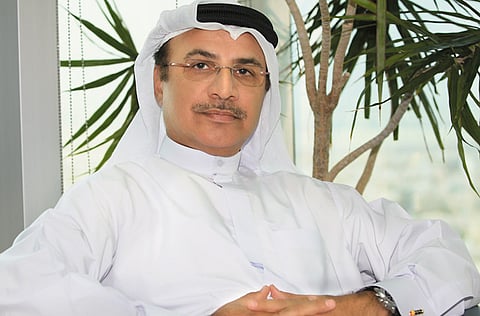
Would you very briefly tell us the essential history, membership profile and purpose of the Union of Arab Banks?
The Union of Arab Banks is an association that brings together 330 banks in the Arab world. It falls under the umbrella of the Arab League, and was established more than 35 years back, in 1974. It's one of the most active and energetic unions, with its activities spanning 22 Arab countries.
UAB organises seminars, different events and activities from Morocco all the way to Oman, depending on the nature of the issues. For example, during the latest economic crisis, several events have been held in Dubai because it's considered the financial hub and a prominent business centre, and Arab banks wanted such events to be held here. UAB is also geared towards providing solutions for certain issues directly related to financial sector and banking. Also, we discuss plans to improve the functions and performance of Arab banks [and] create a way to support and unify [them], for example, creating a unified data system that the member banks can tap to get information on various issues.
Outside the board there are various functions such as organising seminars, conferences, forums, bringing in different experts to discuss topics ranging from risks, credits, performance of staff, training staff on various issues related to the market and the banking system.
What are your hopes for cooperation among the Arab countries, in specific terms, and what was the particular importance of the Arab League's Kuwait Economic Summit last January in this respect?
In different capacities the members of the Board of Directors as well as the member banks are actually consulted when it comes to Arab economic and financial strategies, during the Kuwait Summit, for example.
Now when it comes to cooperation and integration among the banks, there is room for improvement. The UAB, because of its nature of being an active union, it is trying to pave the way for more integration. Integration is something beyond just a union. It has actually to do with the individual countries in the Arab world and, importantly, it has to do with the political issues and strategies.
It is a never-ending pursuit. Whether it is the Arab Union trying to push for more integration among the Arab countries or the Arab monetary system or the Arab Economic Cooperation Council that was established in 1960s, all are pushing for it from different angles.
The aim is to enhance Arab inter-trade and inter-economic cooperation, and it is not an easy task, honestly. I think for the future plans and strategies for the UAB, we have made [that] as our objective.
How has the international crisis of the past two years affected sentiment towards financial development and integration?
It has been mixed. In the Arab world, as you know there are 22 countries and [they] are not consistent and unified in their systems. Some of them have been affected a lot more than others. The closed economies have been less affected than the open ones.
There are, as you know, countries ranging from Syria, Libya, some north African countries as well, also countries such as Somalia and Sudan that face difficulties with international issues, boycotts, sanctions and wars.
You may contrast these countries with fully-fledged open economies such as the Gulf countries, Lebanon, and Egypt to an extent, and see the range between a total open economy, Western-like system to those still under the old traditional, socialist orientation, so to speak.
But the closed ones have started to open, slowly. Those I think are moving progressively towards a position where they will have a better banking system, better economic system — a lot healthier. Both ways, the Arab system has managed to come out OK. Those who exist in the open economies with a good base of capital, good liquidity supply, good regulation from central banks, a healthy economy, good income from oil and other resources have managed to get over the crisis. Interestingly, those under the closed economic system have managed to avoid the world economic crisis because of the nature of their system. But, post-crisis, they are opening up, and that is a good thing that will help in furthering integration of the Arab financial and economic system.
There is discussion of increased Arab investment within the Arab region, rather than in markets elsewhere that have suffered in the crisis, and are now subject to growth constraints. What could be the key features or examples of that idea?
When it comes to Arab banks investing in other countries, the UAB does not interfere. At the end of the day, expansion strategies are individual decisions of the countries and banks.
But, yes, UAB is always in support of Arab integration and expansion of Arab banks into various Arab countries. One of our aims is to have Arab countries actually integrate in their banking system to make them benefit from the huge captive market rather than operate in ‘silos'.
There are a lot of opportunities for Gulf banks to operate in the Levant, in Egypt or in North Africa or [broader] Africa — and vice versa. We don't see a lot of banks, apart from Lebanon, from North Africa, operating in the Gulf, simply because they are small. They need to be developed into bigger banking conglomerates.
So if we from the Gulf start to explore larger Arab countries, larger markets — expand, let's say, into North Africa — not only do we benefit going there, but in the process we also help their own banks adopt and develop more sophisticated banking systems. Even we can benefit — if an Egyptian or a Moroccan bank comes [to the Gulf] — because they definitely have experience from a different market orientation.
Could there be a consensus among Arab countries as to economic strategies and a common approach, including institutional arrangements? If so, how about the agreed relationship between public and private sectors?
On the board, we seem to have a broad consensus on our approach to Arab banks, discussing on the status of the banks and how to improve and develop and integrate all the different systems. This does not mean economic strategies in the Arab world are all consensual, on ways forward, on future plans. This is still far from being there in a tangible way.
That is because of different levels of development and also a lot of political issues affecting that. Again it goes back to the core issue of Arab integration, Arab cooperation, which has been the aspiration since the 1960s. But we haven't been able to put them in the form of concrete, implementable plans.
We keep talking about inter-Arab trade, or Arab banking, Arab cross-border cooperation, but it is not there yet. And, to be honest, even among the GCC countries we still have issues of borders, of [intra-region] trade. There is a need to work on these barriers.
With regard to the relationship between public and private sectors, it varies. I have seen lot more cooperation between private and public sector in the UAE than in the rest of the Arab world. Many Arab countries follow the traditional way of treating them as two separate sectors.
Here in the UAE we have seen precedents where the public and private have actually come very close. And not just banking but individual family companies and big corporations. Sometimes it stems from corporate social responsibility (CSR), cooperation of private sector and governments in big major projects. Let's say in Egypt, Algeria or in Morocco, it is there, but I think it is still small and in traditional ways.
What is the approach of the UAB towards money laundering, about which there have been concerns from the US and the West about Arab banks' attitude towards the issue?
I can assure you that I represent the UAE [in this respect], and I think the UAE has done a tremendous job in enforcing [anti-]money-laundering measures. I have seen it in our bank (Emirates NBD) and in other banks. It is extremely difficult to open an account unless the customer is verified, introduced and checked for the sources of money. This is on the banking side.
On the money exchange side and money transfers it's the same thing. I think we have had a very active proactive central bank that implemented and put in place very strong and stringent measures against money laundering. In the Arab world in every board meeting we discuss this issue.
I think due to international requirements — a lot of it is political — none of the Arab banks or Arab countries can afford to relax. Many of the American and European banks, I must say, have reached a great level in taking measures, but we are not any less [in our efforts], if not better. [Yet] in some areas it is extremely difficult to implement 100 per cent [protection], because in a country (as in the Gulf) where there are no taxes, you can't. Paying tax means you have to declare, and there is track record.
We want to be a free market where there's no restriction on people opening an account, bringing in money, taking out money. Also at the same time we want to be seen as practising a clean, healthy and ethical banking system — and I think we are.
It will [continue to] be pursued, and probably we will reach that level where no one can claim any shortcomings or have misgivings.
Also, in an open economy you have 50 different banks and those banks come from different orientations, different systems. Another factor is that a lot of people are competing for a lot of money.
Sometimes some banks naively place different countries on different watchlists without checking. Personally I would check every individual case, and not nationality. It is only decent to judge each account holder according to his or her own case, not because of where they come from.
What are the current and future priorities for the UAB?
I sensed in the last board meeting that in addition to us trying to work on enhancing and cementing the integration of the Arab banking system and the Arab financial sector, as well as adding to Arab-Western and Arab-European cooperation on various issues such as Basel 2 and Basel 3, the direction now is to cover the Asian market.
We shouldn't just concentrate on the West, [but] explore opportunities in India, China, Japan, the Far East, Malaysia, Indonesia [and] Singapore. Somehow this region has been neglected by the UAB; there are huge developments there. All along, the tendency has been to explore and cover the West. But from now on the focus will be more towards the East.


