Language matters in India: Learn many, but do not impose any
Linguistic identity continues to shape regional politics and national unity in India
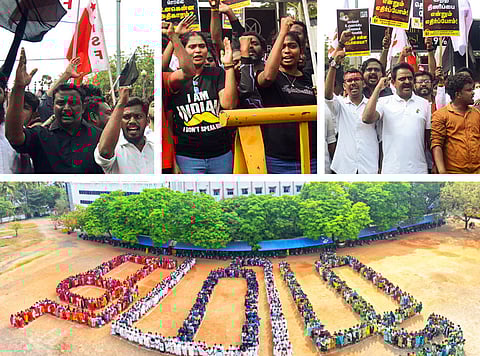
In a diverse and multilingual nation such as India, language policy remains a sensitive and consequential matter. The recent resurgence of language tensions in Tamil Nadu over Hindi demonstrates how linguistic identity continues to shape regional politics and national unity. This cultural flashpoint reveals deeper truths about India's federal structure and the delicate balance required to maintain national cohesion while respecting regional identities.
That is why the recrudescence of Tamil Nadu's language war against Hindi in the light of the Ministry of Education’s insistence on the implementation of the three-language formula in the state does not augur well. I have argued in the past that Hindi should not be imposed on any of the South Indian states, but especially not on Tamil Nadu. Because the very foundation of the state was based on a language movement.
Culturally harmful, politically disastrous
Have we forgotten that linguistic reorganization of states was the very foundation of post-independence decolonization and sub-nationalism? It is a genie that cannot be put back into the bottle. In our neighbourhood, Bangladesh also became an independent country on the basis of a language movement.
Given this background, the imposition - or even the appearance of the imposition - of Hindi South of the Vidhyas would be culturally harmful and politically disastrous. Both the ruling Bharatiya Janata Party (BJP) and its parent organisation, the Rashtriya Swayamsevak Sangh (RSS), should know this.
Trying to push Hindi down the gullets of unwilling or resistant linguistic groups in the five Southern states would only give a new fillip to anti-unity and anti-national forces. On the other hand, whether or not the Tamil Nadu government bans Hindi in state-funded schools, Hindi will grow in influence and acceptance.
Why? Not only because of commercial, but also cultural reasons. Hinglish--a combination of Hindi and English--is one of the fastest-growing languages in the world. It is widely understood and spoken all over India. Yes, even in Tamil Nadu. Also, whenever any Tamilian has to work outside their own state, they quickly realise that resisting Hindi, far from being an advantage, is an occupational hazard. That is why, paradoxically, whether or not the Tamil Nadu government implements restrictions on Hindi instruction in state-funded schools, Hindi will continue to grow in both influence and acceptance throughout the region.
Balanced approach
What is the way forward? The Centre and state must find balance, respecting choice as well as national unity. There is no need for Tamil Nadu politicians, especially from Dravida Munnetra Kazhagam (DMK), to fight Hindi tooth and nail as if it were an enemy. MK Stalin, the DMK supremo, claims that Hindi swallows up all the smaller contiguous tongues such as Maithili, Avadhi, Braj, Gharwali, Rajasthani, and so on.
But even worse is true of English. In the North East, for example, dozens of languages are vanishing daily as small tribal communities switch to English. Indeed, English is the world’s number one killer language from this point of view. But does that mean we shun it? On the contrary, more and more people are also learning English around the world because it is the means and the medium of international communication and commerce.
The lesson is simple. We should encourage the young to learn multiple languages - their regional mother tongue, Hindi for broader national communication, and English for international engagement. This multilingual approach enhances both individual opportunities and national cohesion. In addition, they may also learn another foreign language such as Mandarin, Spanish, Arabic, French, or German. Again, several private schools in Tamil Nadu are already doing this.
Unity from respect, not imposition
At the same time, the Centre should realize that unity emerges from respect, not imposition. When diverse communities feel their identities respected within the national framework, they willingly participate in building a shared future. When they perceive threats to their cultural distinctiveness, defensive postures emerge that can fragment national unity.
The central government must demonstrate sensitivity to regional linguistic identities by avoiding policies that appear to privilege Hindi over other constitutionally recognized languages. It should also encourage the learning of Southern languages in the Hindi belt, something that has never been done so far. Spending huge quantities of government funds on the promotion of Hindi has not paid dividends but only created another employment generation and enforcement agency which is more self-serving than unifying.
Let me end with a word of caution to our political leaders: do not politicise the language issue. It is a tinderbox, which if passions are inflamed, will blow up in your faces. Linguistic amity and mutual respect are essential for national unity. Languages happily coexist and commingle. Languages do not divide people; people divide languages.
Makarand R. Paranjape is a noted academic, author and columnist

