Experts say it's unhappily ever after for many Arab families
Most couples do not seek divorce due to children or because it's the right thing to do
Sharjah: Years ago, counsellors in the Arab world believed dysfunctional families were those where a couple had divorced.
However, after closely monitoring families in these communities, counsellors have realised that most are staying together unhappily ever after.
"We find that they stay together sometimes for 40 years but are still unhappy together," said marriage and family relations counsellor Dr Najwa Aref, based in Jordan.
A danger, counsellors say, is that these families are not noticed and it is difficult to understand why their children behave strangely, as these issues are not usually discussed.
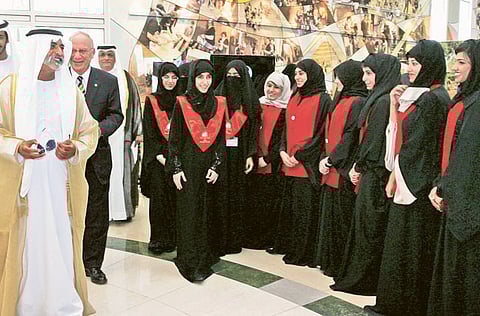
Dr Najwa was speaking at the Sharjah Women's College Counselling Arabia 2011 conference where experts, students and counsellors met to discuss very common issues experienced by Arab youth that are usually swept under the carpet.
Topics of discussion
Topics discussed included the ‘Boyat' phenomenon (cross-dressing among young women), illicit relationships, dysfunctional families, domestic violence, confidentiality and counselling, ‘Arabising' the counselling profession, mental disorders, divorce and the UAE family and substance abuse, among others.
"This year's conference is unique and maybe one of our strongest conferences because we are daring to touch taboo issues in our Arab societies," Fadwa Lkorchy, Sharjah Higher Colleges of Technology's counsellor and conference co-chair, said.
Dr Najwa added that families in the region tell themselves they are staying together for their children's sake or because what they are doing was the right thing.
"And this is a danger to the children because they think this is the right way to raise a family," she said.
She said couples who stay together despite being miserable do so because they have experienced the same style of upbringing and therefore repeat the manner in which they were raised.
The mother raises her children in a dysfunctional manner because "that's the only way she knows how to raise them...".
These unhappy parents also do not treat their children equally and can be overbearing or paranoid — wanting to know their children's every move.
Although talking about problems in the family is not as taboo as it used to be, people do not come forth willingly.
Lot of resistance
"It's not like other couples who say ‘we have a problem and we want to deal with it'. Either someone will force them to come and we face a lot of resistance," Dr Najwa said.
She said both husbands and wives consider the other person as the source of the problem and sometimes blame their children as the source of their problems too.
Shaikh Nahyan Bin Mubarak Al Nahyan, UAE Minister of Higher Education and Scientific Research, who delivered the keynote address commended the organisers for choosing Youth at the Crossroads as the conference's theme which he found "compelling, relevant, and timely".
"Many young people in our region find themselves at a crossroads, facing difficult questions about their future. They face many challenges in maintaining their identity and achieving their own self-development..."


