Positivity begins with poise
Padmasana, or the lotus pose, provides a platform from which other asanas are performed. It strengthens the body and calms the mind
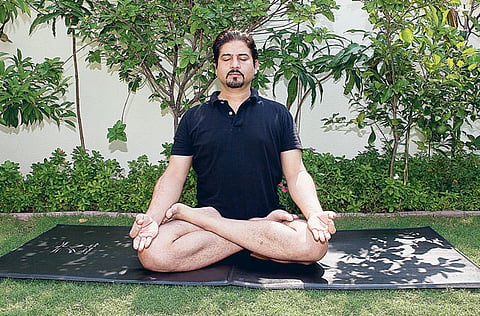
There are 8,400,000 postures in yoga, out of which four are meditative postures. The purpose of doing these asanas is not just to improve strength or flexibility but to achieve the stillness of mind or shunya samadhi (zero state of mind).
There are three types of asanas:
- Cultural asanas
- Asanas for relaxation
- Meditative asanas
Cultural asanas help achieve flexibility and strength to a level where one can sit in padmasana (lotus pose) for two and a half hours at a stretch. It is practised with the eyes closed.
Padmasana is a term derived from the Sanskrit word padma, which means lotus and asana, which means seat or throne.
Padmasana is a bridge between physical posture and pranayama (breath-control technique). It is a scientific technique that anyone can practice to attain a blissful state of mind.
While beginning the journey inwards, one starts with the first layer of the human body, also known as annamaya kosha, the physical self. Then comes vijjnamaya kosha (the ego body) and then anandmaya kosha (the blissful body).
So yoga is a scientific method to reach that blissful state of body where one attains good health and a happy mind.
Padmasana plays an important role, as it allows the body to be still for long periods of time.
Padmasana (lotus pose)
- Sit straight with spine erect and legs extended fully.
- Fold right knee, place right ankle on left thigh and pull left ankle over folded right leg. Place it on right thigh.
- Hold both feet and ease them further in towards groin, aiming for a balanced, symmetrical position.
- The head, neck and spine must be straight.
- Place hands on knees, with fingers in jnana mudra. Close eyes and breathe normally.
- Sit in this posture as long as you can. Many other asanas and yogic procedures can be practised while maintaining this pose as it is one of the basic postures.
Contradiction
Do not practise this pose in case you have an ankle or a knee injury. One should practise these poses with sufficient experience and guidance of a learned teacher.
Benefits of padmasana
This position is adopted to allow the body to be held completely steady for long periods of time. As the body is steadied, the mind becomes calm, the first step towards meditation. The flow of prana from muladhara chakra in the perineum is directed to sahasrara chakra in the head, heightening the experience of meditation. The posture applies pressure to the lower spine, which may facilitate relaxation.
The breath slows down, muscular tension decreases and blood pressure subsides. The coccygeal and sacral nerves are toned as the normally large blood flow to the legs is redirected to the abdominal region. Digestion may also be improved.


