Abu Musa residents: Iran trying to harass us from our homes
Hospitals, clinics and schools are in a state of disrepair as Iran resorts to 'harassment'
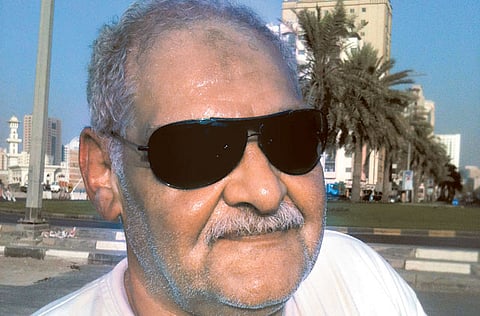
Abu Mousa: Iranian authorities have been attempting to push the residents of UAE’s Abu Mousa Island out of their home.
Hundreds of Emirati citizens and expatriates living in Abu Mousa Island said that Iranian authorities were resorting to harassment, interfering in every detail of their day-to-day lives, in an attempt to make them vacate this controversial strip of land.
On November 30, 1971, Iranian forces seized the Greater and Lesser Tunb. A Memorandum of Understanding (MoU) was already in place between Iran and Sharjah to allow for both authorities to administer part of the island of Abu Mousa. The island is a 12.8 km² stretch of land, located in the Arabian Gulf, in front of Sharjah lying in a curve and leading up to the entrance of the Straits of Hormuz.
Since the early 1990s, Iran has been in breach of this MoU which was signed only under the threat of invasion.
The residents of Abu Mousa claim that Iran has been interfering with free access, building military installations, placing military equipment and moving in settlers whose presence has affected the demographic structure of the population of Abu Mousa.
The number of Iranians living on the Island is triple the number of Emiratis and expatriates. There were allegations that Iranian authorities were not allowing the Sharjah flag to be hoisted on the island.
Furthermore, Iranian authorities have banned building materials, educational and even medical equipment from being available on the island.
“We have to wait for at least six months to import a sofa, or even a chair before approval is granted by the Iranian authorities,” said Khalfan, an Emirati, residing in Abu Mousa.
Umm Rashid, a 55-year-old Emirati mother of five said school, clinics, mosques and the grocery were collapsing. “There is no hospital here, we only have a small clinic which was built 40 years ago near the shore,” she said, adding that Iranians did not allow for daily essential items.
“If a woman is pregnant she should deliver her baby in Sharjah because there is no place to give birth,” Rashid stated. Her daughter Noora, who is married and lives in Abu Mousa, said that food stocks were limited.
“We cannot cook emirati meals because of the shortage of food,” she said. According to her, Iranians even determined what type of food and groceries could come on the island.
Last year, a mother give birth to a premature baby named Habiba and since there was no hospital the woman’s father took her to an Iranian hospital on the island. “The Iranian authorities tried to force the Egyptian father of the baby to have a birth certificate stating that the birth place would be Iran,” said Noora.
The baby’s grandfather refused to take the birth certificate issued from Bandar Abbas. Habiba’s family were unable to procure a birth certificate, or a passport, till she was four months old. “It takes four months to issue a birth certificate from Sharjah,” her mother said. Habiba was the first baby to be born on Abu Mousa.
Maryam Salem, an Emirati student, indicated that people going to the island from Sharjah were subjected to repeated security checks. “They know our name one by one,’ he said.
Mohammad Khalifa Bu Ghanim is the ‘Wali’, or Mayor, of Abu Mousa. His duty is to ensure the well being of the island’s residents. He represents the interests of the Sharjah government.
Ahmad Salem, a 70-year-old Emirati, said that in the past the UAE flag was allowed to be hoisted, but this was stopped during the war between Iran and Iraq. “If we want anything Mayor Bu Ghanem approaches the ‘Iranian Formandariya’ which is the Iranian office in order to obtain permissions for us,” he said.
Salem Salem, a 58-year-old Emirati, endorsed the presence of many Emirati families on the island. “If we want to bring anything such as a fridge, TV, AC, or even cement for the school’s maintenance we will need permission from the Iranian authorities. This could take more than six months.” According to him, “Iranians do not allow receivers on the island claiming that it was against Islam. We get vegetables and food from the grocery everyday.
We have vehicles in Abu Mousa, we bring them from the used car markets in Sharjah and Ajman. The steering for these cars is on the right hand and it comes without number plates, or registration. We obtain permission prior to taking them with us. We are also living without internet, or telecommunications,” he said. “There are two doctors, one nurse and one laboratory nurse in the island’s clinic. We have a power station, a small municipality building and a water desalination station.”
Salem endorsed the sentiment that Iranian authorities were harassing residents. According to him, “Around 450 people live on Abu Mousa. The existing boat ‘Khater’, which is old, will be replaced by new one. There is also a small boat for emergencies,” he said.
His Highness Dr Shaikh Sultan Bin Muhammad Al-Qasimi, member of Supreme Council and Ruler of Sharjah, had decreed that a boat should link the residents of Abu Mousa island to their homeland in the UAE.
According to Salem, “Iran is not allowing new expatriates on the island.”
Abulfatah Ahmad Tabit, a 67-year-old retired Palestinian, lived in Abu Mousa from 1969-1976. He remembers the day when Iranian forces occupied a small part of the island.
“It happened in 1971. The day the British left the island, a small number of Iranian military men came to stay on a small hill,” he said. “We could see them from a distance.”
Ibrahim Mustafa Khamis, a 60-year-old Egyptian, is living in Abu Mousa since 1979. He is the first secretary at Abu Mousa School which has a staff of 27 teachers.
“My son is a policeman at the Abu Mousa police station,” said Khamis, the father of one boy and three daughters. “My son is married with one daughter who was born here eight months ago. After living here for two decades the island is my home. We have the Abu Mousa School, Abu Mousa medical clinic, Abu Mousa police station, power generation station, municipality and grocery. In addition, we have three mosques. Every structure is old and close to collapse.
“The school is not made from cement but readymade walls and ceilings which was renewed 35 years ago. It lacks simple facilities, but the Iranian authorities are not allowing us to develop anything.
“We are trying through all means available to maintain our school which was built 46 years ago. There are 55 students from different nationalities. Earlier we had 360 students, but some families moved to Sharjah when their children finished high school.”
According to Khamis, Iranian military personnel stayed on a small part of the island till recently. “We used to see the Iranians from a distance. Since the past 10 years we have witnessed Iranian families coming in. They have built a school and a hospital,” he said.
The school is the back bone of the island and the Iranians are aware of that. If a teacher retires they will not allow another one to come.
Khamis said, “We are used to this place. We cannot live without Abu Mousa. The social life is wonderful. We are one family, in happiness and in sorrow – expatriate and emiratis.”
Zakiya Khalid, 60, from Palestine, lived in Abu Mousa from 1970 till 1975.
“My husband lived there since 1969. There were no Iranians then, but thousands of Emiratis. In 1971, we were told that a few Iranian military personnel came to the island and settled on a small hill.”
According to Zakiya, those people looked more like salesmen rather than military forces. She stated that the Iranians used to bring textile, clothes, pistachio and other products to sell. According to her there were many houses, groceries and thousands of Emiratis and expatriates on the island.
“The Sharjah government used to send a helicopter in case of emergencies.
There was no water and electricity. We used a lantern called the ‘fanar’ and slept in the backyard during summer. In 1975, we got the first air conditioner in Abu Mousa.”


