Women urged to believe in themselves
Emirati intellectual says benefits of education far outweigh women's cosmetic concerns
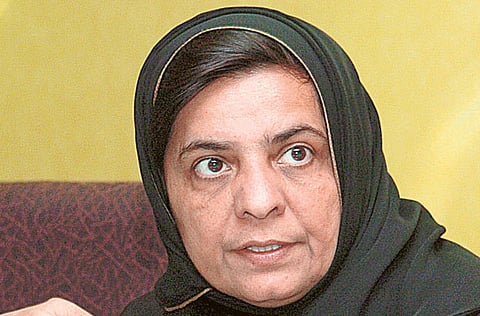
Dubai: Women are empowered when they are able to hold their heads high and believe in themselves, their capabilities and education, a renowned Emirati intellectual said.
Real empowerment is when a woman knows her worth, said Dr Hessa Lootah, Associate Professor at UAE University, speaking on the occasion of International Women's Day at an event titled ‘Women's Empowerment'.
The event was organised by the Dubai Foundation for Women and Children and the Fair and Lovely Alliance at Zayed University on Tuesday.
The event included role playing sessions on the impact of violence against women and the contribution of women towards the development of sustainable families and societies, and a panel discussion on the process of empowering women by Dr Hessa and Dr Mona Al Bahar, deputy chief executive officer of Care and Community Services at the foundation.
Dr Mona advised women suffering from physical or psychological damage to resort to specialised establishments instead of seeking the involvement of family members.
If a woman is subjected to a repetitive pattern of violence, she must seek help from specialists because a violent man will be battling psychological problems, which need the help of a specialist, she said, adding that the woman's personal and family efforts would not solve the problem.
Dr Hessa said Arabic culture heaped scorn on men engaging in violence against women.
She added that the question was how to invest in Arabic culture to produce results? She said while the right atmosphere existed, the methods were not very clear. She talked about the importance of determination and her own experience when she was taken out of school by her family at the age of 11, saying she pursued education at all costs until she earned her doctorate.
Skin-deep culture
Following the event, Dr Hessa told Gulf News that young women now have different interests and said many of them focused mostly on their looks.
"I don't expect all women to be leaders, and I know that while content is very important, you need to have the right container for it, which is not always the case. If a person doesn't feel the joy of knowledge and reading and lives in a culture that promotes shallow beauty, there isn't much you can do, especially if their character was damaged at a young age," she said.
Women face strong campaigns — whether from the media or education sectors — which try to cancel part of the woman's character by promoting Western beauty standards among Arab women, for example.
This has two sides, she said. The first is promoting imperial values and the other is promoting commercial commodities such as creams to make one's skin lighter and fairer, coloured contacts lenses and cosmetic surgery.
Dr Hessa said this promotes low self-esteem among women because they end up feeling their looks are not accepted, and ultimately see themselves as being rejected.


