GCC reconciliation summit on right course
A lot more work is necessary to catapult parliamentary life to a different level
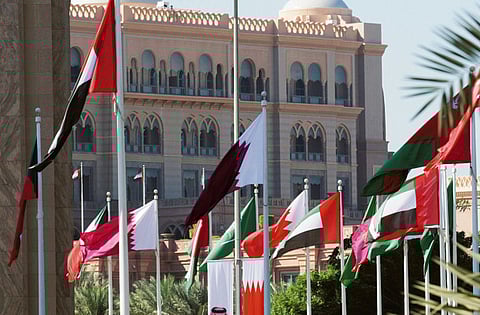
The 35th Gulf Cooperation Council (GCC) Summit, which will convene on Sunday in Doha, Qatar, will long be remembered for its dedication to reconciliation at a time of epochal changes throughout the Arab World. Although member-states continue to struggle with the very idea of union, GCC leaders are amply aware that their own futures — as well as the realisation of whatever aspirations the people of the region harbour — depend on their dedication to that inevitable goal, which is neither easy to do nor risk-free. Will this objective be reached?
Over the years, three broad concerns have preoccupied GCC rulers — Iran, Iraq and extremism — that motivated them to create the organisation in the first place, even if various disagreements introduced irritating policy differences. There were other worrisome issues, including the 1971 Iranian occupation of three Emirati islands, the Soviet invasion and occupation of Afghanistan, the spillover effects of the Iran-Iraq War, the wars for Kuwait and Iraq, complicated challenges in Yemen, Lebanon’s unending conflicts and the perennial question of Palestine — all of which mobilised Gulf officials long before the post-2010 Arab Uprisings toppled regimes from North Africa to the Levant. Still, of the three principle inter-related concerns, none were as dangerous and potentially devastating as the rise of extremism that promises to obliterate traditional societies that are the pride and joy of conservative Arab Gulf monarchies.
Earlier this year, GCC states engaged in what was a rare public quarrel, when Bahrain, Saudi Arabia and the UAE pulled their ambassadors from Doha after they accused Qatar of violating an agreement among GCC member-states not to interfere in the internal affairs of other countries. Not everything that troubled the GCC was aired out although discrepancies over the naturalisation of certain citizens, Qatari support to the Muslim Brotherhood in Egypt (which Riyadh and Abu Dhabi view as a threat to their own authority and have banned the group as a terrorist organisation), alleged unfavourable reporting done by the Qatar-based and funded Al Jazeera television network and the financial and military aid granted to various Syrian opposition movements, were all part of the long-list of complaints.
Mercifully, the rift ended after an extraordinary emergency summit held under the auspices of King Abdullah Bin Abdul Aziz of Saudi Arabia on November 16, 2014, which resulted in the Riyadh Complementary Arrangement that emphasised what really mattered: More unity of the GCC to better protect common interests precisely to ensure the future of their people.
The “Arrangement,” about which little has been known so far, nevertheless, opened a new page in intra-GCC ties, as it underscored the need to think in terms of joint action and to gradually move towards a bold and cohesive Gulf entity. To his credit, that the Saudi ruler secured a pledge that all six would henceforth distance themselves from solo performances to score points against each that, to say the least, was a major accomplishment. He managed to persuade those present — the sole absentee was Omani Foreign Minister Yousuf Bin Alawi Bin Abdullah, who was in Tehran on a secret mission that dealt with ongoing negotiations over that country’s nuclear programme with leading western powers — that GCC states had no choice but to close ranks to protect themselves. It was, the Saudi affirmed, a matter of survival, something everyone understood.
It is interesting that after a seven-year hiatus, the eighth meeting of the heads of the GCC legislative councils was held in Doha a few days ago, where delegates discussed the importance of parliamentary cooperation to push forward the process of integration as well. Truth be told, legislative life in an effective parliamentary set-up is still a work-in-progress throughout the Gulf region, although the Kuwaiti and Omani experiences bode well for the other members. Recent elections in Bahrain for the Lower House, along with significant improvements in the Saudi Majlis Al Shura (Consultative Council), are clearly noteworthy as are the upcoming elections in both Qatar and the UAE next year. Still, a lot more work is necessary to catapult parliamentary life to a different level, one where ideas can be debated to further strengthen GCC states. That will be a measure of the progress that senior leaders assign themselves. That will be a sign that major political lines — union, military cooperation, anti-extremism coordination, financial stability, etc — are comprehensively debated among decision-makers, elites and the public at large. That will be a confirmation that the GCC is truly mature and ready to embark on the next steps towards effective unity.
GCC states will seal their reconciliation on Sunday and embark on a fresh chapter in the quest for union that, inter-alia, will require additional commitments on political, economic, social and military ties that, naturally, will be unsettling as so many issues are tackled at once. Of course, differences will continue to exist though few ought to doubt that the people of the Arabian Peninsula will shy away from the necessary political evolution that alone can help preserve and protect them over the long term. Everything else is tangential.
Dr Joseph A. Kechichian is the author of the forthcoming Iffat Al Thunayan: An Arabian Queen, London: Sussex Academic Press, 2015.


