Euphemisms muddle the brain, but assuage the heart
Across cultures, the need to prevent hurt feelings or embarrassment justifiably takes precedence over clarity
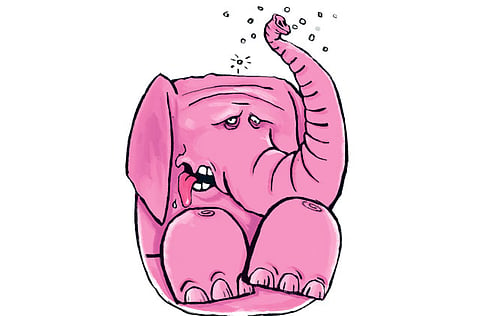
Short sharp terms make big points clear. But people often prefer to soften their speech with euphemism: a mixture of abstraction, metaphor, slang and understatement that offers protection against the offensive, harsh or blunt.
In 1945, in one of history's greatest euphemisms, Emperor Hirohito informed his subjects of their country's unconditional surrender (after two atomic bombs, the loss of three million people and with invasion looming) with the words: "The war situation has developed not necessarily to Japan's advantage."
One way to categorise euphemisms is ethical. In Politics and the English Language, George Orwell wrote that obfuscatory political language is designed "to make lies sound truthful and murder respectable". Some euphemisms do distort and mislead; but some are motivated by kindness.
Another way to typify them is by theme. A third — and a useful way to begin — is by nationality. A euphemism is a kind of lie, and the lies people and countries tell themselves are revealing.
American euphemisms are in a class of their own, principally because they seem to involve words that few would find offensive to start with, replaced by phrases that are meaninglessly ambiguous: bathroom tissue for lavatory paper, dental appliances for false teeth, previously owned rather than used, wellness centres for hospitals, which conduct procedures not operations.
Some Chinese euphemisms also stem from squeamishness. Rather than inquire about a patient's sex life, doctors may ask if you have much time for fang shi (room business). Online sites sell qingqu yongpin, literally ‘interesting love products'.
The British are probably the world champions of euphemism. The best of these are widely understood (at least among natives), creating a pleasant sense of complicity between the euphemist and his audience.
British newspaper obituaries are a rich seam: nobody likes to speak ill of the dead, yet many enjoy a hint of the truth about the person who has ‘passed away'. ‘Austere' and ‘reserved' mean joyless and depressed. Someone with a foul temper ‘did not suffer fools gladly'. The priapic will have ‘enjoyed female company'; nymphomania is ‘notable vivacity'. Uncontrollable appetites of all sorts may earn the ultimate accolade: ‘He lived life to the full'.
Such euphemisms are a pleasant echo of an age when private lives enjoyed a degree of protective discretion that now seems unimaginable in Britain. That left room for ‘a confirmed bachelor' (a homosexual) or someone ‘burdened by occasional irregularities in his private life' (leaving the reader guessing whether the problem was indecent exposure, adultery or cross-dressing).
Writing about dead people is a question only of taste, because they can't sue. Describing the living (especially in libel-happy jurisdictions such as England) requires prudence. ‘Thirsty' applied to a British public figure usually means heavy drinking; ‘tired and emotional' (a term that has moved from the pages of Private Eye, a satirical magazine, into general parlance) means visibly drunk.
‘Hands-on mentoring' of a junior colleague can be code for an affair, hopefully not coupled with a ‘volatile' personality, which means terrifying eruptions of temper. References to ‘rumbustious' business practices or ‘controversial', ‘murky' and ‘questionable' conduct usually mean the journalist believes something illegal is going on, but couldn't stand it up in court if sued.
British style
In the upper reaches of the British establishment, euphemism is a fine art, one that new arrivals need to master quickly. A civil servant warning a minister that a decision would be ‘courageous' is saying that it will be career-cripplingly unpopular. ‘Adventurous' is even worse: it means mad and unworkable.
A ‘frank discussion' is a row, while a ‘robust exchange of views' is a full-scale shouting match. (These kinds of euphemisms are also common in Japanese, where the reply maemuki ni kento sasete itadakimasu or I will examine it in a forward-looking manner — means something on the lines of ‘This idea is so stupid that I am cross you are even asking me and will certainly ignore it'.)
A thematic taxonomy of euphemism should have a category devoted to commerce. Business euphemisms are epitomised by the lexicon of property salesmen. A ‘bijou' residence is tiny (it may also be ‘charming', ‘cosy' or ‘compact'). A ‘vibrant' neighbourhood is deafeningly noisy; if it is ‘up and coming' it is terrifyingly crime-ridden, whereas a ‘stone's throw from' means in reach of a powerful catapult.
Conversely, ‘convenient for' means ‘unpleasantly close to'. ‘Characterful' means the previous owner was mad or squalid. ‘Scope for renovation' means ‘decrepit'; ‘would suit an enthusiast' means ‘a ruin fit only for a madman'.
But the richest categories would centre on cross-cultural taboos such as death and bodily functions. The latter seem to embarrass Americans especially: one can ask for the ‘loo' in a British restaurant without budging an eyebrow; don't try that in New York.
Lavatory and toilet were once euphemisms themselves; they in turn were replaced by water closet (WC) and the absurd ‘rest room'. British English encourages lively scatological synonyms: foreigners told that someone is ‘taking a slash' or ‘on the bog' may be mystified.
Orwell was right: euphemisms can be sneaky and coercive. They cloak a decision's unpleasant results, They make consequences sound less horrid — as, chillingly, in ‘collateral damage' for ‘dead civilians'.
Politically correct euphemisms are among the most pernicious. Good and bad become ‘appropriate' or ‘inappropriate'. A ghastly problem becomes a less alarming ‘challenging issue'. Spending is investment; cuts are savings. ‘Affected by material error' (in European Union parlance) means money stolen from the budget.
But euphemisms can also be benign, even necessary. Sometimes the need to prevent hurt feelings justifiably takes precedence over clarity. Saying that dim or disruptive children have ‘special needs', or that they exhibit ‘challenging behaviour', does not make them easier to teach — but it may prevent them being teased or disheartened. ‘Frail' (of an old person) is nicer than doddery or senile. Euphemisms may be a species of lie, but some of them are white.
A culture without euphemism would be more honest, but rougher. Here's a New Year's resolution: scrub your conversation of euphemism for a day. The results will startle you.


