Ending Kuwait’s gridlock politics
The ruling elite in Kuwait should embark on bold initiatives and reforms
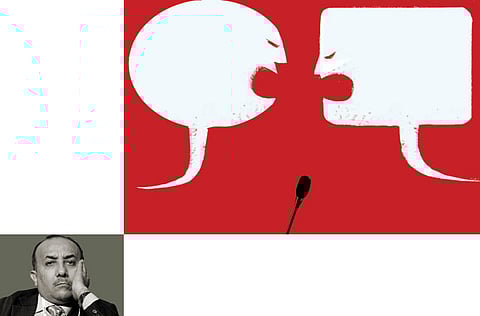
Once again caught in the high drama of Kuwaiti politics, Kuwaitis and those who are interested in Kuwait’s political system — that used to be quite awe-inspiring — have been subjected to another chapter of high-stake politics, as the Kuwaiti Constitutional Court, in a landmark case, rejected the government’s request on the constitutionality of the 2006 electoral district law. The same Court, 100 days ago, in another unprecedented verdict that shook the whole political system and dealt a major blow to the sitting parliament, which was elected on February 2 this year, ruled that the parliament was elected through constitutional, procedural and technical flaws. Following the ruling, the new majority took to the streets, insisting that the only path to amend the electoral districts was through the new, elected parliament and not through an Emiri decree. Furthermore, the opposition that lost its majority disputed the Court ruling of reinstating the defunct and controversial 2009 parliament that was marred by bribery and graft charges and demanded its suspension and sought snap polls.
The Constitutional Court ruling, rejecting the government petition on the constitutionality of the electoral districts, reaffirmed the resilience of the Kuwaiti political system, the judiciary’s independence and separation of powers. The ruling restored much needed hope to the Kuwaiti political system and polished its muddied image after years of bickering, infighting and gridlock politics that brought Kuwait and its development plans to a screeching halt.
The endless acrimony between the two branches of the political system has disillusioned Kuwaitis and outsiders — observers and people who have for long admired the robust Kuwaiti political system. Most complaints about Kuwait were heard in other GCC and Arab capitals that used to be in awe of Kuwaiti politics.
At times, this impasse seems to be politics as usual. I have inked numerous articles in this column over the last few years, decrying the failing image of the Kuwaiti model as a harbinger that inspires and could be emulated by others.
But the endless political crises have taken their toll on the Kuwaitis who are disgruntled by the political impasse. The repeated crises, the acrimonious relations between the two branches of the political system, the crumbling infrastructure, the poor services for a rich country like Kuwait that has been registering budget surpluses for years, have finally reached a tipping point.
The argument that Kuwait could do much better than this and the call for sound fiscal responsibility and political accountability to rectify the mismanagement of the affairs of the country have reached a fever pitch because of the stalled development. The voices of protest and demands by the masses are getting louder and bolder. Disgruntled people now gather regularly at “Irada Square”, the garden across the National Assembly building, in a show of defiance, emboldened by the waves of Arab Spring.
Kuwait did not need the Arab Spring to uplift it and bring it into representative politics. Kuwaitis have been living their own spring for decades. The Kuwaiti system of consensus and consultation between its rulers and ruled has been the hallmark and it sets Kuwait apart from its regional neighbours. That was reflected in the 1921 Consultative Council and the 1938 Legislative Council and a host of elected councils between the 1930s and the 1950s, until Kuwait’s independence ushered in the first written constitution and the first elected parliament. Thus, Kuwaitis who have been going to the polls for the last 50 years, practice representative politics and enjoy freedoms, accountability and checks and balances and believe it is their inalienable right to have these rights and practices. Although Kuwaitis practice a reverse adage of the famous saying: “No taxation without representation”; where Kuwaitis have “representation without taxation”, they nevertheless, continue to demand more rights and freedoms, because it is grounded in their political practices for centuries.
Kuwait was shaken to its core and traumatised, two decades ago, by the invasion and occupation of Saddam Hussain’s forces. That left an indelible mark and reduced Kuwait from a country that used to punch its weight to a country that looks inwards to safeguard its people and fortune in a precarious region.
The Kuwaiti political paradigm — that used to inspire many as the leader in the Gulf region with its recognised and much admired pioneering soft power in politics, arts, literature, media, theatre and sports — seems to have reached its final stages. At times, the endless rounds of infightings between the maverick feisty parliament and much cowed government, has convinced many in Kuwait and outside that Kuwait has passed its pinnacle stature. Emirati writer Sultan Al Qasemi seems to be reflecting such a sentiment. In his latest column in Open Democracy, The Black Swan of the Gulf, he argues: “Kuwait’s celebrated but dysfunctional parliament is an experience to emulate and it has silenced even some of the biggest advocates of political reform in the region. This has become a classic chicken-or-egg dilemma. Introduce political reforms and watch economic development stagnate a la Kuwait.”
The Constitutional Court’s ruling, rejecting the government’s petition over the electoral districts, has averted a crisis, but has not solved the real cause of the gridlock or addressed a way out of the political stalemate. As Kristin Coates Ulrichsen, a research fellow at the London School of Economics, put it in his recent article, ‘Kuwait’s uncertain path’, in Foreign Policy magazine: The court ruling does not “suggest a pathway for reforming the dysfunctional relationship between the government and parliament that lies at the root of much of the recent instability”.
For Kuwait to overcome the dysfunction in its political system, it needs to take a bold decision over the vexing problems related to the future direction of the country and by moving towards consensual politics and a parliamentary system. Considering the gung-ho opposition and the energised, emboldened youth movement, the ruling elite needs to engage in open dialogue with the opposition to address their demands. Therefore, the ruling elite in Kuwait should embark on bold initiatives and reforms to set Kuwait on the right path. This, hopefully, will put an end to the politics of gridlock and restore confidence in Kuwait’s much-cherished model of a resilient harbinger for others to emulate and build upon.
Professor Abdullah Al Shayji is the Chairman of the Political Science Department, Kuwait University. You can follow him on Twitter at www.twitter.com/docshayji


