A third Intifada is quite possible
Violent attacks by Israeli colonists against Palestinian towns and villages in the West Bank have escalated
Repeated Israeli desecration of Muslim religious sites in occupied East Jerusalem has led to a wave of anger amongst Palestinians in the Occupied Territories. The situation is so tense that the United States Secretary of State, John Kerry, has decided to take the trouble to visit Israel-Palestine in an attempt to prevent a likely third Palestinian Intifada (uprising).
A number of factors converged to form a state of heightened Palestinian disenchantment with the status quo, leading to the latest escalation in confrontations with the Israeli occupation.
The realisation of Palestinian national aspirations now seems increasingly unlikely. Lingering division amongst the Palestinian factions has made the situation even worse. Furthermore, in the face of the Israeli intransigence, the options available to the Palestinian National Authority (PNA) are becoming very limited. Indeed, the PNA did take some retaliatory measures against Israel, following the collapse of the US-led efforts to reach a framework agreement that aimed to end the occupation and usher in a Palestinian state before 2017. These measures included the application for a formal Palestinian membership of the Internatio
nal Criminal Court (April, 2015). This step has, theoretically at least, given the Palestinians the ability to bring charges against Israeli officials for war crimes committed in the West Bank and Gaza Strip.
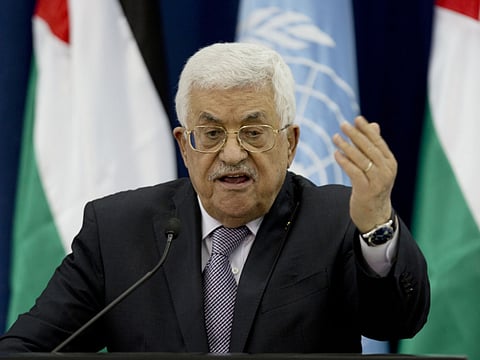
Given the crescendo of Israeli violence and attacks on the Muslim holy sites in occupied Jerusalem, however, Palestinians had expected Mahmoud Abbas to announce further measures during his speech at the opening of the 70th session of the United Nations General Assembly (UNGA). But Abbas failed to meet expectations that he would use the UNGA speech to threaten an annulment of the Oslo Accords, or at the very least declare that security cooperation with the Israeli occupation would end if Israel does not change it behaviour.
Just as the prospects of a political, negotiated solution to the Palestinian question dwindled, violent attacks by Israeli colonists against Palestinian towns and villages in the West Bank increased. Data from the Palestinian News and Information Agency shows that there were no fewer than 282 attacks by colonists during the first eight months of this year. One such incident that stood out for its brutality was the arson attack on the Dawabshe family in the village of Douma on the outskirts of Nablus, which killed a toddler and his parents, leaving the only living member of the family, a four-year-old boy, still lying in hospital, suffering from severe burns to his small body. Israeli colonists have also attacked Palestinians in the West Bank through hit-and-run car attacks, throwing stones on Palestinian vehicles and defacements of Palestinian property. All of these attacks have been carried out in an environment of complete impunity. In the case of the arson attack on the Dawabshe home, for example, the alleged suspects were released from Israeli detention within 24 hours of their arrest. By contrast, the Israeli authorities in the West Bank have had no problem in summarily executing several Palestinian activists, using the pretext that they were planning attacks on Israeli checkpoints. The Israeli government has also encouraged incursions by Israeli soldiers, colonists and extremist rabbis into Al Haram Al Sharif, with 45 such incidents taking place between July and September. In one incident, Israeli colonists destroyed the centuries-old windows and doors to the seventh century mosque.
These Israeli policies have given rise to acts of resistance by individual Palestinians, acting out of patriotism — especially in occupied Jerusalem. InspGreeired by the latest spate of lone-wolf acts of rebellion within the municipal boundaries of the old city, Palestinians in towns and cities across the West Bank have also taken up arms against Israeli colonists. In addition, there have been mass public protests at flashpoints outside Israeli colonies. This phenomenon has been particularly pronounced in towns and cities that have a large colonist presence on their outskirts — such as Ramallah, Nablus, Tulkarem and Jenin. Notably, these popular protests in occupied East Jerusalem and the West Bank have also been taken up by Palestinians living behind the “Green Line” (i.e. Palestinians from 1948 areas), in towns such as Jaffa, Nazareth and Taybeh, who are equally incensed by attacks on Palestinian sites in occupied Jerusalem.
In response, the Israeli government has become increasingly ruthless in its efforts to crush the popular Palestinian resistance. These policies include expedited procedures to demolish the family homes of Palestinians involved in resistance actions; the increase of military and police forces in occupied Jerusalem; and the interrogation of bystanders, such as the occupied Jerusalem shopkeepers questioned by Israeli authorities, following the stabbing of two Israeli colonists.
But these measures are likely to produce the opposite effects and increase public anger. And if Kerry fails to open a small window of hope for a possible political settlement during his upcoming visit to the region, we may well see a third Palestinian Intifada.
Dr Marwan Kabalan is a lecturer in media and international relations, Faculty of Political Science and Media, Damascus University, Syria. He can be contacted at: makabalan@gulfnews.com


