Sudan army inflicts major blow on rebels
Head of Darfur insurgents' group ‘killed'
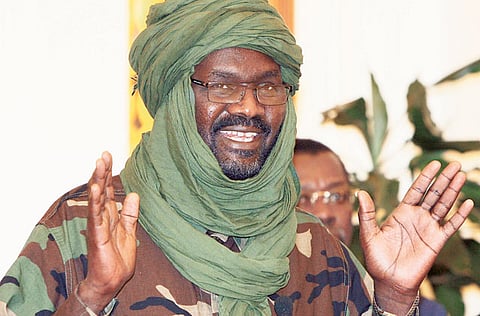
Khartoum: The Sudanese army said it killed Khalil Ebrahim, the leader of the main Darfur rebel group, during fighting yesterday, west of the capital Khartoum, touting the death as a key victory over the rebels who had rejected a peace deal with the government.
The army said Ebrahim and several of his associates died during a military offensive in the North Kurdufan state. The attack was in retaliation to a rebel attack on Saturday, which authorities said had killed an undisclosed number of civilians.
An army statement, carried by the official SUNA news agency, said Ebrahim died in Wad Banda, an area in North Kurdufan about 440 miles (700 kilometres) west of Khartoum.
Ebrahim's group, JEM, could not immediately be reached for comment or confirmation of the Sudanese army claim.
Fighting in the area had flared up in the past days. On Saturday, the Sudanese army said the rebels from Darfur attacked three locations in neighbouring North Kurdufan, killing an unspecified number of civilians in an area where government forces were not present. JEM has not claimed responsibility for Saturday's attack, but in 2008, it was behind a large-scale attack on the capital.
Retreat to South Sudan
The military said it responded yesterday to the rebel attacks, killing Ebrahim with a group of associates as they were retreating, allegedly toward South Sudan, which in July seceded from Sudan and became the world's youngest country.
"The army cut all paths for the group as it was retreating and trying to cross into South Sudan to reorganise it forces," said Sudanese army spokesman Colonel Khalid Al Sawarmy Sa'ad. "Our armed forces were able to kill rebel Khalil Ebrahim along with some of his associates."
While Ebrahim's death is likely to be a significant blow to JEM, it is unclear what wider ramifications it would have in Darfur — Sudan's vast, mostly desert western region — or on the array of other Darfur rebel groups.
Darfur has been in turmoil since 2003, when ethnic African rebels accusing the Arab-dominated Sudanese government of discrimination took up arms against it. The Khartoum government is accused of retaliating by unleashing Arab militias on civilians — a charge the government denies.
Another prominent Darfur rebel group, the Sudan Liberation Movement, also was not part of the deal signed last year with Sudanese President Omar Al Bashir. The agreement, signed in Qatar, meant to provide a basis for a cease-fire, power sharing, equal distribution of wealth and compensation for displaced people.


