Ministers demand swift action
Arab League discusses measures to end bloodshed in country
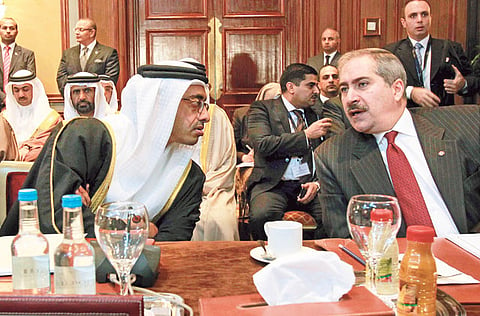
Cairo: Arab ministers called on Sunday for swift Arab and international action to end bloodshed in Syria after Russia and China blocked a Western-backed Arab peace plan at the UN Security Council.
Arab ministers met in Cairo to revive diplomatic efforts after the Arab initiative that called for President Bashar Al Assad to step aside was stalled by the double veto in New York.
As part of the Arab efforts, Tunisia said it would host the first meeting on Febraury 24 of a "Friends of Syria" contact group made up of Arab and other states and backed by Western powers.
"How long will we stay as onlookers to what is happening to the brotherly Syrian people, and how much longer will we grant the Syrian regime one period after another so it can commit more massacres against its people?" Saudi Foreign Minister Saud Al Faisal asked ministers at the start of the Arab League session.
"At our meeting today, I call for decisive measures, after the failure of the half-solutions," he said. "The Arab League should ... open all channels of communication with the Syrian opposition and give all forms of support to it."
Arab League chief Nabeel Al Araby said he was proposing a new joint Arab-UN monitoring team to Syria, replacing an Arab mission beset by problems since it began work in Dec-ember. The Sudanese general leading the Arab observers quit yesterday.
"I won't work one more time in the framework of the Arab League," General Mohammad AL Dabi, whose appointment had been criticised because of Sudan's own rights record, told Reuters.
"I performed my job with full integrity and transparency but I won't work here again as the situation is skewed," he added.
Ministers from Gulf Arab states, which have been leading the drive to end Al Assad's bloody 11-month crackdown on protests against his rule, met separately earlier.
A source who attended the Gulf meeting said the ministers had discussed recognising the opposition Syrian National Council and would propose that Arab states each take such a step.
Gulf states announced last week that they were recalling their ambassadors from Syria and expelling Syria's envoys. Libya and Tunisia, both countries where popular revolts toppled authoritarian rulers last year, have done likewise.
Observers
The Gulf ministers also discussed "terminating the [Arab observer] mission in its existing form", the source said.
Criticised by Syria's opposition for failing to halt violence, the 165-strong Arab mission suffered from internal dissent, as well as logistics and training problems.
Al Araby told Reuters last week that any new mission to Syria would have to be bigger and better equipped, with a different mandate with international support. The idea of a joint Arab-UN mission has won only a tepid response from UN diplomats.


