Colvin was known for her courage behind front lines
Her final dispatch was from a cellar in Homs
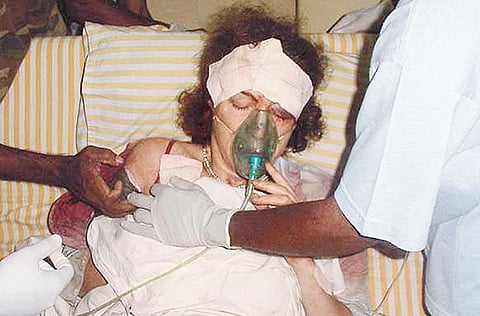
London Respected American journalist Marie Colvin, who spent decades reporting on conflicts from Sri Lanka to Syria, focusing on the suffering of women and children in wartime, died in a fierce shelling attack yesterday in Syria.
Colvin, 57, was known for her courage behind the front lines and immediately recognisable for an eye patch that hid an injury suffered in a Sri Lankan ambush. She had been holed up in the besieged Syrian city of Homs. Sunday Times editor John Witherow confirmed her death during a "devastating bombardment by the Syrian army."
French photojournalist Remi Ochlik died alongside Colvin, the French government announced. Freelance photographer Paul Conroy and journalist Edith Bouvier of Le Figaro were wounded, according to Witherow and Le Figaro.
Colvin, from Oyster Bay, New York, had been a foreign correspondent for Britain's Sunday Times for the past two decades, making a specialty of reporting from the world's most dangerous places. Her final dispatch Tuesday from a cellar offering refuge for women and children hinted at the horrors that eventually took her own life.
In war-torn zones
"It is a city of the cold and hungry, echoing to exploding shells and bursts of gunfire," she wrote. "There are no telephones and the electricity has been cut off. ... Freezing rain fills potholes and snow drifts in through windows empty of glass. No shops are open, so families are sharing what they have with relatives and neighbours. Many of the dead and injured are those who risked foraging for food.
"Fearing the snipers' merciless eyes, families resorted last week to throwing bread across rooftops, or breaking through communal walls to pass unseen."
Colvin gave interviews to major British broadcasters on the eve of her death, appealing for the world to notice the slaughter taking place.
"I watched a little baby die today," she told the BBC on Tuesday. "Absolutely horrific, a two-year old child had been hit. They stripped it and found the shrapnel had gone into the left chest and the doctor said ‘I can't do anything.'"
Colvin worked in the Balkans, where she went on patrol with the Kosovo Liberation Army as it engaged Serb military forces. She worked in Chechnya, where she came under fire from Russian jets while reporting on Chechen rebels. She also covered the conflict in East Timor after its people voted for independence. She was one of the few reporters to interview ousted Libyan leader Muammar Gaddafi in his final days.
Unfettered
She was a fervent advocate for the cause of unfettered war reporting. During a tribute service for slain journalists at Fleet Street's St. Bride's Church in November 2010, she offered an appeal to media executives, pressing the case to continue investing in conflict zone reporting. "Our mission is to speak the truth to power," she said. "We send home that first rough draft of history. We can and do make a difference in exposing the horrors of war and especially the atrocities that befall civilians."
Her death comes only days after two other respected journalists died while reporting on the uprising against Syria's president Bashar Al Assad.


