Greater transparency can silence negative press, author notes
Krane urges Dubai to take control of its story to nip Western perceptions
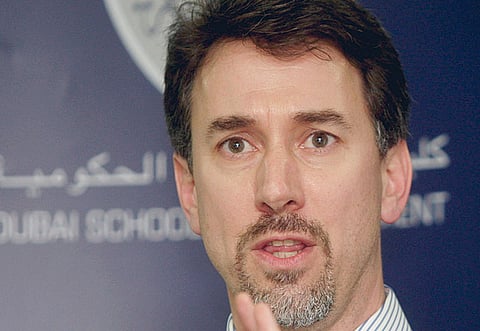
Dubai: Transparency is the only way that Dubai can take control of its story in the media and fight misconceptions about it, said a former journalist and author of a new book on Dubai.
Jim Krane, former correspondent for the US news agency the Associated Press and author of Dubai: The Story of the World's Fastest Growing City, was speaking at the Dubai School of Government on Sunday in a lecture about perceptions of Dubai in the western press.
He referred to Dubai as "the best thing that has happened to the Arab world in 700 years" but said that the western press did not capitalise on that because it was natural for news outlets to play up negative stories, and because Dubai was not "in control of its story".
"I'm impressed to see that Dubai is still here," he said, referring in jest to the doom and gloom that media outlets have described in the city in recent times.
Uncontested claims
Krane said that while some of the negative press that Dubai has received was warranted, such as the situation of blue-collar workers and the UAE's environmental record, there were many things being said in the Western media that were easily contestable — but there was nobody to contest them.
It was therefore vital for the city to designate an office to follow up with media coverage of Dubai as well as provide journalists with access to information and officials. "When the press calls, you need to answer the phone," he said. "Dubai is the only entity I have covered that didn't have a press office."
To maintain their credibility and journalistic integrity, he said, news outlets will issue corrections to their stories if mistakes are pointed out. This can be embarrassing for the news outlet and the erring reporter, he said, and would be avoided if the errors are brought to light time and again.
"The news business is like the funeral industry. It thrives on misfortune," he said, adding that contrarian stories often trigger a "herd mentality" which oblige other papers to follow, leading to the mushrooming of a story.
He added that positive stories were difficult to get into the press, citing a story he wrote for the AP about zakat and philanthropy in the region amounting to significantly more in charitable givings than other places in the world. The story, he said, kept being "kicked back" by his editors for verification and strengthening, but eventually was published.
Corrections: Book to get more real
Having spent four years in the UAE as a consultant for the Dubai government, and a correspondent for the Associated Press, Jim Krane says he has a unique perspective of Dubai "from the inside and the outside".
In his book Dubai: The Story Of The World's Fastest Growing City, Krane makes significant revelations from the ups and downs preceding the creation of the UAE to the role of the US consulate in Dubai in extracting information from Iranian residents.
Krane said however that a few other revelations about the CIA and influential figures in the country had to be removed from his book because they could not be sufficiently corroborated. He confessed that he was concerned that the book would not pass the censors in the UAE, but was relieved that it was available in the country since it could "open the hood on Dubai and see how it works". The greatest challenge in writing the book, he said, was getting access to officials.


