Reduced turbulence in Indian skies this year
Rising traffic from tier II and III cities, policies boosting foreign direct investment and favourable taxation will lead the Indian aviation industry out of the red
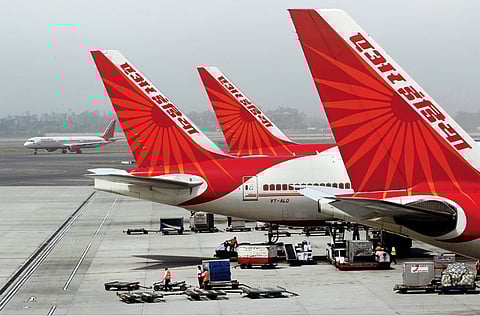
Although the Indian aviation industry recorded growth of nearly 17 per cent in passenger traffic last year, it had its share of rough landings. While an increase in jet fuel prices led the turbulence in Indian skies last year, the country's aviation industry was shaken by other factors, including mounting debts faced by national carrier Air India, resulting in extended pilots' strike, and the closure of budget carrier Kingfisher Red following a cash crunch and a fake pilot scam.
The mess resulted in clipped wings for some Indian carriers and saw a couple of shake-ups at the Indian Civil Aviation Ministry, where Praful Patel was replaced by Vayalar Ravi, who soon gave up the hot seat to Ajit Singh, the current civil aviation minister. The sector is now busy putting measures in place to tackle the challenges ahead, with a primary focus on foreign direct investment (FDI) and a new civil aviation policy.
Amber Dubey, Director — Aviation for global consultancy firm KPMG, says the outlook for the operating environment in Indian aviation is "challenging" in 2012. "Rupee depreciation, volatility in Air Turbine Fuel (ATF) prices and intense competition may continue in 2012," says Dubey. "The silver lining is the relentless growth in traffic. Domestic traffic grew by 17.6 per cent year-on-year in the period January-November 2011. This makes India one of the fastest growing aviation markets in the world. The developed markets are having low single-digit growth."
Adding to this, an aerospace and defence analyst at Frost & Sullivan, who asked not to be named, says "increasing ATF prices" posed one of the biggest challenges for the Indian aviation industry in 2011, accounting for "50 per cent" of Indian carriers' operating cost. According to the company's estimates, ATF accounted for nearly 40 per cent of Indian airlines' operating costs in 2010 compared to 20-25 per cent globally. "This year-on-year increase in ATF prices may hamper Indian carriers' financial condition in 2012 as well," warns the firm's analyst, adding that with the ministry nod to allow foreign carriers to "invest up to 26 per cent in Indian airlines", the cash-strapped Indian airline "may foresee financial stability".
Dubey says the rationalisation of ATF taxes and FDI by foreign carriers, if cleared, will bring some respite to Indian carriers. "Domestic ATF prices are nearly 55-60 per cent higher than competing regions like the Middle East and South East Asia.
Allowing FDI by global airlines will provide access to global funds, routes and management expertise," he says, , adding that the ministry is now interacting more often and more "proactively" with the industry and other government entities impacting aviation. "The ministry is working on the new civil aviation policy in consultation with various stakeholders. It is expected to bring out a clear vision and a road map to address the various challenges," says Dubey.
The year 2011 was the worst for the industry with its huge debt burden and with major carriers losing market share. The sector faces a severe cash crunch and is under a massive debt pile of about $20 billion (Dh73.45bn), with all but one of the country's six main airlines is loss-making, with state-run Air India on government life-support.
Air India has raked up Rs437.7bn (Dh32bn) in debt towards purchase of new aircraft and working capital loans. Elsewhere, Kingfisher Airlines' growing debts have pushed it to the brink of bankruptcy. The carrier has total debts to the tune of more than Rs60bn.
While not commenting on a specific airline, Dubey says Indian carriers' losses are likely to decline with the expected policy interventions in ATF prices and FDI. Growth will continue to be positive. Indian carriers flew 55 million domestic passengers between January and November 2011, as against 46.8 million in the corresponding period a year earlier.
KPMG also expects strong traffic growth in 2012, driven by traffic emanating from India's tier II and tier III cities. The Frost & Sullivan analyst says, "The year 2012 will foresee majority of the Indian carriers shifting their focus towards tier II and tier III cities to tap their growing potential. Low-cost carriers with their short-haul flights may dominate the regional routes in the coming years, whereas, full-service carriers may remain a preferred mode for passengers flying international."
Further, KPMG expects FDI norms for airlines to be eased in 2012 besides some corrective measures on the taxation front — for ATF and MRO (maintenance, repair and overhaul), says Dubey. He listed a number of positive developments ahead, including new airports coming up and old ones being refurbished; the stabilisation of airfares; growth in domestic and international tourism; and the country's growing per capita purchasing power.
On another note, as per Frost & Sullivan's analysis, with massive ongoing investment towards non-aeronautical activities and the introduction of aerotropolis areas around various airports, the "revenue contribution from non-aeronautical activities may increase".


