Odds stacked against young, inexperienced German squad
Team has reached last four at the Hero Honda World Cup despite loss of title-winning stars
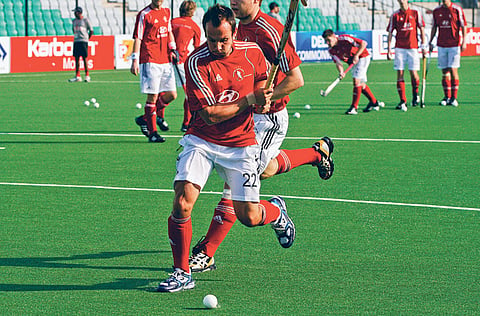
New Delhi: Coming into the Hero Honda World Cup with a young and inexperienced team, Germany were not among the favourites to complete a hat-trick of wins in this event.
The youngest team in the tournament with an average age of just 23, the team includes just three players — Jan Marco Montag, Moritz Fuerste and Matthias Witthaus — from the team that won the title less than four years back.
Among those missing are their captain and star defender Timo Wess, and, even more importantly, the man who scored the winning goal against Australia in the Monchengladbach final, Christopher Zeller — the man they call the "Scoring Machine'"
Zeller, along with his brother Phillip, has decided that hockey doesn't provide a future, and is pursuing his law degree, while Wess too has gone the academic way.
With hockey in Germany still largely amateur, players stand to earn very little for success — the team that won the Olympics received 2,000 euros (Dh9,979.52) per player, an amount that seems obscenely inadequate when compared to what footballers or golfers make for hardly breaking a sweat.
That the Germans continue to remain competitive has much to do with their youth system as well as with their coaching ethics.
System
In Germany, players are incidental to the system. Each new, raw youngster seems to fit right in and the team keeps rolling from one success to another. "Our coaching system means that we play the same way in our clubs and in our junior team as the senior team,'' says 21-year-old Martin Haner, the captain of last year's junior world cup winning team. He is the man who has taken over Wess's role as defender and also shares drag-flicking duties with Jan Marco Montag.
Even their coaching transition tends to be seamless.
When Peters abdicated his role after winning his second World Cup, the job was given to Marcus Weise, the former women's team coach.
Weise, a totally different character to the taciturn Peters is brasher and more outspoken, lacing his press conferences with generous doses of humour as well as stinging criticism of his own players.
In terms of success though, nothing has changed. He did have a rocky start, when Germany failed to finish in the top three in the European championships.


