US foreign policy has changed very little
On the 'war on terror' Democrats have been even more hawkish than their Republican fellows
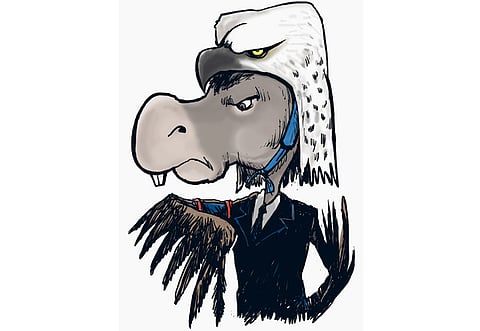
Since the September 11, 2001 attacks on the US, commentators and analysts from around the world have been trying to understand the evolution of US foreign policy with special reference to theoretical concepts attributed to a close-knit band of ultraconservative ideologues that surrounded the previous Republican administration. The impact of the attacks on America's liberal camp has been widely ignored. A year into the administration of President Barack Obama, it is becoming increasingly obvious that Democrats may be just following the same foreign policy course of the Bush administration.
As a point of departure, it is important to note that the aggressive foreign policy of former president George W. Bush was merely made more acceptable by the September 11 attacks, not made by them. Prior to the attacks there were well-organised political and intellectual forces that had been preparing for years for such catalysing event that would permit their relatively unpopular ideas and schemes for a radical foreign policy shift to gain an attentive public hearing. The neo-conservative movement was, therefore, best positioned to take advantage of the opportunity presented by the attacks on New York and Washington in September 2001.
By contrast, the nature of the attacks and their magnitude took the Democrats off guard, preventing them from developing viable intellectual and political alternatives to the dominant Republican doctrines in foreign and security policy. One must acknowledge, however, that some of the ensuing consequences of the attacks did not seem to be particularly in conflict with key Democratic notions. The September attacks shocked the US, seeming to come ‘out of the blue' to a public that had largely seen wars and violence around the world — especially in the Middle East — as being none of their concern. The attacks have, therefore, largely eliminated ‘isolationism' as a political, intellectual and even a moral defensible force in American life. This new ‘globalistic' orientation — that defined American national interest in the world, rather than continental or hemispheric terms — was a notion that has been for long advocated by Democrats. The September attacks have also led to the doctrine of American expansion under the banner of deterring aggression, exporting freedom and democracy, of not appeasing brutal dictators, and building a global hegemony, all of which are Democratic principles.
Consensus
The consequences of the September attacks have, thus, made it extremely difficult to distinguish between the agenda of the neo-conservatives and their neo-liberal peers. On Iraq, for example, the position of the two parties was not very much dissimilar. After all, the policies of the Democrats on Iraq have in one way or another paved the way for the invasion. Particularly important was the Iraq Liberation Act (ILA) which was introduced under the Clinton administration.
John Kerry, former Democratic presidential candidate, was the latent force behind the Act and was the first to raise the issue of regime change, citing Iraq's violation of UN resolutions, internal repression, and its alleged weapons of mass destruction programmes, as justifications to topple Saddam Hussain.
Leading Republicans, such as former Senator Jesse Helms noted in 1998 that the ILA "would begin the long-overdue process of ousting Saddam", and, in so doing, "harkens back to the successes of the Reagan doctrine".
Besides, except for the extreme left in the Democratic Party, leading Democrats have supported most of the Bush administration's military ventures. They have indeed favoured multilateralism; attached greater importance to international institutions and to alliance building, but otherwise they appeared to be equally committed to military solutions to global problems.
On the ‘war on terror', Democrats have even been more hawkish than their Republican fellows. Leading figures within the Democratic Party have suggested only that US foreign policy would "need ploughshares and swords to win this war [on terror]". Some have urged to "reinvigorate the US military for the new century through an aggressive transformation that makes it lighter, more lethal, and more readily equipped to win unconventional wars". What American foreign policy needs is to place ‘muscle behind our morality' if it's to build the basis of the next American century.
Equally important, perhaps, is the support expressed for this policy by leading liberal thinkers, such as Paul Berman and Stanley Kurtz. Berman urged Americans to stand firm behind a more hawkish foreign policy in the Middle East. Similarly, Kurtz argued that the British rule in India would provide many useful lessons for the long-term American occupation of Iraq. He also championed the argument of pro-colonialist Max Boot, who in the neo-conservative Weekly Slandered, wrote: "Afghanistan and other troubled lands today cry out for the sort of enlightened foreign administration once provided by self-confident Englishmen in jodhpurs and pith helmets"!
No wonder therefore that US foreign policy, particularly towards the Middle East, has not so far undergone fundamental change under the Obama administration.
Dr Marwan Al Kabalan is a lecturer in the Media and International Relations Faculty of Political Science and Media at Damascus University in Syria.


