It's time for Al Assad to step aside
Those ordering the siege of Homs, shelling of Idlib and the torture of Syrian children need to be put on notice that they will be held to account
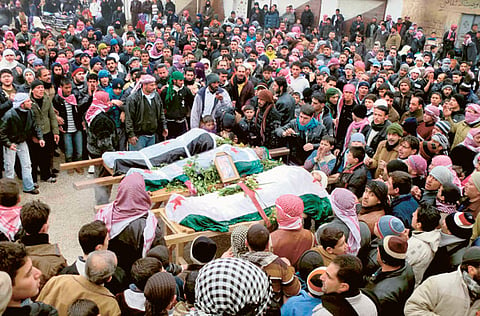
The Syrian people's terrible ordeal shows no sign of ending. On February 4, Russia and China vetoed a UN Security Council Resolution supported by all 13 other members of the council. They chose division when the international community should have shown unity.
But Syrian President Bashar Al Assad should not think he is off the hook. The UK will use every peaceful means possible to tighten the diplomatic and economic stranglehold on this vicious regime. In Parliament last week I set out our seven-point plan to step up the diplomatic pressure. The Arab League initiative remains the best chance for peace in Syria and it should be implemented. Arab foreign ministers will be meeting to consider the options. The UK is working with them to set up a coalition of nations to bring the widest possible political, economic and diplomatic weight to bear on Al Assad's regime.
The UK is working to ensure that later this month the EU will adopt new sanctions against Al Assad's regime to help choke off the regime's sources of revenue. At the same time the UK will not be deterred from seeking UN condemnation of the violence and backing for the Arab League plan, either through the UN General Assembly or the Security Council. We will urge Russia and China to support this. In order to help people in Syria affected by the violence and those trying to develop a peaceful alternative to the regime, we have intensified our contact with members of the Syrian political opposition and we are calling for free and unimpeded access for humanitarian agencies to deliver life-saving support to the Syrian people.
Collecting evidence
Some 6,000 people have already been sacrificed to the regime's brutal determination to cling to power. Those ordering the siege of Homs, the shelling of Idlib and the torture of Syrian children need to be put on notice that their crimes will come to light, and that they should stop these actions now. Part of this must be to record the testimony and evidence of those who are fleeing Syria or suffering on the ground.
The UK will be sending British experts to the region in the coming days and weeks to help gather evidence and document human rights violations, working with NGOs already carrying out such work. We must help to ensure that atrocities in Syria are documented to an international evidential standard suitable for local and international courts. In conflicts of the past there was no systematic collection of evidence against those who committed heinous crimes. This has made prosecutions harder to mount, and longer and more costly when they take place.
Often witnesses are required to testify many years after the event. Our work will be designed to support that process now. In the past few months, Britain has commissioned experts to travel to the Syrian refugee camps in the region to document the evidence of crimes committed by the Syrian regime. We will step up these efforts. We are also providing funding to help human rights organisations in the region gather evidence against the perpetrators of crimes. Already, the organisations we are working with have spoken to hundreds of Syrian activists, refugees and army defectors who have fled their homeland since the start of the uprising. They have collected hundreds of interviews, testimonies and eye-witness accounts.
This is only a start. I will be asking other nations to take similar action to ensure that ordinary Syrians have access to the justice they deserve. Foreign Office officials will work with our partners to set up a Syria-wide human rights abuse documentation hub to collate the mounting evidence of crime that exists. The UK will help ensure that it is preserved and safeguarded, in the interests of justice and of the Syrian people.
I have also instructed our ambassadors in Lebanon and Turkey to report back to me on the situation on the border and among Syrian refugees, and to assess what other support Britain can offer. At the same time, we will return to the UN Human Rights Council to push for an extension of the mandate of the Syria Commission of Inquiry, with a new focus on ensuring accountability in Syria. The world must send a clear message to the Syrian regime that those who commit atrocities will be held to account, and those taking part in them now should urgently reconsider their actions.
There is a chance of saving Homs and its people from the fate endured by cities like Sarajevo in the 1990s. It requires Al Assad to step aside to permit a new political process. It also lies in the hands of individual Syrians to refuse to participate in the regime's campaign of terror and murder. So while we step up the diplomatic and economic pressure on the regime, we will also strive to ensure that the fate of its victims is not forgotten and the extent of its crimes cannot be hidden.
— The Telegraph Group Limited, London 2012


