Foreign influence is waning in Iraq
But Washington makes it clear troop withdrawal will not diminish its role in Baghdad
We say to the Iraqis, if you work with us Iraq would be a member of the international community, and you will have respect wherever you go, and you will be a strategic partner of the United States, we do not use the negative method: because we have troops in your country and we can harm you... We tell them if you go with Iran it would be a different way with you."
With these very clear words, Christopher Hill, the US Ambassador to Iraq, answered a question related to the possibility of Iran playing a bigger role in Iraq after the withdrawal of US troops in the coming few months.
Hill's important statement comes at a decisive moment in Iraq, which is expected to witness huge political changes. The bitter experience Iraqis underwent over the past years makes it inevitable for them to vote for new faces for the parliament. The Middle East is also witnessing the emergence of dangerous flashpoints that may explode into bloody wars.
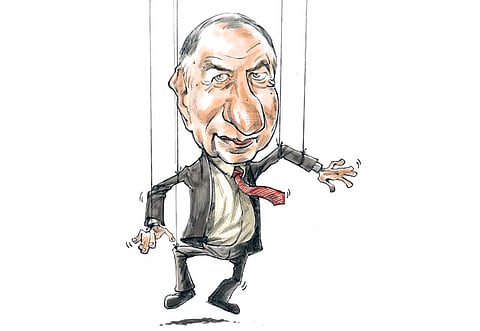
Hill's statement coincided with the speech of General Raymond Odierno, the US top commander in Iraq, in which the general accused the executive director of the Accountability and Justice Commission, along with the panel's chairman Ahmad Chalabi, of being "clearly influenced by Iran".
The declarations also came at a time when active action is being taken to cut Iran to size with a fourth round of sanctions over its nuclear programme. The statements also came at a time of improved relations between Syria and the US.
Hill's carefully chosen words were directed at the Iraqi government which will take office after the upcoming elections. His statement also revealed the discontent of the US over the relationship between some Iraqi political leaders and Iran.
Hill said, "There is no doubt that Iran showed a very hateful face in Iraq.This means that we should be wary if Iranian interference in Iraq continues to be vindictive."
It is not a coincidence that Hill's statement comes a few days before the Iraqi elections, especially after American efforts to thwart what it considers Iranian interference in the Iraqi elections failed.
The US believes Iranian influence is embodied in the removal of a number of political blocs and candidates from the elections by the Accountability and Justice Commission, which the US alleges is led by Iran-affiliated individuals.
The US ambassador's statements may well be interpreted as the start of American regression in Iraq, in accordance with US President Barak Obama's policy of cutting down foreign preoccupation.
On the other hand, some may consider these statements a prelude to pressure its allies to give up on Iran, and to determine its position in a clear and candid manner, either with or against the US.
However, no matter what the explanation may be, these statements are in themselves an interference in Iraq's internal affairs and an attempt to influence the Iraqi elections which is a natural consequence of the US invasion.
Quest for power
Moreover, the assumption of some Iraqi politicians that the US refrains from interfering in Iraq's affairs is unrealistic, especially as those same politicians owe their existence in the Iraqi government to the US interference in the country.
Nevertheless, whoever misreads Hill's statements will be making a strategic mistake. The US ambassador further warned of assessing the US influence in Iraq by the number of its troops inside the country by saying: "Our influence in Iraq is not a specific number of troops in it," adding that "the US is serious in its desire for long-term relationships with Iraq, if Iraq is to this relationship, it should cooperate with us."
The US plan to pull its troops out of Iraq does not entail a complete withdrawal, as 50,000 American soldiers will remain in the huge military bases. The US has also built one of the world's largest embassies in Iraq to oversee its interests in the Middle East.
Further, any drawback in the US policy towards Iran will not be in accordance with the pressure, containment and isolation policy used by Washington with its Western allies to increase sanctions against Iran.
It is more likely that the role of Iran in Iraq will weaken after the elections, if all goes well and the elections are not tampered with. The sectarian strife has also become increasingly insignificant despite Iran's efforts to foment it.
Moreover, the Iranian project in Iraq with its ready surgical tools to segregate the country through the loopholes present in its constitution has weakened tremendously.
Two things that worked against Iran were Iraqis in Basra defeating the federal project for their governorate and an important political power in the south being compelled to change its strategy in this respect because of its wide unpopularity.
Religious party leaders who are closer to Iran have also lost a great deal of their influence over the past four years due to their poor performance on both the legislative and execution levels. They were also unable to deliver their election campaign promises and became mere facades for shady money deals and administrative corruption.
Mohammad Akef Jamal is an Iraqi writer based in Dubai.


