Five years on, the doubts linger
Quite like the mystery that still shrouds JFK's assassination, the truth about Rafik Hariri's killing may never be known
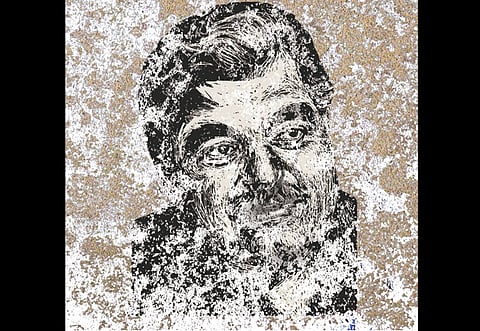
When asked about an expected date for verdicts, Antonio Cassese, president of the International Tribunal for the assassination of Lebanon's former prime minister Rafik Hariri, recently replied: "We cannot set deadlines!" For his part, Prime Minister Sa'ad Hariri stressed last Sunday that there would be no compromise on the issue of the tribunal.
Cassese, who arrived in Lebanon one week ahead of the February 14 commemoration of Hariri's assassination, did not meet with the slain premier's son or Defence Minister Elias Al Murr, in order to preserve the tribunal's impartiality. "The Tribunal is alive and very healthy," he told Beirut daily As-Safir, trying to downplay fears that Lebanon itself was no longer interested in pursuing the tribunal project any further. Despite all the talk by numerous members of the March 14 Coalition, who never miss an opportunity to remind the Lebanese that they are still rallied, rank-and-file, behind the International Tribunal, many in Beirut have begun to speculate that the international court has indeed been written off into history.
The Netherlands-based Special Tribunal for Lebanon was formed in March 2009, building on consecutive reports of United Nations (UN) persecutors, including the notorious Detlev Mehlis, who authored a controversial 53-page report in October 2005, blaming Lebanese and Syrian security officials of being behind the murder.
Last September, Syria appealed to the UN to bring Mehlis to justice for having said: "There is probable cause to believe that the decision to assassinate former prime minister Rafik Hariri could not have been taken without the approval of top-ranked Syrian security officials and could not have been further organised without the collusion of their counterparts in the Lebanese security services." The Syrians argue that none of Mehlis' findings were authenticated by any of the persecutors who succeeded him, including the most recent one, Canadian Daniel Bellemare.
Additionally, based on Mehlis' findings, four senior Lebanese officers were arrested back in 2005 on charges of involvement in the Hariri case. Last April, however, all of them were released due to lack of evidence, casting serious doubt on the UN probe's professionalism. One of the officers, Jameel Syed, said that Mehlis had tried talking him into naming any Syrian official in the crime in exchange for his release from jail regardless if this official were guilty.
Adding steam to argument
The release of the Lebanese generals, the visit by King Abdullah Bin Abdul Aziz of Saudi Arabia to Syria in October, followed by Sa'ad Hariri's in December, has added steam to an argument that says: ‘Syria had nothing to do with the murder of Rafik Hariri.'
Simply put, if the tribunal had any evidence against Damascus, it would have released it by now and Sa'ad Hariri would not have gone to the Syrian capital to meet the top leadership.
Making things worse for those who pinned high hopes on nailing Syria through the Hariri tribunal was the resignation last month of David Tolbert, the court's chief administrator, followed by the stepping down of its Chief of Investigations later this month. Tolbert's predecessor had stepped down four months after the tribunal started, in mid-2009.
If Syria had nothing to do with the Hariri murder, then who exactly killed the Lebanese premier? In May 2009, a sensational report was published in the German magazine, Der Spiegel, accusing Hezbollah of having ordered Hariri's killing. The magazine reported that these findings have been kept secret by the International Tribunal, noting that "investigators now believe Hezbollah was behind the Hariri murder."
It adds that a "special force" from Hezbollah, "planned and executed the diabolical attack." The magazine did not quote sources, nor did it support its argument with documents, prompting people like Walid Junblatt and former prime minister of Lebanon, Fouad Siniora, to say that Israel was behind the Der Spiegel story.
The Israel angle
The Syrians for their part claim that Israel is behind the elimination of Rafik Hariri, wanting to use it to incriminate, isolate and weaken the Syrians. They argue that the country to suffer most from Hariri's murder was Syria, claiming that they too want justice in the International Tribunal to prove that Damascus was right in all its denials since 2005. Another theory says Hariri was murdered by Al Qaida-style terrorists. A third argument blames it on different players within Lebanon, who wanted to get rid of the Sunni heavyweight who had prevented the rise of anybody in Beirut politics who was not operating underneath his direct umbrella. A fourth argument blames it on Hezbollah words that were spoken just last week by Israeli Foreign Minister Avigdor Lieberman.
A fifth argument and the most probable perhaps says that we will never know for sure who really killed Rafik Hariri, due to the complexity of the crime and the involvement of so many different and contradicting accomplices, placing the "Hariri Affair" at par with classic and eternal mysteries like the murder of John F. Kennedy. Forty-seven years down the road, we still don't really know if Lee Harvey Oswald gunned down the US president in Dallas on November 22, 1963.
And we might never know who pressed the EXPLODE button in Beirut on February 14, 2005.
Sami Moubayed is editor-in-chief of Forward magazine


