Beirut’s fading glory
Nadine Kanso captures the city today, a mere shadow of its past and listless about the future
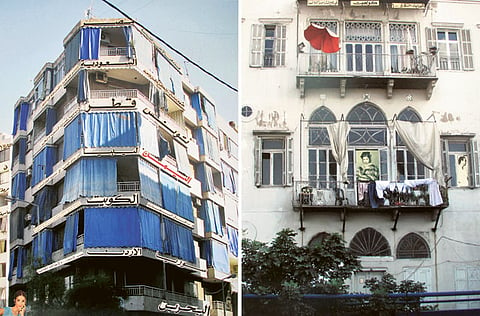
Nadine Kanso's latest work is an honest portrayal of a city she loves. The Lebanese artist grew up in Beirut, but has been living abroad for over 15 years. Her show titled Makan Fi Al Zakerah — meaning "a place in the memory" — is steeped in nostalgia. But it also acknowledges the realities of the present and expresses her concerns for the future.
"I have this love/hate relationship with Beirut. When I go back, everything I see brings back happy memories. But at the same time when I see that nothing much has changed in all these years, I feel sad that the city is stagnating," the Dubai-based artist says.
Kanso has used a clever device to juxtapose the past and the present in this body of work. The series is based on photographs of Beirut that she took during a visit last summer. But on these pictures she has pasted cuttings from old Arabic lifestyle magazines of the 1950s, 1960s and 1970s. While the magazines provide a connection with the past, the pictures and words she has cut out from them combine with the photographs taken in 2011 to create witty collages that comment on the present socio-political situation in Lebanon and the Arab world.
Kanso's pictures do not depict the smart localities, fashionable people and sophisticated lifestyle that one usually associates with Beirut. Instead, her camera has captured dilapidated buildings and the squalor of the inner city. There are no people in the photographs, but thanks to her manipulations, you can see well-known Arab film and theatre personalities and glamorous divas from the old days peering out from the balconies of the rundown houses. Objects such as old-fashioned radios, televisions and cars, words (often taken out of context) and advertisements from those days blend seamlessly with the photographs to create narratives that offer witty observations about daily life with a serious socio-political subtext.
Some of the images feature once elegant buildings that now have crumbling walls and windows blocked with bricks. By putting pictures of well-dressed people in the windows, Kanso tries to recreate the good life of the old days, while also highlighting the poor maintenance, lack of basic amenities and general neglect that plagues the city. Other images showing a few brightly painted balconies in otherwise decrepit buildings comment on the way people focus only on looking after their individual area with no regard for the surroundings. There are also pictures of Palestinian camps in Beirut that make subtle remarks about differing attitudes to the Palestinian issue through cuttings of articles on nationalism and advertisements for cleaning chemicals.
Posters promoting Beirut as the "Switzerland of the Middle East" juxtaposed with her pictures of the city today tell a sad story of denial and mismanagement. Other works use pictures of Western stars and carefully chosen words from the magazines to comment on the long history of foreign interference in Arab affairs. Kanso uses advertisements of revitalising drinks, household cleaning agents and toothpaste to exhort Arabs to be strong, clean up the mess and learn to smile again. Through pictures of poets, writers and actors, she recreates a past when society was more open as opposed to the growing conservatism in Arab society.
Kanso's work is deeply personal. The black-and-white TV sets with no remote control, the old radios that needed careful tuning and advertisements for products that her grandmother used are nostalgic reminders of her childhood and the Beirut of the past. But her focus is on learning from the past to ensure a better future.
"I feel that instead of facing reality, the Lebanese people are living in the past. They are denying their problems and hoping that things will be resolved by themselves. But these problems will not go away. The more we ignore them, the more they will build up," she says.
"However, this work is not only about Beirut. My concern is for the entire Arab world. Today Lebanon is so paralysed by social and political problems that we are stagnating with no movement forward. I do not want to see the same thing happening in the rest of the Arab world. We should stop our internal power struggles and unite against common enemies. The recent changes are good, but I believe that we should be cautious and alert to ensure a free and open society in the future," Kanso adds.
Makan Fi Al Zakerah will run at Cuadro Fine Art Gallery until March 7.


