Urgent action needed to bring demand back to Sharjah's real estate sector
Despite the emirate retaining some of its advantages, the patience of residents is being worn thin by high rentals, power outages during summer, higher utility costs and traffic jams
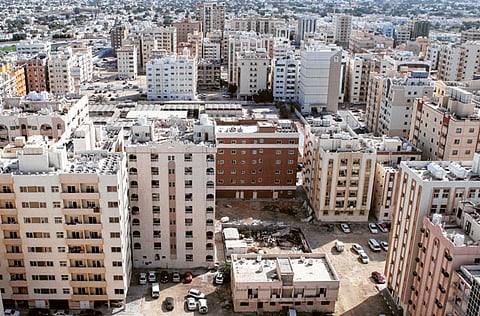
Dubai: There's one thing that Sharjah's real estate sector was unequivocal about. A recent directive from the authorities confirmed that property would continue to be available only to UAE and GCC nationals. In one move, it snuffed out all expectations that had built up until then that some flexibility would be allowed.
But that was just about the only clear signal that Sharjah's property market could provide last year. As has been the case since 2009, it continues to haemorrhage residents to Dubai, with the Al Qusais neighbourhood being the biggest beneficiary from this migration. It has even helped middle-income clusters further afield such as Discovery Gardens and even JLT.
Sharjah's landlords have tried to stanch the outflow by cutting their rentals, but inherent hurdles such as power outages during the summer, the rise in utility costs and the regular traffic snarls in and out of the emirate during peak hours are wearing residents' patience thin and making them move to new pastures. What is causing additional stress for the property market is that simultaneously the emirate is seeing a steady stream of apartment projects being completed, many of them in and around the Al Nahda locale.
Occupancy levels in many of these are running at around 30 to 40 per cent.
Despite all that, Sharjah still retains some of its traditional advantages, according to industry sources.
"The properties have historically been, and remain, very popular with GCC investors especially from Kuwait and Saudi Arabia," said Ihsan Kharouf, director at the Sharjah office of Cluttons Middle East.
"The interest is on two levels — as end-users of villas and apartments — especially in Al Nahda and Al Khan, as well as investment interest via the ownership of income-producing properties, especially mid-scale residential buildings. The drop in prices is creating added interest but many are adopting a wait and see approach at this stage."
According to Kharouf, Sharjah's developers can help their cause by building what's required in the market. Despite some of Sharjah's residents migrating to low-priced Dubai areas, there is still a shortfall in the supply in certain types of properties in the city," he said.
Rigorous approach
"This is particularly true for villas. Developers can adopt a more rigorous approach prior to the development to identify and meet the requirements. Quality, well-planned products would still be attractive to the existing residents."
Authorities in the emirate are also pitching in.
"Sharjah's landlords are being pressured to reduce their rents. In the near future, the Sharjah Municipality has promised to address past challenges with SEWA and to improve the road system," said a Better Homes spokesperson.
"All of which will serve to bring back both old and new residents."
The success of such efforts would determine if a reverse migration can take place. Until then, Sharjah's property market waits in anticipation.


