Papandreou racing to cut borrowing costs
Athens wants explicit pledge of EU aid
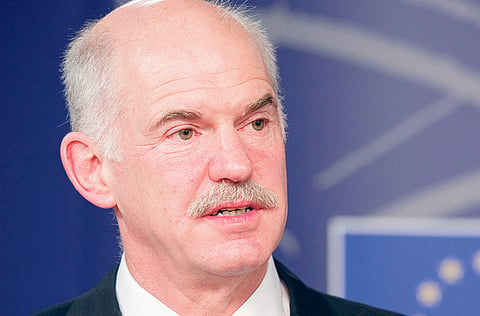
Athens: Geek Prime Minister George Papandreou is racing to secure an explicit pledge of European aid and cut his country's borrowing costs as 20 billion euros ($27 billion, Dh99.59 billion) of debt comes due in the next two months.
With investors still demanding Greece pay three percentage points more than Germany on its 10-year debt, Papandreou says Greece can't afford to hold out much longer at current market rates. His government still needs to raise another 10 billion euros to repay bonds maturing on April 20 and May 19.
"Greece wants to bring down its funding costs fast," said Holger Schmieding, chief European economist at Bank of America- Merrill Lynch, in a note to investors. If the spread doesn't narrow in the next month, "Greece may ask for financial support."
Split
Papandreou's appeal to the European Union to help him steer interest rates lower is being stymied by a deepening split among the bloc's leaders. While French President Nicolas Sarkozy said the euro region would rescue Greece if necessary, German Chancellor Angela Merkel's government on Thursday signalled it's ready to turn its back on Greece and force Papandreou to seek International Monetary Fund assistance.
In the Netherlands, a traditional German ally in European fiscal debates, acting Finance Minister Jan Kees de Jager said late Thursday the IMF could pay "part" of what Greece needs.
The yield on Greek 10-year bonds rose 2 basis points to 6.279 per cent yesterday. That pushed the spread on German equivalents to 314 points, the most since March 1. By contrast, Greece could pay as little as 3.25 per cent for IMF funds, based on what the lender is charging at current global interest rates.
Papandreou says Greece deserves better treatment from markets after presenting an austerity programme on March 3 so harsh that it sparked the second national strike in less than two months. "We are under a basically IMF programme," Papandreou said Thursday. "We don't want to be in a situation where we have the worst of the IMF, if you like, and none of the advantages of the euro."

