Indian rupee forecast to depreciate to Rs15 to a dirham
Indian expatriates living in the UAE rush to currency exchange centres to transfer cash
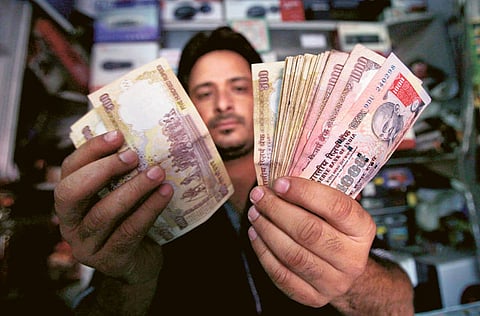
Abu Dhabi: The Indian rupee is set to fall further against the UAE currency in the days ahead after it fell to an all-time low of 14.81 per dirham on Wednesday on global risk aversion and strengthening of the US dollar, currency experts say.
"The rupee will continue to be under pressure due to India's large current account deficit, Eurozone's escalating sovereign debt crisis and outflow of dollars from its stock markets," Sudhir Shetty, chief operating officer of UAE Exchange, one of the largest currency remittance houses in the region, told Gulf News.
The rupee fell to record low of 54.52 to the dollar as global risk aversion across international markets sent local stocks sharply lower.
The further weakening of the rupee brought cheer to Indian expatriates living in the UAE, who made a beeline to currency exchange centres to transfer cash back home. "The rupee may depreciate to Rs15 per dirham, given the current trend in the currency market," he added. The battered Indian currency, the worst performer among emerging markets since March, is poised for more weakness in the near term unless the authorities step in with specific measures, analysts said.
Some state-run banks have been seen on the sell side, but there is no definite talk of Reserve Bank of India intervention. Repeated currency intervention by the central bank and a rash of other measures targeting deposits and exporters have failed to stem the slide in the currency.
Pradeep Unni, Senior Relationship Manager at Dubai-based Richcomm Global Services DMCC, said the sliding currency threatens India's place at the high table among potential economic leaders of tomorrow.
Flight to safety
"Part of it is due to investors' flight to safety to US assets amid a worsening European Union crisis. But policymakers can't blame international developments for all the ills. They slept at the wheel when macro-economic conditions deteriorated over the years — be it the current account deficit, or the fiscal deficit."
He added: "It was taken for granted that overseas investors will forever be pouring money into India, irrespective of its macro-economic conditions. That was not to be. While the global liquidity tide for years enabled India to enjoy the privilege of a ‘growth market', along with China, India's weak fundamentals are getting exposed when the tide is turning. It is time that the rupee is allowed to depreciate and left to find its own level that could slow imports and help raise exports. Foreign investors who are holding back investments because of unfriendly tax proposals should be lured."
Prakash Chand Mehta, an Abu Dhabi-based chartered accountant, told Gulf News what has added fuel to the fire is changes to the Income Tax including GAAR and Vodaphone cases and reopening of old cases up to 16 years.
"These are very damaging changes, which the Finance Minister has introduced in the Finance Bill 2012.
"This has damaged the sentiments and foreign investors withdrew their investments and also not inclined any more to invest further in India. They have lost confidence in India. Therefore, S&P also downgraded India's ratings. Also, the tax code, which changed the definition of Non-Resident, is very ill thought-out.
"Just to bring some errant assessees into the tax net, the government is punishing the whole NRI [non-resident Indian] community," Mehta added.

