Dubai hospitality back on track as global economy improves
Rise in Abu Dhabi hotel rooms among year's sector trends
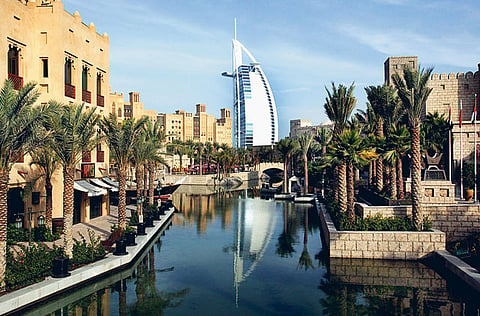
Dubai: The UAE hotel sector has shown some stability for the first part of this year with occupancy and rooms rates showing only a slight dip in recent months.
According to Bin Mahmoud Chiheb, senior vice-president at Jones Lang Lasalle Hotels ME, the two prominent trends in the sector this year is the new supply of hotel rooms in the market in Abu Dhabi and the recovery of Dubai due to the improving economic global conditions after the ‘freeze' effect of 2009.
Trends
Both cities have shown different trends in relation to occupancy and rates due to their structures.
"While Dubai is a more integrated proposition, Abu Dhabi is a much more diversified destination. It will prove challenging when it comes to managing and marketing Abu Dhabi as a city and Abu Dhabi as an emirate," Bin Mahmoud said.
"Liwa, Qasr Sarab and Sir Bani Yas, have little in common with the city of Abu Dhabi. Even within the city of Abu Dhabi, there is a high degree of diversity," he added.
According to the Middle East Hotel Benchmark Survey conducted by Ernst & Young, occupancy rates have remained relatively high in Dubai. Occupancy in the city area of Dubai has increased to 75 per cent as of July 2010. However, hotels located along the beach saw a slight drop of two per cent in occupancy but retains a higher occupancy rate of 81 per cent.
According to Bin Mahmoud, Dubai hotels, which mix their leisure and business components have the healthiest and the most sustainable and manageable occupancy rates in the GCC region.
Abu Dhabi occupancy rates also remain on a par with Dubai's beachfront developments with a 4 per cent decrease over a year, down to 73 per cent.
"Dubai beach hotels have not been strongly affected by the drop in occupancy and hence the recovery is limited. For Abu Dhabi the drop in occupancy is mainly due to the new supply that came to the market, as well as a softening of the business activity," Bin Mahmoud said.
According to the Ernst & Young report, average room rates in Dubai, after staying steady at the beginning of this year between $237 (Dh870) to $252, have seen a dip between May and July when they dropped to $150. This is an outcome of hotels offering more attractive rates in order to increase occupancy.
Adjustment needed
"Hotels in Dubai are still high by international standards. The correction happened and the ‘abnormal returns' are over. Competitiveness and efficiency are now the name of the game. Some of the satellite destinations that used to be marketed as ‘Dubai' will have to adjust their offering," Bin Mahmoud said.
A similar trend was seen in Abu Dhabi where average room rates saw a continued decrease from October 2009 where prices were $362.
By July 2010 they had dropped to $161.
Revenue per available room (PAR) rates in Dubai have also seen a drop from April 2010 when it was $199 to $103 in July 2010
According to Euromonitor's 2010 Travel Accommodation Report, the drop in occupancy and rates is not because tourists are travelling less. Both Dubai and Abu Dhabi International Airports have reported substantial year-on-year passenger increases.
Instead, there is more emphasis on finding good deals, pushing the rates down.
In the near future, a new supply of hotels will continue to widen the gap between demand and supply.
New attractions
Hilton seeks to launch new hotels in line with the opening of landmark attractions such as the Louvre in Abu Dhabi.
The IHG group is seeking to develop more budget brands in the UAE, expanding the Holiday Inn and Holiday Inn Express brand.
The group has 49 hotels planned for the Middle East and Africa region over the next three to five years.

