At your service: stakeholders in Oman
How the private equity market has developed opportunities and players in Oman
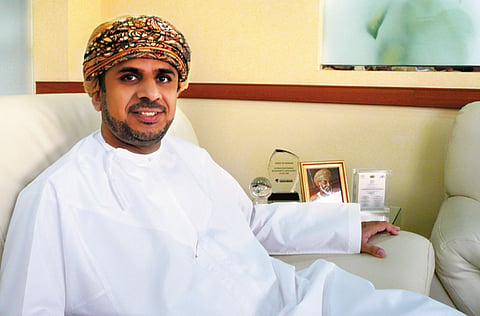
Please comment on how the private equity market has developed in Oman and the wider Gulf in terms of opportunities and players.
There are good venture capital and greenfield project opportunities. There are a number of greenfield opportunities as downstream projects to the mega petrochemical plants and iron and steel plants, as well as the aluminium smelters.
When it comes to the manufacturing sector, [we] are in competition with international players with a lower-cost basis, such as from the Indian subcontinent and China. There also exist venture capital opportunities that are export-based to the USA and European market where they leverage upon the low cost of utilities, manpower, and land and government incentives such as tax.
Usually greenfield projects are much more risky and take more time to harvest. Acquisition opportunities are limited, and when they are available they are expensive.
There are from time to time opportunities where entrepreneurs need growth capital, and these are usually good deals. There are also good opportunities for private equity on the privatised projects, mainly in the power and water sector, which offer secured revenues and easy exit via public offering.
What are the company's particular investment criteria and normal scale and term of investment (compared to the regional mainstream)? Can you highlight the key investments since formation and expected exit strategies for these participations? Are you aligning with particular sectors, looking forward?
OIC is an investment corporation adopting a private equity investment model. Our main investment focus is currently in Oman. We have invested since inception in oil and gas service companies, manufacturing for infrastructure projects, manufacturing for the oil and gas sector and the power and water sector.
Most of our investments have been of the venture capital and greenfield project type. We have achieved two exits, and in both cases have had good returns.
Our investment in the Integrated Water and Power Plant (IWPP) project is also a great example of good investments, whereby the investment is highly leveraged and with secured income.
We are looking forward to continuing to invest in companies that provide services to infrastructure developments in Oman, the privatised power and water sector, and also looking to develop projects in health care as well as the education sector. These sectors are aligned with the country's capital expenditure as well as the demographical need.
As to corporate effectiveness, how does selling a stake to a private equity fund typically enhance the development of a company, with examples from your own experience?
Where private equity companies support companies it is in their growth strategies, as they will need growth capital. Another area to cite is that private equity companies can bring in lots of good practice, systems, policies and corporate governance in running a business, especially with respect to small private businesses.
We in OIC, as an example, have supported two Omani entrepreneurs who had an idea for establishing an oil and gas service company. We worked with them and translated the idea into two companies whereby, in four years, they grew to be valued at more than $40 million (Dh146 million), and management exercised their rights and bought our shares. It was a successful model and a win-win for both parties. The company today has operations outside Oman.
With IPO the normal exit option, is the local environment restrictive (in terms, for example, of the scale and relative illiquidity of the Muscat Securities Market)? What measures may be taken to improve surrounding circumstances for private equity to prosper and have best effect?
I believe that the market is liquid in Oman, and the recent IPO of Nawras was [an example of] success. To me the market in Oman is hungry for IPOs, and it needs more newcomers. Investors at the same time are becoming more sophisticated as well as thorough; they are analysing investments prior to investing. This [scenario] is healthier, and sustainable in the longer run.
How does the private equity segment in the sultanate relate to the national 20-20 diversification strategy? What is your perception of the economic climate and prospect now, following disturbances across Mena and their potential disincentive to international firms viewing the region?
A good example of how private equity companies support the government's 2020 vision is OIC, since from our establishment at the end of 2005 we have created around 800 new jobs, brought to Oman around $200 million of foreign direct investment and brought around $650 million of international bank finance for projects in this country. This is a clear example of what private equity investment companies can do. It is only achievable through real value-added investments that are pursued on sound business cases, which are sustainable and which can be grown.
What is happening in the Gulf is that in most of the cases there are moves in the right direction. It is a region where more transparent systems, policies and reforms will take place, where employees in their positions will have to do their jobs, be accountable, and in a highly professional manner, and where employers have to be fair and respectful to their employees.
All this [process] will allow for a long-term sustainable investment environment. In my personal view, countries have to think and have to plan as to what will happen once their natural resources run out, and they have to use their current resources to build the foundations for the future. They should build value-added, technical service industries utilising the human capital that they have.

