London: In most developed countries, children with autism are usually sent to school where they get special education classes. But in France, they are more often sent to a psychiatrist where they get talk therapy meant for people with psychological or emotional problems.
Things are slowly changing, but not without resistance. Last month, a report by France's top health authority concluded there was no agreement among scientists about whether psychotherapy works for autism, and it was not included in the list of recommended treatments.
That provoked an outcry from psychiatrists. Groups including Freudian societies, the World Association of Psychoanalysis and France's Child Institute started a petition calling on the French government to recognise their clinical approach, focused on psychotherapy.
"The situation in France is sort of like the US in the 1950s," said Dr Fred Volkmar, a US expert who directs the Child Study Center at Yale University. "The French have a very idiosyncratic view of autism and, for some reason, they are not convinced by the evidence."
France has long been criticised for its approach to treating autism. In 2002, the charity Autism Europe lodged a complaint against France with the Council of Europe, charging the country was refusing to educate autistic children, as required under the European Social Charter.
The charge was upheld and the European Committee of Social Rights declared "France has failed to achieve sufficient progress" in educating autistic children. The committee also slammed France for making autistic people "an excluded group" and said there was a chronic shortage of care.
According to government data, fewer than 20 per cent of autistic children attend school in France.
Marie Dominique Amy, president of Cippa, a French association of psychotherapists and psychiatrists, said she had seen autistic children improve after being treated with a controversial therapy known as "packing." That involves wrapping nearly naked children in wet, cold towels in an attempt to "reconnect" them with their bodies.
Others condemn the practice as barbaric. "Not only is there no evidence that packing works, but it's unthinkable something potentially dangerous and harmful would be performed on vulnerable children," said Tony Charman, chair of autism at the Institute of Education in London.
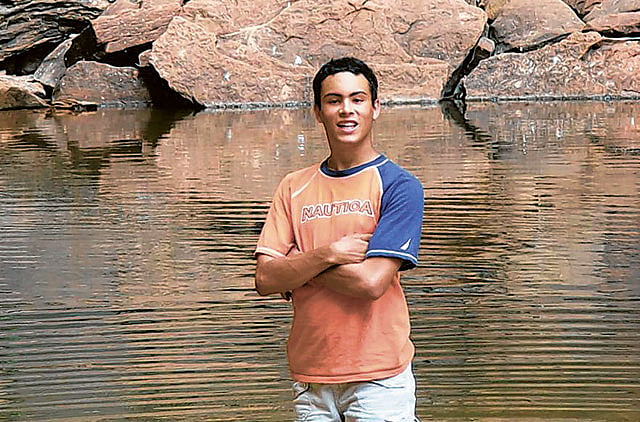
Catherine Consel was horrified when she and her husband found out their autistic son Thomas, now 20, had been subjected to regular packing sessions for three years while he was treated in a Bordeaux hospital. "I was shocked," she said.
Catherine is convinced Thomas would have fared better had the family stayed in the US, where he was born. "There is only one way to do things in France," she said. "And sometimes the government makes the wrong choice."
Joaquin Fuentes, a psychiatrist and scientific adviser for a Spanish autism group, said: "To be exposed to psychoanalytic treatment is a painful and unethical way of treating children with autism," he said.
When Andy Beverly's son Guillaume was diagnosed as autistic at age 2, Guillaume began to receive treatment from psychiatrists in Paris. "I started out having a lot of trust in the French doctors, but it was only later that I realised we were in the wrong country."
Sign up for the Daily Briefing
Get the latest news and updates straight to your inbox
Network Links
GN StoreDownload our app
© Al Nisr Publishing LLC 2026. All rights reserved.