Liberation Front hopes to finally settle the Moro question
Gulf News gets access to camp to learn the sentiments of the MILF
Camp Darapanan, Shariff Kabunsuan: As the new government, under President Benigno Simeon Aquino III prepares to resume talks with Muslim rebels, negotiators from both the Moro Islamic Liberation Front (MILF) and the new administration are firming up their position.
The government claims definitive steps are being taken to hasten the resumption of peace negotiations with both the Muslim and the communist rebels. According to the newly appointed Presidential Advisor on the Peace Process, Secretary Teresita Deles, the peace talks should begin "within the next quarter".
She points out that the government peace panel is part of Aquino III's objective of attaining a "peaceful and just settlement of the armed conflict" as quickly as possible.
"My government will be sincere in dealing with all the peoples of Mindanao. We're committed to a peaceful and just settlement of conflict, inclusive of the interests of all, whether they are Lumads (indigenous peoples), Bangsamoro or Christians," President Aquino III said in his inaugural speech on June 30.
Deles herself, says: "We expect the resumption of the talks to be serious and intense, so that we can get to the root of the conflict and find out what the capabilities of both sides are in resolving this problem."
She added that a five-member government peace team, headed by the University of the Philippines College of Law Dean Marvic Leonen, would be formed before the talks take place.
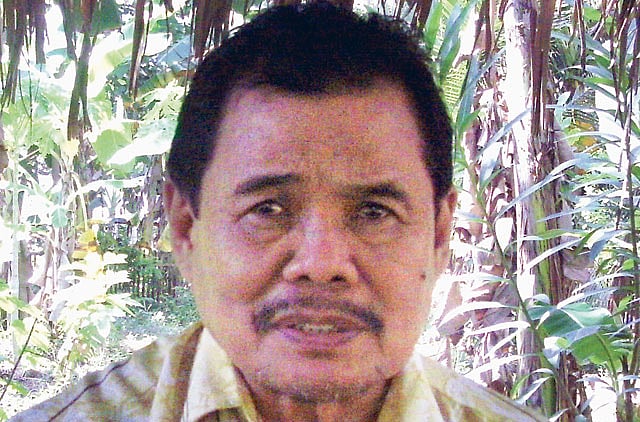
As the government was making preparations to resume the peace talks, Gulf News travelled to Maguindanao and interviewed MILF Chief Negotiator Mohaqer Iqbal to find out whether the main insurgent group in the southern Philippines intends to resume negotiations with the government.
It should be remembered that the government of Arroyo, just last April, signed an agreement with the MILF. It essentially stated that all previous minor agreements relating to peace would be respected. However, during the Gulf News interview, Iqbal made it clear that the MILF had not agreed to discuss issues that had already been decided.
GF: What do you expect from the new government in terms of its peace negotiations with the MILF?
Iqbal: As a negotiator, we [the MILF] need to be remain positive, otherwise we cannot continue with the peace process. It's like boxing; it's the boxers who determine the outcome of the match. It all depends on how the two groups slug it out in the ring, through the validity of their arguments.
The Government of the Republic of the Philippines (GRP) and the Moro Islamic Liberation Front (MILF) are represented by peace panels. I cannot speculate on what will happen. But I hope this time, we'll finally be able to address the Moro question.
GF: Before, the big question used to be how to put into action the plans that were approved in previous under the Arroyo government, but there's a possibility that these plans will never be implemented because of the influence of politicians who oppose the peace negotiations. Is this true?
Iqbal: Well, you know, we've been talking about achieving peace with the government from as early as January 7, 1997. That's more than 13 years. In so far as the MILF is concerned, our view of the peace process is one of "entrenchment".
Look at it this way; we're reaching out for an objective which is peace. Both the GRP and the MILF are aware that we won't achieve it immediately because of a number of stumbling blocks.
So, what do we do under these circumstances? We remove those obstacles. You may have noticed, for example, that both sides have not been able to firm-up minor agreements, such as the ones concerning the ban on the use of landmines, prohibition of child soldiers and the return of residents, displaced by previous clashes.
What we do is try to, bit-by-bit, remove these hurdles, in the overall hope that both sides will be able to arrive at a comprehensive solution to the Moro question.
However, we will not agree to a situation where matters that have already been agreed upon in past negotiations are discussed again. If that's the case, we would have achieved nothing so far and would have to start all over all again.
MILF's attitude towards the peace negotiations follows the principle of ‘irreversibility and consistency', which means that what has been settled is settled. In other words, we insist that we start from where we left off in the previous negotiations during the term of then president Gloria Macapagal-Arroyo.
GF: The new administration says it plans to ‘de-internationalise' peace talks, meaning that it plans to limit the influence of parties outside the country, who are not directly concerned with the negotiations. What is your view on this?
Iqbal: Well, if there's any party that's guilty of internationalising the talks, it's the government. Right from the start, the Moro question has been an international issue. For instance, if we refer to history, Mindanao, Sulu and Palawan as the Bangsamoro homelands have always been separate from the Luzon and Visayas mainland.
There's another argument supporting the belief that the Moro question is an international issue. During the 1970s, at the height of the Moro National Liberation Front (MNLF) rebellion, the then President Ferdinand Marcos sent his wife Imelda Marcos to Libya to talk with the Libyan leader Muammar Qadaffi. The Philippine government sought to settle the issue over the Moros by bringing it before an international forum.
This happened again in 2001, when President Arroyo asked the then Malaysian Prime Minister Mahathir Mohammad to intervene.
One of the first official acts of Arroyo, when she assumed the presidency that year was go to Kuala Lumpur and ask the Malaysian government to facilitate the talks between the GRP and the MILF. This was necessary because, during the time of Estrada, the talks had collapsed completely.
In other words, the Moro question has always been an international issue. So, if the Aquino government insists that the Moro question is simply a local problem and not an international issue, then we will not agree.
For the Aquino government to insist that the Moro question is only a local [Mindanao] problem means that all the apparatus set up to make the talks possible such as the ceasefire and the presence of the International Contact Group, amongst others, would have to be dismantled.
What would be the outcome if the government insisted on ‘de-internationalising' the peace talks? There would be no talks. We could not resume discussing the issue.
GF: Going back to the demands of Bangsamoro. In an interview in October 1999 with then Chairman Selamat Hashim he reiterated the MILF's demand for a separate state. Given that Selamat has now died, would you say that the MILF is still demanding the same thing?
Iqbal: Viewed from another angle, as can be understood in international law, the right to self determination is a collective right of the people; the right to govern themselves, in other words you should give the people the responsibility to choose what kind of government is right for them. Naturally, they would choose independence. Self-determination is a non-negotiable right.
The MILF will not even consider giving up our right to self-determination, but, it would be best not mention that in our negotiations for the time being. It's best to leave the issue open, without concluding it. However, not mentioning it does not necessarily mean that we're not aspiring to independence.
We're not completely inflexible in our position, but the government needs to realise just how important self-determination is to us.
In the draft peace agreement we sent to the Arroyo government, we divided the power of the central government and that of the state, which is the Bangsamoro state or sub-state. In that draft, there was no mention of abandoning our pursuit for self-determination.
GF: Do you see the current calls for charter change to your advantage in asking that your self-determination be recognised? Would such a development be positive for MILF?
Iqbal: Very recently, I met with a counterpart in the government and we discussed many issues that could eventually be incorporated into a proposal to be put to congress.
It's different for the MILF, however, especially in relation to the peace process. There are clear responsibilities on both sides, meaning that if they do sign an agreement, the MILF has to implement their part of the pact.
In other words, if in that agreement stipulated that there was a need to amend the Constitution, then, it would have to be carried out. What is important at the end of the day is that both the government and the MILF implement their own parts of the agreement.
Sign up for the Daily Briefing
Get the latest news and updates straight to your inbox
Network Links
GN StoreDownload our app
© Al Nisr Publishing LLC 2026. All rights reserved.