Filipinos go hungry despite resources
Lack of awareness and concern for the environment hitting Filipinos where it really hurts
Manila: Lack of awareness and concern for the environment may already be hitting Filipinos where it really hurts — their stomachs.
Senator Loren Legarda said that despite the country being blessed with natural resources, a Social Weather Stations (SWS) survey suggests many Filipinos are going hungry.
"Recently, the SWS released its survey results showing an increase in hunger incidence in the country," she said.
Legarda said the lack of an environmental protection programme has left many hungry despite the abundance of natural resources.
Importing
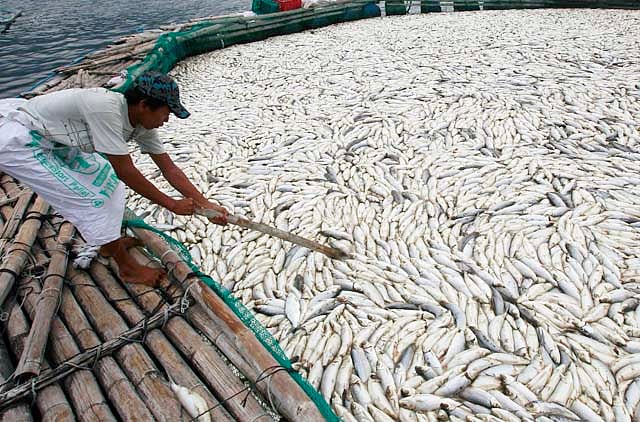
The degradation of the country's marine resources has reached a point where it now has to import fish species that were once abundant in its waters.
"Now there are reports that we are already importing galunggong [a kind of fish]," Legarda said.
"But 71 per cent of the fish species in the world are found in the Coral Triangle and the Philippines is one of the six countries that forms part of the area. We are so rich, but why are we hungry?"
Galunggong, or round scad, was once known as the "poor man's fish" as the cheapest species found in the market. But now, because of blast fishing and other illegal practices, the country has to source its supply from abroad.
Legarda, who is chair of the Senate Committee on Foreign Relations, said a recent hearing on the establishment of a Worldfish Centre office in the Philippines revealed environmental degradation has taken its toll on the country's food security.
According to the National Fisheries Research and Development Institute, galunggong is one of the three major pelagic species captured in the Philippine seas.
"We are blessed with rich and diverse coastal and marine resources such as coral reefs, mangroves, fisheries and many others," Legarda said.
‘Disturbing'
"We are now seeing the direct impact of environment degradation and abuse of natural resources to the hunger that many of our citizens have been experiencing for so long.
"It is immensely disturbing that we have allowed the depletion of our valuable resources at the risk of leaving nothing for the future generations of Filipinos," Legarda said.
Based on the Fourth Quarter 2011 Social Weather Survey, the proportion of families experiencing involuntary hunger at least once in three months was 22.5 per cent, or an estimated 4.5 million families, up from 21.5 per cent in the previous quarter.
Sign up for the Daily Briefing
Get the latest news and updates straight to your inbox
Network Links
GN StoreDownload our app
© Al Nisr Publishing LLC 2026. All rights reserved.