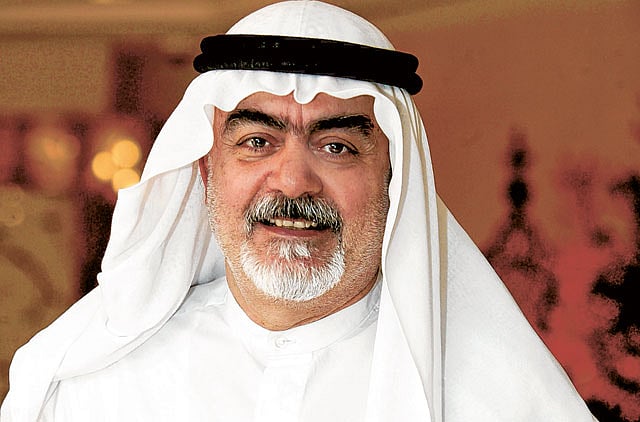
Dubai: Ten years after 9/11, despite the killing of Osama Bin Laden, the Arab and Islamic worlds seem to be living in uncertainty, Dr Yousuf Al Hassan, Emirati author and expert in international relations told Gulf News.
That has been the biggest characteristic of the region post 9/11, but Al Hassan believes the explosion of popular uprisings since January 2011 across the Arab world has brought more challenges to the region.
On the other hand, Al Hassan remarked how the 9/11 attacks caused immense political, economic and social pressure on the Arab world.
"The attack of 9/11 caused a sudden and resounding shock which reverberated strongly in the Arab world. It had strong effects in politics, economics, and society and impacted greatly on people's freedoms and security," he said.
‘Chaotic times'
"In the past decade, the Arab world lived through turbulent and chaotic times. Economies declined, unemployment increased, internal strife increased, the area also witnessed various strikes and disturbances, which had economic and societal dimensions."
Al Hassan said security measures and policies had changed remarkably as a result of the attack.
"The issues around security increased along with tighter restrictions on freedoms and more interference and intervention in the Arab world by regional powers, like Iran, Turkey and Israel."
"Another aspect is that the region witnessed at least three destructive and very brutal wars, the invasion of Iraq under false pretences, and the two Israeli wars on Lebanon and Gaza, in addition to militarised civil disputes in Yemen and security chaos and problems in more than one Arab state."
However, regarding the relationship between the Arab world and the West, he said Arab countries were heavily involved in international efforts to combat what was referred to as the ‘war on terror.'
"While all of this was going on and people were too preoccupied with everyday worries. The Arab world became overly involved in implementing Western disastrous economic policies, especially those of the School of Chicago that promoted free markets and privatisation and shrinking governments."
These are the same disastrous policies heralded by the late Milton Friedman that led to many economic crisis, including the most recent 2008 recession, Al Hassan said.
‘Emergence of extremists'
Al Hassan attributed the wide spread of Islamophobia and the emergence of extremists to the excessive power used in US foreign policy after the attacks.
"Unfortunately, American foreign policy in the Middle East post 9/11 was developed by the right wing Neo-Conservatives of the past US Administration," said Al Hassan.
He said this thinking tended to support the militarisation of relationships between nations and did not support diplomacy. "It is regrettable that their influence lingers on and is worsened with the rise of the right wing extremist in Israel with Netanyahu in power."
This allows the persistence of Islamophobia to continue and pushes policies towards extremism and results in even more spending in the military industry, Al Hassan added.
Sign up for the Daily Briefing
Get the latest news and updates straight to your inbox
Network Links
GN StoreDownload our app
© Al Nisr Publishing LLC 2026. All rights reserved.