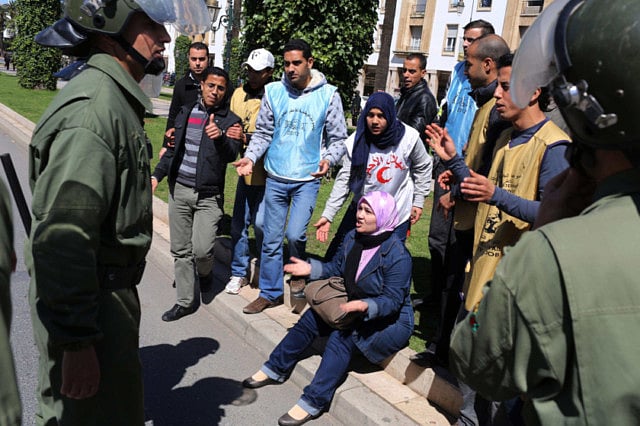
Rabat: After just over a year in power, Morocco’s Islamist-led government is struggling to fulfil the high hopes brought on by its election in 2011 on promises to fight corruption, provide for the needy and reform the country.
Working within a coalition of often reluctant allies, the moderate Islamists of the Justice and Development Party have found many of their initiatives blocked by an establishment with close ties to the royal palace that still wields ultimate power.
Like the Islamist parties in Tunisia and Egypt, the PJD, as the Moroccan party is known, capitalised on the pro-reform demonstrations of the Arab Spring and swept into power through the ballot box. But also like their sister parties in the region they are finding ruling to be much more difficult than being in the opposition.
Morocco gained notice internationally for its swift response to defuse Arab Spring-inspired demonstrations in 2011, pledging reform and greater democracy. The constitution was quickly amended and early elections were held, resulting in a coalition of Islamists along with leftist and conservative parties that pledged to tackle some of the deep-seated problems that had brought people into the streets by the tens of thousands.
The coalition, however, has shown signs of strain, with some members threatening to quit amid accusations the Islamists are trying to monopolise power. Meanwhile there has been little headway in confronting Morocco’s severe economic woes.
During recent by-elections, Prime Minister Abdul Ilah Benkirane, who leads the PJD, campaigned less on his record than on attacks against forces “plotting” his downfall. In January, he said at a conference that he wasn’t sure he would be allowed to finish his five-year term.
The opposition, however, has said that such talk is just a way of covering up for the government’s failures. In its first year, it has achieved relatively little, passing only five of the 20 laws meant to implement the democratic reforms of the new constitution.
Abdullah Bouanou, the head of the Islamists’ parliamentary delegation, said there are powerful forces in the administration, business world and opposition parties that oppose the government’s ambitious reform agenda and want to undo Morocco’s Arab Spring, which began on February 20, 2011.
Warned
“There are people who benefited from the despotism and corruption before February 20,” he said on Wednesday. “They want to go back to before February 20 and they don’t respect the law or the [new] constitution.”
He warned if they succeeded the people, as well as his own party, would return to the streets.
Paradoxically, some of the fiercest opposition to the PJD has come from its main coalition partner, the Istiqlal (Independence) Party, which has been a relentless critic of the Islamists since it elected a new leader, Hamid Chabat, in September.
Sign up for the Daily Briefing
Get the latest news and updates straight to your inbox
Network Links
GN StoreDownload our app
© Al Nisr Publishing LLC 2026. All rights reserved.