Revisiting genius of Mahfouz
Session recalls literary universe created by the only Arab Nobel literature prize winner
Dubai: The life and works of Nobel Prize winner and Egyptian novelist Najeeb Mahfouz was the subject of discussion by a panel under the title ‘Tribute to Najeeb Mahfouz'.
Discussing the only Arab to win the Nobel prize for literature were renowned Sudanese novelist Leila Aboul Ela, Iraqi playwright, novelist and director Abdul Elah Abdul Qader and translator Anthony Calderbank, Deputy Director of the British Council in Saudi Arabia.
This year marks Mahfouz's 100th birthday. He was born in Gamaliya, a poor neighbourhood of Cairo, and although Arabic literature was thriving in the 20th century with many equally important writers during his days, the panel attempted to define why Mahfouz was so outstanding.
On one side was his simplicity of style and language, which was in no way simplistic, and on the other was his ability to break all three taboos of the Arab world — politics, religion and sex — and to get away with it.
Abdul Qader said Mahfouz managed to say everything he wanted to say and to tackle a very difficult issue in the Arab world, which is sex, without ever having a word scrapped out of any of his novels. He managed to say what he wanted to, but not in a way that would offend the public or prompt censors to ban his works.
And although Mahfouz looked down on colloquial Arabic and wrote all his novels, even the conversations between simple people of poor neighbourhoods, in classical Arabic, he did not resort to complicated language, and all his novels were turned into films, plays and drama series, Abdul Qader said.
Main character
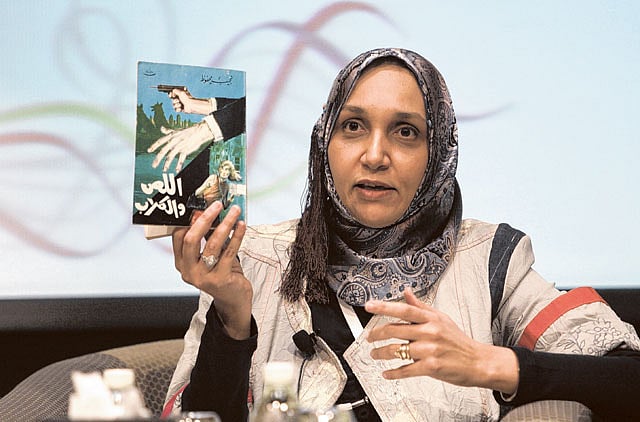
On her part, Leila said Najeeb Mahfouz is a household name in Egypt. "He is so well known that the main character in his trilogy, whose name was Si Sayyed, now means something to an Egyptian. If you say someone is Si Sayyed, it means that he is an overbearing father who is very strict with his children and oppressing his wife, and so on," she said. "I want to show the audience the cover of The Thief and the Dogs," Leila said, displaying the book.
"This is how Najeeb Mahfouz was marketed. His book has a racy cover and even inside we have illustrations of beautiful women and such, so he was a popular writer and people got to know of him," she said. Leila and Abdul Qader read excerpts of Mahfouz's work to the audience, which included many students studying the novelist's work.
Sign up for the Daily Briefing
Get the latest news and updates straight to your inbox
Network Links
GN StoreDownload our app
© Al Nisr Publishing LLC 2026. All rights reserved.