Tee off for Saadiyat Island
Explore takes a tour around Abu Dhabi's biggest development Saadiyat Island
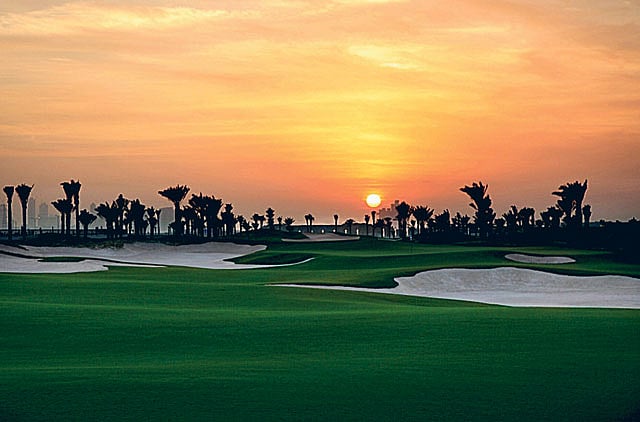
Scheduled to be completed in phases by 2020, it seems Saadiyat Island is well under way.
Just 500 metres off the coast of Abu Dhabi, the 27-square-kilometre multifaceted island destination will offer an array of attractions, including a business hub for international commerce; a waterfront home for residents; a cultural magnet for art aficionados; a home for architectural icons; a pristine beachfront tourism destination; and a challenging ground for compelling sporting experiences, such as the region's only tidal and ocean golf courses.
Among the five hotels (out of nine) announced on the island, Park Hyatt Hotel, Resort and Spa, and St Regis Saadiyat Island Resort are already under construction.
Very few structures are up at the moment, except for Manarat Al Saadiyat — a 15,400-square-metre visitor-and-exhibition centre designed to showcase the island's projects — and the Saadiyat Island Golf Course. Since the island is being built and completed in phases, it is difficult to get an overall idea of what it will look like but the sheer scale of the construction and the level of involvement from investors, sports personalities and superstar architects make it certain that Saadiyat Island will become a flagship destination.
We first visited Manarat Al Saadiyat, located in the Cultural District and now housing The Saadiyat Story, an interactive exhibition that informs visitors about the background and development of the island project in nine chapters.
Chapter 2 showcases a striking 3-D audio-visual experience about the vision of the island and Chapter 4 introduces visitors to the Cultural District through a series of graphic displays, using edge-lit glass graphic panels, lightboxes, videos and touchscreen interactives. The centre is open daily from 10am-4pm.
In the near future, Manarat Al Saadiyat will encompass four major galleries, a 250-seat theatre, a sales centre and a restaurant.
Saadiyat Island's museums
The Cultural District represents the world's largest single concentration of premier cultural institutions, including the Zayed National Museum, the Guggenheim Abu Dhabi Museum, the Louvre Abu Dhabi Museum, a Performing Arts Centre and the Maritime Museum, all designed by Pritzker prize-winning architects.
The Zayed National Museum was designed by Lord Norman Foster but the design has not yet been revealed. The museum will feature five galleries, each themed around a pillar of Shaikh Zayed's legacy and central aspects of his work. The galleries will be individually devoted to the UAE's heritage, its environment, the transformation of the emirates, unity through leadership and education, and to the late ruler's devotion to the ideals of humanitarianism and tolerance.
Spanning 345,000 square feet, the museum will also encompass a presidential library, a falconry centre, a family theatre, a visitor services area, shops and cafés. It is scheduled to open in 2013.
Foster + Partners is one of the UK's leading architectural firms that continues the work and design philosophy of its Pritzker Architecture prize-winning founder, Lord Norman Foster. The firm has designed iconic structures of the 20th and 21st centuries, such as the Chep Lap Kok Airport, the Hong Kong and Shanghai Bank and Spain's Bilbao Metro.
The Louvre Abu Dhabi Museum was designed by Pritzker Architecture prizewinner Jean Nouvel. The 24,000-square-metre museum will exhibit paintings, drawings, sculptures, manuscripts, archaeological and decorative arts created and collected all over the world through temporary exhibitions and from a permanent gallery space.
A 30-year contract has been signed with the French and Abu Dhabi governments to exchange artworks. The Louvre Abu Dhabi has already acquired various pieces from the French parent.
A key design element of the Louvre Abu Dhabi will be its 180-metre dome, floating above a cluster of buildings and waterways and perforated by interlaced patterns, letting diffused light filter into spaces below. The museum is due for completion in 2013.
Nouvel, the French architect has worked on more than 200 projects, including the Institut du Monde Arabe in Paris (Institute of the Arab World), the bullet-shaped Torre Agbar in Barcelona, the Guthrie Theatre in Minneapolis, the Musée du quai Branly in Paris and the Copenhagen Concert Hall.
The Guggenheim Abu Dhabi Museum was designed by world-renowned architect Frank Gehry. It will exhibit modern and contemporary art from around the world, dating from the Second World War to the present, along with cultural traditions and latest trends of Abu Dhabi, the UAE and the Middle East. Plans to showcase the pieces of the permanent collection are already in the works and will be unveiled in the near future.
The 42,000-square-metre museum will be the world's largest Guggenheim facility, including 12,000 square metres displaying the permanent collection, special exhibition galleries, a centre for art and technology, a children's art-education facility, archives, a library and a state-of-the-art conservation laboratory. It is scheduled to open in 2014.
Gehry's design reflects Gulf architecture, incorporating dramatic conical forms that play with a modern twist on the region's ancient wind towers. These structures blend form and function, and serve to ventilate and cool the museum's covered courtyards. The Canadian-American architect is responsible for the Guggenheim Museum in Bilbao, Spain, the Experience Music Project in Seattle and the arcs of the Walt Disney Concert Hall in Los Angeles.
The Performing Arts Centre, designed by Zaha Hadid, will serve as a multidiscipline venue, hosting performances or classical and contemporary music concerts, opera and theatre. Besides hosting performers from across the world, the centre will house an academy of performing arts to foster local and regional talent.
The Maritime Museum, designed by Tadao Ando, will celebrate the maritime heritage of the Arabian Gulf and serve to inspire environmental stewardship of the marine environment. The design features a reflective surface merging sea and land and ship-like interior with floating decks.
Five-star hotels and dining options
There will be nine five-star hotels on the beach that people can stay at or choose to dine in. Five of these have been announced.
Park Hyatt Hotel, Resort and Spa
The Dh1-billion hotel will be the first to open on the island. It will have 316 rooms, with a number of seaside villas, offering guests a sense of luxury and privacy. Guests and visitors can dine at Café Mezze or Bar & Grill. While lounging by the pool, guests can have a beverage of their choice at Beach House, the pool bar. For business meetings, The Living Room & Study will offer business centre facilities besides a variety of coffee, tea and pastry. The Tea Lounge at the lobby will be perfect for afternoon tea fans.
Expected to open: Beginning of 2011
Saadiyat Rotana Resort
Located along a private stretch of beach, the upscale hotel will have more than 350 rooms and 13 serviced villas. There will be a variety of food and beverage outlets, conference facilities, spa and Bodylines health and fitness club.
Expected to open: Mid 2013
Shangri-La Resort
The resort hotel will feature more than 280 rooms, 8 luxury serviced villas and more than 300 metres of pristine beach. The hotel will also have a speciality villa restaurant, pool bar, club house, food and beverage outlets, front-of-house and back-of-house facilities and outdoor landscaping on an area of approximately 75,000 square metres.
Expected to open: End of 2011
Mandarin Oriental
The spa resort and residence will host 160 guest rooms and suites, 35 serviced apartments and 50 branded residences. The group’s award-winning spa will be introduced to the region for the first time in a serene, meditative setting. Other features will include six eclectic restaurants and bars, meeting and banqueting rooms, a private beach club, a comprehensive fitness centre and a large outdoor swimming pool.
Expected to open: In 2013
St Regis Saadiyat Island Resort
The internationally acclaimed St Regis hotel and resort will be connected to the golf course and comprise of the St Regis Hotel with 380 rooms, 259 apartments and 33 luxury residential villas. Diners can choose from eight themed restaurants, an all-day-dining outlet, three lounges and more than 2,800 square metres of meeting and conference space.
Expected to open: Late 2011
— By Nada M. Alghowainim, Staff Writer
Award-winning Golf Club
By Nada M. Alghowainim, Staff Writer
A huge 18-hole championship beach golf course is spread across more than 317 acres of Saadiyat Island. Designed by world-renowned golfer Gary Player, it offers golfers a beachfront course, a world-class practice facility and a Golf Academy. The 2,900-square-metre Academy building, now serving as the clubhouse, is where players can relax after a hot day in the sun.
The clubhouse features a fully stocked golf shop, separate locker rooms for men and women, and diverse meeting facilities, besides a full-service restaurant and bar named Hawksbill Restaurant. It has a relaxed atmosphere and a range of options in the menu.
World-famous architect Frank Gehry will design the 18,000-square-metre Saadiyat Beach Golf Clubhouse, which is scheduled to be completed in 2012. It will include a boutique hotel with 26 deluxe rooms, two restaurants, a spa and a pro-shop.
Environment-conscious golfers can be assured that the course has been designed with nature in mind, which is also a shared philosophy of Gary Player Design and TDIC.
Being the only daily pay-and-play facility in the Middle East, golf fans can experience the course for one day without having to worry about membership subscriptions.
Having recently won the title of the “best golf course” in Middle East, the course caters to all levels of players, starting at 5,290 yards to the most challenging environment for the world’s leading tour players at 7,784 yards.
Access to the island
Saadiyat Island is seven minutes from downtown Abu Dhabi, 15 minutes from Abu Dhabi International Airport and an hour from Dubai. It can be reached by the Shaikh Khalifa Bridge and the Shaikh Khalifa Highway.
The bridge was one of the largest projects in Abu Dhabi, providing easy access to and from the island. Construction of the ten-lane, 1.4-kilometre bridge, which began in December 2006, has been completed and is now open to the public.
The Shaikh Khalifa Highway is a ten-lane road, stretching 6.5 kilometres across Saadiyat, providing visitors with a smooth connection between the island and Abu Dhabi International Airport, through Yas Island, in approximately 15 minutes. The main interchange of the link comprises seven bridges and three tunnels.
Saadiyat Island will eventually be connected to Abu Dhabi by train. The central-reserve platform for light rail has been constructed on Shaikh Khalifa Bridge.
Sign up for the Daily Briefing
Get the latest news and updates straight to your inbox
Network Links
GN StoreDownload our app
© Al Nisr Publishing LLC 2026. All rights reserved.