Our daily brot
With a per capita consumption of almost 85 kilograms every year, the country’s penchant for bread permeates all aspects of life
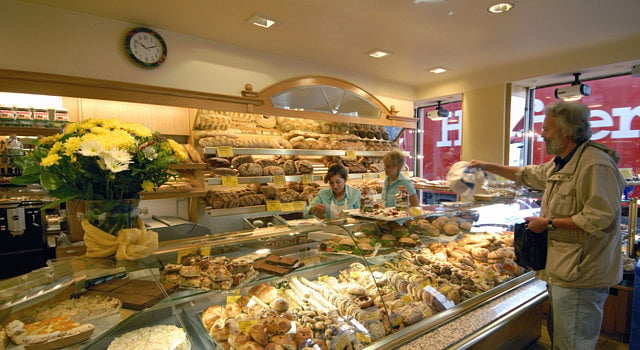
It is hard to think of another place under the sun where a bakery can manage to raise millions from its bread-buying customers. Last year, when the 120-year-old Wiener Feinbäckerei Heberer announced the launch of its jubilee bonds at approximately 300 bakeries across Germany, it promised its customers 7 per cent annual returns. Public response was a litlle slow, but it certainly was steady. The bond closed two months ago, and the company collected no less than €8.5 million (Dh40.06 million), which it plans to use for acquisitions, debt repayment, and to modernise its bakeries.
Although the millions matter, this is but a small illustration of the country’s colossal love affair with bread. Its importance in everyday life is exemplified by German words such as abendbrot for supper, which simply means evening bread, and brotzeit — the concept of a snack, which translates as bread time.
Bread is an essential and integral component of German cuisine: it is served at all meals, there are special versions for holidays and festivals, and each region has unique offerings, such as the Swabian Seele, Frankenlaib from the Franken region of Bavaria, and Christstollen from the Erzgebirge or Ore Mountains. Not surprisingly, the single biggest grievance of German expatriates in almost any part of the world is their inability to find acceptable local breads.
The lore extends beyond cuisine. A successful hip-hop band is named Fettes Brot (Fat Bread), and the hero of a popular children’s TV channel is a loaf-shaped puppet called Bernd das Brot (Bernd the Bread). The Museum der Brot Kultur, or the German Museum of Bread, was founded in Ulm in 1955 as the first of its kind in the world. Its collection now includes 16,000 objects in 30 sections and is undoubtedly the world’s most important archives on bread.
Germany may be the land of bread, but it is also a country of creative and innovative bakers who combine the traditional with the contemporary. The 2011-12 edition of the Germany Trade and Invest publication The Food & Beverage Industry in Germany reports how the baked goods segment has firmly established itself in the German retail consumer market: “With the highest annual per capita bread consumption in the world (84.2 kilograms), Germany is the European leader in the production of bread and rolls, and the third-largest producer of cookies. Germany also produces more varieties of breads than any other country, with over 300 varieties of dark and white breads and over 1,200 varieties of rolls and mini-breads.”
German bakers invest almost €500 million in new machinery, vehicles and equipment every year, including flour silo plants, flour pipelines, computer-controlled weighing systems and cooling systems. These technical innovations allow for greater diversity in baked goods, with more efficient and flexible production.
Political voice
Organised and organisational support is extended to bakers, bakeries and bakery managers across every aspect of the business. Founded in 1948, the German Bakers’ Confederation is a trade association that boasts membership from almost 70 per cent of the 14,594 master bakeries in Germany. Members benefit from this three-tier organisation, both in political discussions as well as in public opinion making, with efficient and sustainable advocacy.
For instance, the Confederation established the Advertising Association of German Bakers in 1971 to maintain and protect the industry’s positive image. Commercials and advertising campaigns support the activities of local bakeries, while brochures on recruitment and teaching materials are made available to schools. Another unit, run in association with the Union for Food, Delicacies and Restaurants, helps institutions with vocational and civic education.
Meanwhile, the Economic Organisation of the Bakery Industry (BÄKO) acts as a central partner of the baking industry for raw materials and is involved in worldwide procurement, delivery and consulting for bakeries.
Support structure
According to the industry publication The German Bakery Industry Facts and Figures 2011, there are currently 288 bakers’ guilds in Germany that independent bakers can join voluntarily.
Guild members benefit from pension plans that are specially tailored to the needs of bakery owners and workers by the German Bakers’ Confederation, while bakers who are in need can count on the financial assistance of the Karl-Grüßer support association.
Industry professionals can also count on ongoing education at the International Baking Academy in Weinheim, the Association of German Bakers’ Academies, state-run technical colleges, and the educational institutions of the guilds.
German Trade and Invest predicts that the domestic market will grow by 7.9 per cent by 2015. But Helmut Klemme, President of the Association for German Wholesale Bakeries, says the number of bakeries will probably drop from 15,000 to about 8,000 over the next eight years.
Speaking to the German newspaper The Local in September, Kelmme said small bakeries were losing business to the growing number of bakery departments in supermarkets and large discount stores.
“These departments are expected to increase from about today’s 15,000 to about 25,000 in 2020 — when about 60 per cent of bread will be bought in grocery stores. Consumers are voting with their feet, and this development is clearly at the expense of the small bakeries.”
Klemme says German consumers pay more for bread in traditional bakeries, where a kilogram of bread costs about €3.88, while in bakeries of larger stores it costs only €2.42. His words revoke an old German proverb, roughly translated as, “Whose bread I eat, his song I sing.”
Sign up for the Daily Briefing
Get the latest news and updates straight to your inbox
Network Links
GN StoreDownload our app
© Al Nisr Publishing LLC 2026. All rights reserved.