Look out... K-horror is here to stay
Hollywood studios are snapping up the rights to Korean films as the horror culture serves up a chilly spectacle for moviegoers
Quiz a horror film purist and more often than not you will hear about the mediocrity employed by Hollywood studios in churning out tried-and-tested formulae. In an industry that averages one horror film a month, the few movies that have successfully broken barriers over the last decade have been Asian imports, with Japan being an old player in the game and South Korea a more recent underdog.
Which is perhaps why the latter has been lauded for its efforts in kick-starting a film industry that has fallen victim to several decades of hardship.
In recent years, the path-breaking cinematic efforts of a few have given rise to a trend that is now referred to as the ‘K-horror culture'. Industry insiders believe the phenomenon is an attempt to replicate neighbouring Japan's J-horror craze, combined with globalisation opening up avenues for a wider audience base to reach out to quality entertainment with ease.
Quality cinema
"Let's face it, horror films sell," says New York-based award-winning director, Samir Banerjee. "However, the films that American studios produce are catered towards a tame, popcorn-munching audience that relies on cheesy fare to work to their advantage on date night. Those who demand quality are looking elsewhere and that avenue is emerging with the growth of ‘New Asia Cinema' and the accessibility to such features through international film festivals and online mediums."
While K-horror has sparked over four million Google pages, South Korea is no novice to the genre, having begun its experiments in the wake of Second World War.
Censorship regulations, funding constraints and competition from Hollywood hindered the industry's growth for nearly four decades. But this changed in the early nineties, when government sanctions were lifted and stability returned to South Korea, making way for a less restrictive film policy. It was also around this time that former President Kim Dae-jung established the Korean Film Commission to fund creative enterprises.
But it was only in 1998 that K-horror found a new lease of life with the release of Park Ki-hyeong's Whispering Corridors. The film went on to become the seventh-highest grosser in the republic that year. In an interview on the sidelines of the Fantasia Film Festival in 2001, Ki-hyeong spoke to journalists Offscreen about the sudden growth of the horror genre in Korea: "After the success of Whispering Corridors many producers changed their mind concerning horror films. The Korean horror genre actually dates back to around the 1960s and Kim Ki-Young made most of the horror films in that period. In the 1970s and 1980s, because of commercial reasons, horror films were abandoned... In the 1990s the genre made a comeback with many new directors."
Whispering Corridors was followed by a sequel of sorts, Memento Mori, which ran to packed houses — and suddenly studios were willing to open purse strings and experiment further with this genre.
The horror craze
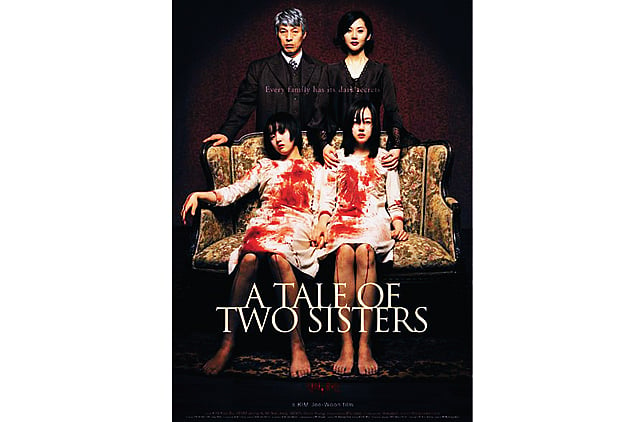
However, two movies do not kick-start a trend, and it would take another four years and a movie such as A Tale of Two Sisters to take the K-horror craze to new heights.
Directed by Kim Ji-Woon, the 2003 film's uncomfortable silences that stretched to near-screams had even Hollywood rushing to purchase its rights after studios realised the potential Asian money-spinners wielded after Japan's Ringu raked in $120 million (about Dh440 million) at the box office in its Western avatar The Ring in 2002. Transformed into The Uninvited, the film sparked many Korean remakes in Hollywood.
Rob Zombie, director of the 2007 film Halloween, has previously described the appeal of the movie: "You've got to kill someone in the first five seconds or the kid's going to go see 50 First Dates on the next screen. But Asian films, they let it go. It seems like nothing happens for an hour, and then the pay-off is so insane that people are freaking out," he told MTV.com.
This sentiment is echoed by Dubai-based filmmaker Abdul Basit Qureshi: "What makes these films work is the almost poetic justice that unravels with the plot, allowing the imagination to work overdrive in anticipating what may come next. Plus, there's no hurry in getting the body count to pile up; the emphasis is on the characters and the story to unravel at its own time."
Qureshi adds: "With countries such as South Korea emerging on to the global arena, Hollywood, which seems to have run out of ideas in the horror genre, has finally found a saviour."
ONES TO WATCH
Five Korean horror films
A Tale of Two Sisters: The film that started the K-Horror craze is not for the faint-hearted. Written and directed by Kim Ji-Woon, the 2003 hit sees two young girls, Su-mi and Su-yeon, return home from a mental institution following the death of their mother. Things come to a head when ghostly apparitions haunt Su-mi.
Whispering Corridors: A teacher is murdered on school grounds after finding out that a pupil called Jin-ju had committed suicide there nine years ago. Three girls discover the dead body, sparking a series of events that set the school abuzz with whispers of hauntings.
R-Point: Su-chang Kong's 2004 war-horror film, set in 1972 Vietnam, sees a group of soldiers head into the jungles to search for and rescue a unit that has been missing for months. Upon arrival at the unit'slast known address, the team discovers a burial site. Strange happenings start occurring, as unit members are killed off one by one.
Memento Mori: This 1999 film sees two students, Yoo Shi-Eun and Min Hyo-Shin, get romantically involved; but their relationship causes uproar among other students. Cracking under social pressure, Hyo-Shin commitssuicide. A fellow student, SohMin-Ah, discovers a secret diarykept between the former lovers and finds that all those who condemned the relationship are listed within — and dying.
Bunshinsaba: Ahn Byeong-ki's 2004 high school horror film sees three friends curse a set of bullies with the aid of an Ouija Board. Using the Bunshinsaba curse, one girl discovers the trio have called upon a spirit who has taken possession of her body.
— K.S.C.
Sign up for the Daily Briefing
Get the latest news and updates straight to your inbox
Network Links
GN StoreDownload our app
© Al Nisr Publishing LLC 2026. All rights reserved.