Investment: A larger piece of the pie
International investors eye high returns as the Indian government revisits its FDI policy despite divided public opinion
Everyone wants in on India. It is the fourth most attractive foreign investment destination in the world after the United States (first) and China (second), according to the World Investment Report 2012 by the United Nations Conference on Trade and Development. Between April 2000 and May 2012 India attracted foreign direct investment (FDI) worth $258 billion (Dh947.6 billion) across sectors such as services, telecommunications, IT, construction and real estate.
India is chock-full of potential with high domestic demand, production cost competitiveness and a massive talent pool. According to Ernst & Young’s 2012 India Attractiveness Survey, the country saw a 25 per cent increase in FDI in the first 11 months of 2011, attracting 864 projects, which created more than 216,000 jobs.
As the world continues to wrestle with recessionary concerns, India’s resilience to macroeconomic challenges has attracted a strong number of FDI projects — a clear indication that global investors are sure of its long-term prospects.
But is it so simple? “There [is] a political and cultural unease against the perceived sale of national assets to foreign companies and investors,” says Anshuman Magazine, Chairman and Managing Director, CBRE South Asia, a real estate consulting firm, in an interview with GN Focus.
From an international investors’ perspective, the recent Vodafone-led tax dispute with India highlights the need for clarity and balance. This April, Vodafone, India’s largest foreign investor, threatened the Indian government with legal proceedings under a bilateral investment treaty challenging India’s plans to amend its tax code, which could bill the UK-listed telecom group up to $2.6 billion in capital gains tax, following Vodafone’s 2007 purchase of Hutchison Essar, an Indian mobile operator. In the bigger picture, this dispute has faded to a negligible dent.
The FDI spotlight is now on two key sectors, retail and aviation. “Both sectors require foreign investment for infrastructure creation and ushering in new technologies. However, they employ a large number of people and the public is anxious about the impact on employment opportunities and sustenance of small and medium enterprises, specifically in the retail sector,” says Magazine.
Retail
India allows 100 per cent foreign investment in single brand retailers (SBR), which was locked at 51 per cent in 2006. The next FDI policy proposed is for multi-brand retailers (MBR), which allows 51 per cent foreign ownership. The government is pursuing a political consensus to see the policy through. Here’s why. India’s retail sector is worth a whopping $500 billion, of which more than 95 per cent comprises small-scale retail or independent retailers. The pent-up demand for consumer goods is making India one of the hottest markets.
“With around 15 million retail outlets, India has the highest density of small shops in the world, which employs 40 million people,” says Dharmendra Kumar, Director, India FDI Watch, an organisation that seeks to prevent FDI in the Indian retail sector. “FDI in MBR could have far-reaching implications for many including small farmers and independent retailers in India, where agriculture and retail are the two largest sources of livelihood. It would challenge the very existence of small independent retailers.”
Anand Sharma, Minister of Commerce and Industry, insists the new policy protects India’s interests.
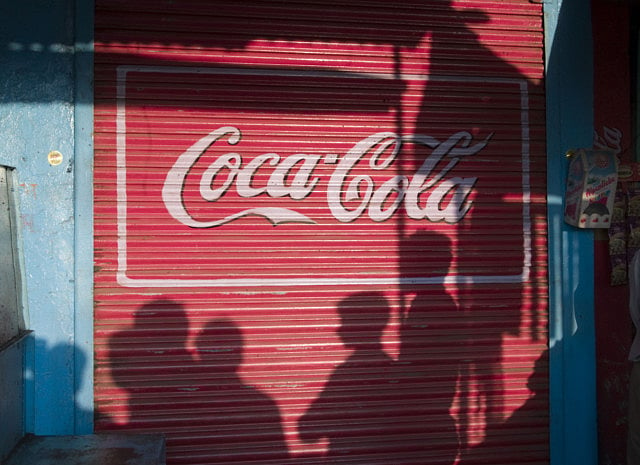
When the SBR policy announced 100 per cent foreign ownership, leading global brands queued up thick and fast. The likes of Ikea Group and H&M confirmed major investments despite restrictive mandates. In June last year, Ikea wanted to invest $1.9 billion for expansion. Last November Coca-Cola decided to spend $2 billion in India over five years, which is equivalent to its investment in the country in the past 18 years. Ford announced $1 billion to set up a second production line in India, one of its fastest-growing markets in the world.
The good
“[With FDI] we’re looking at major developments in logistics, infrastructure, supply chain management, textile and food sectors. In fact, it’s going to impact food retail in a positive way,” says Shubranshu Pani, Joint Managing Director, Retail Services, Jones Lang LaSalle India, who cites the hypermarket business model as the advantage. “These outlets provide deep value to customers, by buying in bulk from the source — farmers — thereby passing the benefits to customers, which translates into customer loyalty.”
The bad
Kumar says the policy could displace more workers than it could employ. “It does not increase the country’s production base as there is no rocket technology attached to it.” Also, India’s complex retail environment and consumer behaviour do not guarantee high consumption levels compared to global markets. “Brands won’t be able to plant their existing business model. They will have to build it from the ground up,” says Pani. As a result, the growth of corporate retail will be at the cost of self-organised independent retail. A mere change in format may not boost demand. FDI could also threaten the Indian SME sector by opening up imports.
Best case scenario
So where do we stand? The answer, experts say, lies in the policy’s caveats. Dr Harvinder Singh, Associate Professor in Marketing, Institute of Management Technology, Ghaziabad, believes tweaking the policy’s mandates in India’s favour could make a huge difference. “The government should make it mandatory for retailers to invest in skill development of local youth to protect and increase employment opportunities.” Singh recommends a regulator along with a series of strategic controls to prune and monitor growth. “By disallowing foreign retailers to operate in smaller towns, we can dilute the impact on small to medium retailers,” says Singh.
Other concerns prevail. Kumar says, “The back end is loosely defined with no regulations on key aspects including number, size, and location of superstores.” The current 30 per cent procurement clause, which also mandates MBRs to source from SMEs with a capitalisation of $1 million, is also in the grey. “Some that intend to come to India may open only a few stores, which may not have enough volumes to stock 30 per cent,” says Pani. “Furthermore once an SME crosses a turnover of $1 million the brands can no longer source from them.”
Aviation
“Aviation already has 49 per cent FDI allowed, but foreign airlines are barred from investing in domestic carriers,” says Kapil Kaul, CEO South Asia, Centre for Asia Pacific Aviation (CAPA) India. According to the latest reports the Commerce Ministry plans to allow foreign airlines to pick up stakes in any Indian carrier up to 49 per cent.
India has a fair bit to worry about though. The International Air Transport Association President recently remarked that India’s aviation sector faced a multifaceted crisis and if critical domestic problems were not addressed immediately, foreign investors would not line up even if they were offered a 49 per cent stake.
The sector’s model operates on higher operating costs with a lower cost model compared to other countries, which aviation leaders, such as Jet Airways’ Naresh Goyal, believe has resulted in sustained losses for Indian carriers.
So what’s taking so long? “One of the key reasons the government is yet to settle on placing FDI limits is because it wants to allow domestic players to grow of their own accord and become strong,” says Saj Ahmad, Chief Analyst, StrategicAero Research.
The good
With FDI, India will gain the chops to tap into a massive market within its borders. “That means airlines will get better and less efficient players will be booted out,” says Ahmad. As a result, quality, service, expertise and technology will automatically get a boost. FDI would mean flailing airlines that lack capital but have growth potential can take off and expand again.
The bad
Whether the government can accept the risks attached to FDI remains to be seen. A burst of foreign capital and investment could result in an airline collapse and loss of jobs. “While FDI does help in the short term, there are no clear government plans on what to do if investors dump their equity holdings or assume full control of an Indian airline and asset strip it for the benefit of the parent company,” says Ahmad.
Best case scenario
CAPA believes that by issuing new licences, joint ventures between leading global carriers and large Indian corporations could arise. It also recommends introducing a strong and independent regulator and accident and safety board, an overhaul of training in India in a cost-effective manner, and separating the policy and regulatory functions. It also advises a phased approach to policy, allowing time to set the industry in order before introducing a new liberal one from 2015-16 providing all stakeholders, including the government, with three years to prepare for a new open environment.
Sign up for the Daily Briefing
Get the latest news and updates straight to your inbox
Network Links
GN StoreDownload our app
© Al Nisr Publishing LLC 2026. All rights reserved.