India shining: A look behind the lustre
The nation stands poised at the gateway to a brilliant future, with economic success and political stability being among its key drivers.
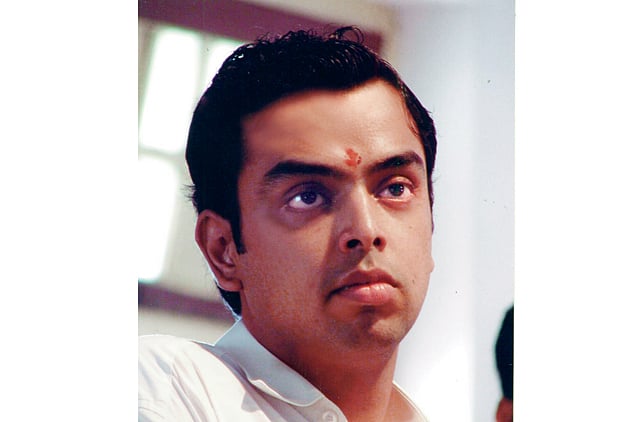
Milind Deora
Politician
Deora, currently the Minister of State for Communications and Information Technology, was born and brought up in Mumbai. He graduated from Boston University in Business and Political Science, and on returning from the US, founded Sparsh, a social initiative that aims at educating students in computer and IT proficiency. He was elected to the Indian Parliament in 2004 from the South Mumbai constituency at the age of 27, making him one of the youngest MPs ever. He loves music and is an accomplished blues guitarist.
India: A superpower in the making
"In my view the policy framework that we have is our biggest deterrent, preventing India from growing to the next level. While the policies are good and well-intended, it is the regulation and implementation of these policies that leaves much to be desired. There is a lack of clarity and cohesiveness, when it comes to framing all our policies, whether military, foreign or economic. After all, how these policies are framed and articulated along effectively and their timely implementation is what makes a huge difference. And there in lies the challenge before us.
"As far as being a super power is concerned, I am confident that we will get there because we have certain fundamental advantages compared to other nations, the biggest being that we are the largest functioning democracy and while that is oft repeated, we should never underestimate the value of the constitution."
India's youth: Demographic dividend or disaster?
"We have a gold mine as far as the youth are concerned, but again it is very important to have the right policies in place for the youth. We intend well to harness all the potential of having such a massive youth segment within the population, but again, our implementation sometimes fails. For the youth to benefit, we have to ensure that our public and private sectors is well regulated, creating enough opportunities for the youth."
Religion: Secularism or vote banks?
"We live in a nation that allows its citizens the freedom to express their religious beliefs, and yet it is so unfortunate that we end up debating on this issue numerously. While India is most certainly not divided on the basis of religion, there are certain groups of people that support this ideology and there in lies the problem. We have allowed religion to be politicised and there are definite vote bank politics that play out, but not only is it despicable, it is also a belief that only a few subscribe to."
Corruption: A necessary evil?
"It is impossible to deny that corruption exists, but what is heartening is that it always manages to get exposed. India is at a tipping point and when every stakeholder facilitates the truth, we will be able to get rid of this necessary evil that has become so much a part of our everyday lives. While the media exposes the truth, it is often exaggerated, so perhaps things are not as bad as they are often portrayed."
Kiran Bedi
Activist
India's first and highest ranking woman officer; Bedi joined the Indian Police Service in 1972 and retired in 2007. She has worked with the UN as the Police Advisor to the Secretary General, in the Department of Peace Keeping Operations as well as represented India at various international forums on crime prevention, drug abuse, police and prison reforms, and women's issues. Recipient of the prestigious Ramon Magsaysay Award, Bedi is columnist and author of several books and anchors radio and television shows.
India: A superpower in the making
"What is weakening our nation is poor governance and corruption. Of course, this corruption follows from poor governance and until our governance is not set right, we are going to be crippled in many ways than just this. Not just the government but the citizens too should be equally responsible, where we stop wasting resources, stop violating the law and pay our taxes judiciously."
India's youth: Demographic dividend or disaster?
"I don't feel so buoyant about this huge demographic dividend — in my opinion it is one of our biggest challenges. We are dealing with a segment of the population that always requires more — more schools, more universities, more opportunities, more jobs. The youth want a better standard of living — they want more space, as they and their needs are growing. They want more space on the trains, on the roads, on the buses, they want their own homes. Instead, what we have is a shortage of food, space, opportunities, commodities, jobs, education institutions and infrastructure. And we can only turn things around if every penny we earn goes towards building a better nation, with adequate opportunities for the youth."
Democracy: The right to reject
"We deserve the best government possible. The reason we do not get it is that while we have the right to vote, we do not have right to reject. Invariably, we end up voting between the devil and the deep sea. We must also have the right to reject — and unless that happens we will not be able to get a new creed of politicians.
"One-third of the Indian politicians have criminal charges against them, out of which about 70 to 80 per cent are serious charges. And yet, they get elected. This is because we do not have the right to reject."
Ritu Kumr
Designer
Often branded the empress of Indian couture, Kumar's speciality is traditional Indian clothes that depict heavily the textile and embroidery heritage of her country. International icons such as the late Princess Diana and Jemima Khan have been outfitted by her. Kumar's book, Costumes and Textiles of Royal India, was published by Christie's, London.
India: A superpower in the making
"I don't see what's the hurry, and why do we have to compare ourselves to any other country? We are barely 60 years old and have achieved a lot, considering the short span of time. I'm confident that we'll get there in due course."
India's youth: Demographic dividend or disaster?
"It is so inspiring to see the country's youth — they are full of energy, new ideas, and the drive to achieve their goals. How can these people be categorised as anything but a dividend that we are waiting to reap?
"And it is this generation that will also do away with the various issues fracturing our nation, such as scams and communal tension. They have no baggage and will work towards a stronger India.
"We already observe a greater demand for accountability and transparency in the country, and spearheading this much needed change is a generation that will tolerate nothing less.
Terrorism: Homegrown or exported?
"It is sad that we are seeing such terror attacks on our city, but terrorism today is a global phenomenon. We have to battle it collectively."
Society: Intolerant and emancipated
"We live in a society that worries about increasing divorce rates rather than poverty. I suppose we have lived with the latter for so long that it is no longer shocking to have beggars knocking on our car windows. Regarding divorce, I do not see it as something bad. Education has given our women the option of being independent, thereby not tolerating anything less than what they expect."
Jitish Kallat
Artist
Known for his bold figurative paintings that are often self-referential with socio-political content drawn from life in Mumbai, news events and popular culture, Kallat has combined photography, painting and collage in large works. In addition to a number of solo exhibitions in India, he has been included in major international exhibitions such as the 1st Fukuoka Asian Art Triennale 1999, Japan; the 7th Havana Biennial 2000, Cuba; Century City: Art and Culture in the Modern Metropolis, Tate Modern, London, in 2001; the Armory Show, New York, in 2004, and Public Notice-2, Bodhi Art, Singapore in 2008.
India: A superpower in the making
"The ethical consciousness of people in power is sadly lacking. They have the power, but it is not being correctly deployed. We are seeing a tremendous lack of accountability, both at the political and corporate level, and this then trickles down to all walks of life. The engine of governance and the industries have to take the lead to take India to the next level and this is visibly lacking.
We'll never be able to be a super power, when the possibilities available to India today are not available to everyone, because the gatekeepers of this power are absorbing everything themselves. India is shining, but a few are basking in the sunshine."
Religion: Secularism or vote banks?
"We are living in times that are seeing the recycling of human folly. There are people with great capacity and capability who spend their life terrorising others, be it gunning the Indian Parliament, bombing Mumbai, the shootings in Oslo, or trying to bring down a vertical tower. Why can't the same capacity and capability be used for good? "The subcontinent is a secular terrain that's carved out of a populace that is primarily of believers — if we want to see a secular India re-emerge, it would be by taking into account all these beliefs.
"The state needs to be purged of inflammatory and opportunistic politics that essentially turns belief into hatred. There is a politically created mobocracy that lies alongside our democracy, and while the levels of political opportunism have risen, there is a realisation that governments are not linked to religion. But this realisation needs to come from a large part of the population."
Corruption: A necessary evil?
"It is a malignancy that truly needs some kind of radiation. We hope civil society has a greater voice.
"While we say that people get the government they deserve, perhaps it's time that Indians asked for a better government. If the average Indian asks for a better India, we will see a better India emerge. It is about individual emancipation, which will then get rid of these evils such as corruption and hate-based politics.
"Also, I am strongly of the belief that if the imagination among youth is allowed to grow, it will take the nation in its stride and lead it to success."
Manoj Chandran
Social Entrepreneur
He joined Ashoka India, a global association of social entrerpreneurs, as its Marketing Director with the objective of making Ashoka's vision and its various programmes successful in India and South Asia. Ashoka is leading a profound transformation in society, where social entrepreneurs are creating innovative solutions, delivering extraordinary results, and improving the lives of millions of people. It has grown to an association of more than 2,500 Fellows in over 60 countries.
India: A superpower in the making
"Today, when you speak of India emerging as a new superpower, you are not referring to the 1.2 billion people of India. You are essentially talking about just a small sliver of our population that has access to better living standards. We cannot be a leading country unless the entire nation benefits from the efforts of creating a superpower."
India's youth: Demographic dividend or disaster?
"They are the hope for all of us. The youth today hold more promises in almost every space than ever before. They ask the right questions, display entrepreneurial character and feel connected to the world like never before. We need to ensure that the youth of India do not lose the key skill of empathy that helps them live a socially relevant life. They also need to build a respect for history and learn from it."
Corruption: A necessary evil?
"Entrepreneurship is about seeing opportunities. Social entrepreneurs have always seen opportunities in adverse conditions — opportunities to come out with innovative ideas to resolve issues. No nation can ever afford to say that any social issue cannot be resolved. We have always had social entrepreneurs address the issue of corruption effectively. The need today is for the citizens to see such social problems as theirs. Once the awareness reaches a tipping point, we will witness mass movements that will effectively address such issues."
Sign up for the Daily Briefing
Get the latest news and updates straight to your inbox
Network Links
GN StoreDownload our app
© Al Nisr Publishing LLC 2026. All rights reserved.