Bridge to the world
The UAE’s infrastructural developments act as a catalyst for Pakistani companies hoping to make a mark on the global stage
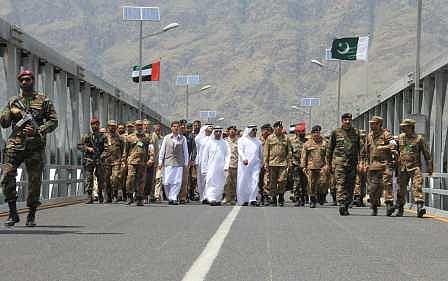
As the undisputed commercial, financial and logistics hub between the East and West, the UAE acts as a perfect launchpad for Pakistani companies with global expansion plans.
Trade between Pakistan and the UAE rose from $2.8 billion (about Dh10 billion) to $7.2 billion in six years, said Makhdoom Amin Fahim, Pakistani Senior Commerce Minister, in a written response to the daily Business Recorder last year, adding that during 2010-11, Pakistani exports to the UAE were $1.8 billion and imports stood at $5.4 billion. Currently, figures stand at $8.4 billion with Pakistani exports to the UAE being $2 billion.
Companies such as the Siddco Group, pioneers in plastic conversion, petrochemicals, trade and logistics, have capitalised on the UAE’s safe business haven status to catapult themselves into leading industrial players.
“The idea is to align our businesses with the mainstream industry of the region and what can be more fundamental than petroleum?” asks Zakee Siddiqi, Chairman and CEO, Siddco Group. He emphasises that the key move is to focus on import substitutions and technology enhancements. “This is why we are continually acquiring the latest technology comprising heavy machinery and equipment from Europe and the Middle East. It is a more cost-effective solution.
“Companies prefer to route their transactions through the UAE. It is efficient, liberal, transparent and cost-effective. Who wouldn’t want to deal with AAA banks in an AAA rating country?” asks Siddiqi.
The first company of the group, United Oil Supply Company (UOSC), was established in 2003 at Al Hamriyah Port, Sharjah. Since then, UOSC has transformed into a reputable solutions provider in the regional petrochemical storage and logistics segment, with a capacity of more than 75,000 tonnes up from its initial 13,000. At any given point of time UOSC handles up to $100 million worth of goods.
With plastics being a logical derivative of petroleum, the company also produces 11 million plastic cans per month. And while it employs more than 300 Pakistanis, it doesn’t have a base in Pakistan.
Another company that has carved a niche for itself is Pak Oasis. Founded in 2005, it set up UAE operations a couple of years ago. The company bills itself as a leading turnkey water solutions provider.
“The UAE acts as a pivotal meeting point, which only aids business for Pak Oasis. Clients come from not just across the GCC but the rest of the Middle East to meet in the UAE,” says Omar Jilani, Managing Director, Pak Oasis.
“There is tremendous support for businesses here, with infrastructural developments designed to encourage growth and collaborative opportunities with other organisations. Pak Oasis has found this of great benefit since its establishment in the UAE,” he says.
Global connections
Industry events such as the Water, Energy, Technology and Environment Exhibition, held each spring in Dubai, allow the company to interact with potential clients from around the globe. “Having this proximity to our competitors has allowed us to reassess ourselves, strengthen our position, highlight our unique strengths and develop our advantages,” adds the managing director.
“Being in the region has helped us connect with the world and promote business on a scale, unimaginable had we confined ourselves to being only a national player,” says Khadija Naeem, Deputy General Manager, Chenab Group International.
Jilani is of the opinion that establishment on the international instead of national stage necessitates the ability to develop advantages and maintain a niche. “However, the proximity to Pakistan has allowed Pak Oasis to do this safely and securely, at first leaning on our Pakistani office for support while growing as a company.”
Facilitating ties
Further facilitating infrastructural ease and economic support in the UAE are numerous free zones across the country, such as the Hamriyah Free Zone Authority (HFZA).
“With more than 350 Pakistani companies having set up offices in HFZA, investment by Pakistanis is ranked as the second highest in HFZA among 150 nationalities from across the globe,” says Dr Rashid Alleem, Director General, Sharjah Department of Seaports and Customs and Sharjah Free Zones Authority. “HFZA offers the red carpet treatment to Pakistani businesses in the free zone with full ownership and security,” adds the director general.
The UAE remains the second-largest trade partner of Pakistan. “And we have to acknowledge that it’s small, medium and microenterprises that are the major contributors to this robust growth,” adds Alleem.
The connection between Pakistan and the UAE has a history built on shared traditions, common values and geographic proximity, he says.
Sign up for the Daily Briefing
Get the latest news and updates straight to your inbox
Network Links
GN StoreDownload our app
© Al Nisr Publishing LLC 2026. All rights reserved.