Honest and open communications the secret to good public relations
Practitioners urged to be forthright even when delivering bad news
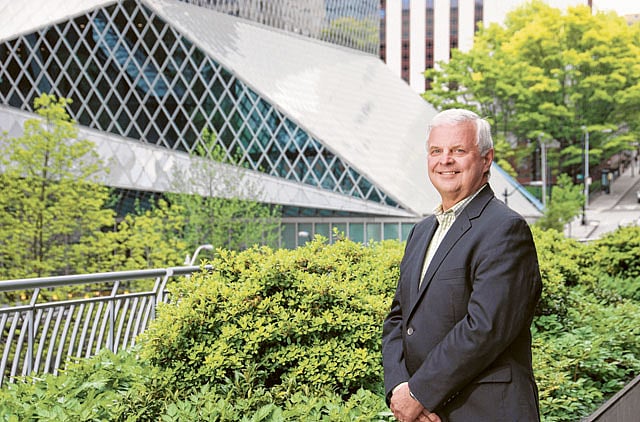
Dubai: In a bleak economic and financial — not to mention political — landscape, putting a "spin" to corporate communications might be one way to spread some good cheer among the intended audience.
But don't try selling that to Bob Frause, chairman and chief executive officer of the Frause Group and an acknowledged doyen in the global business of PR.
Instead, he prefers the more forthright approach and even when it comes to dealing with bad news. It could be that his years in the US Army, where he was a captain, could have formed such an approach. Or it could be the 40 years spent in various high-ranking capacities in the global PR industry that honed the "directness is good" mindset.
Frause will be in Dubai next week to helm a gathering of Public Relations Organisations International, formed through an affiliation of independent agencies with his group. Ahead of the meeting, Frause provides his thoughts on the state of the industry and what PR professionals should be taking out of it.
Gulf News: Corporate fin-ancials are not where they should be and there is consumer disquiet everywhere. It would then seem that the global communications industry has only bad news to deal in. Does it mean new strategies are called for?
Bob Frause: Regardless of the condition of regional or global economies there is still a need to communicate. The good thing about bad news is that people have to think about creative solutions and strategies to turn things around and in turn generate good news. Once the thinking is done new strategies go from paper to execution. And part of execution is the need to engage people in the conversation.
Honest and open communications about honest and creative strategies is the secret to good news.
To any corporate communications campaign, the first response is "where does the spin end?" Do you feel scepticism among the target audience has touched new peaks?
I think using the word "spin" is a little trite when thinking about corporate communication. As long as it is open, truthful and non-deceptive I like to think of it as "focused communication." People only become sceptical of corporate communication practices when all they see and read focuses on the few bad seeds out there.
The common perception is that every big organisation communicates that way. This is far from the truth.
What would you rate as the biggest challenge for the industry — is it the economy or the perception?
Definitely perception. Perception that PR professionals are dishonest communicators or are only "spin doctors." That perception is created from stories about the truly bad practices by corporate executives and organisational wrongdoings or abuses. And in some cases PR practitioners perpetuate perception because they choose to practice unethically and get caught doing it.
We see that associations — such as Mepra [Middle East Public Relations Association — in the Middle East are working hard to change that perception at the grass roots. Let's be honest — this is challenging both in the region as well as across the world.
Unlike in the advertising space, global PR has not seen too much of a consolidation process. Is one still possible?
It depends on a couple of things. Is there money to be made or does a firm need coverage in a market or markets to remain competitive regardless of the profit motive.
There is not much M & A activity in the PR agency sector now because agencies don't need to spend money on what they don't have when they can join a network like Public Relations Organisations International (Proi) and get the best a market has to offer without any capital and continuing overhead costs.
You eschew direct equity in favour of a network of affiliations. Are you convinced this would ensure the same level of skills can be replicated at all the affiliates?
Actually it is better. Having worked at two multinationals Hill and Knowlton and DDB, I have first-hand experience that non-equity, best-in-market, relationships produce better quality for every client. The reason is that clients don't have to worry about the varying level of services from individual multinational offices. Nor do clients have to worry about higher than average billing rates due to capital and overhead burdens assessed by the home office.
Service and quality are not the top interests of multinationals. It's mostly about return on investment and money than product and service. With a network of independent agencies you get the CEO, top PR practitioners, thought-provoking solutions and then the bill without tonnes of multinational overhead.
What could be better?
Middle east
Prospects look bright
Dubai will host both the Global Board and the Europe, Middle East and Africa regional meetings of the Public Relations Organisations International (Proi) over the weekend. The choice of location is significant as it comes at a time when PR billings for the region are estimated at $500 million (Dh1.8 billion) and are expected to record significant growth in the medium-term.
"With the media landscape changing due to new freedoms, apart from the spread of digital and social media, prospects for the communications industry in the Middle East have never looked so good," said Louay Al Samarrai of Active PR, which is the local affiliate for Proi.
— M.N.
Sign up for the Daily Briefing
Get the latest news and updates straight to your inbox
Network Links
GN StoreDownload our app
© Al Nisr Publishing LLC 2026. All rights reserved.