Gianni Merlo: We need to set our own path
Leading sports journalist discusses the importance of looking beyond the obvious
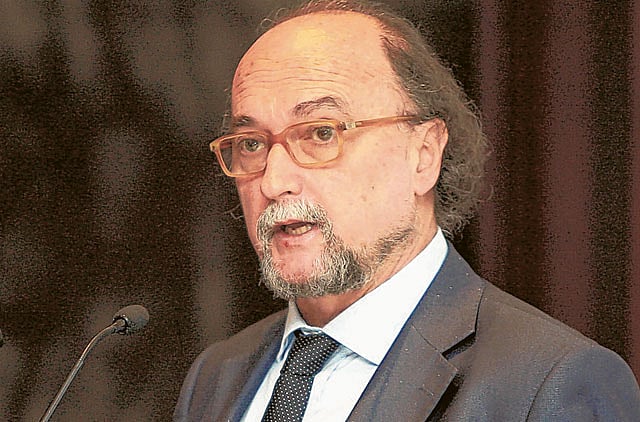
Dubai: The 68th Association Internationale De La Presse Sportive Congress in Marrakesh in 2005 marked a milestone in the functioning of the world governing body for sports media.
The Congress saw the end of the 12-year presidential reign of Togay Bayatli and the election of his successor Gianni Merlo.
Born in 1947 in Vigevano, Italy, Merlo began his journalistic career in 1967 with the magazine Atletica Leggera, founded by his father Dante, and is presently with the prestigious Gazzetta dello Sport specialising in athletics, skiing and sports policy.
Merlo has published two encylopaedias, Conoscere l'Atletica and Conoscere lo Sci, but his most recent book was two years back with South African double amputee Oscar Pistorius.
During a chequered career, Merlo has covered 19 Olympic Games — nine summer starting with Munich in 1972 until the last one in Beijing in 2008, and ten winter competitions, starting with Innsbruck in 1976 until Vancouver in 2010.
In the UAE last week to speak at the two-day Dubai International Sports Media Forum, Merlo took time off to speak to Gulf News on a range of issues.
GULF NEWS: How important is an event like this forum for sports journalism in this region?
GIANNI MERLO: For the first time I came here and found there is a lot of discussion on the independence of the press and how we can have journalists to be free and how they can have a culture of improvement in their career.
There are some problems that have to be attended to here and we are ready as an association to come here and address these issues as best as we can.
It is a common belief that sports journalism is not as important as other streams such as political or business journalism.
No, I don't agree. Sports journalism is very important.
Sport is a social element related especially to the younger generation in our communities. So what sports journalism needs now is more culture because we have a social duty to the population.
For this reason we have to study more and then lead a sort of revolution.
We need to understand how important a job we have.
We need to see how important a role we play while educating the young and the not so young in being better.
How can we adapt to these changes that are taking place around us?
The only way to do so is by studying and beginning to open our minds to the reality surrounding us.
A journalist has to be proud of himself. He is not there to just follow what the officials are saying. We need to set our own path. And to set this path we need to study and empower ourselves. We can't afford to be superficial.
We need to go deeply into every issue, we need to exchange opinions with other people, we need to innovate, and through all this we cannot think we are the best because we can never be the best.
We have to keep on improving, just like an athlete.
What challenges do we face?
Sometimes we have to fight against bad tradition. Some things from the past don't fit in our modern-day living.
This is a new process of revolution of our profession.
Why do you think sports journalism is not taken all that seriously?
Actually, this is the idea conveyed by the powers as they prefer not to take sports journalism seriously merely because they are afraid of us.
In some way sports journalism is more free than other forms and norms of journalism. You can speak with more colleagues from around the world and sports journalism has a much bigger and better reach.
This sometimes is not liked by the powers as we can tend to sometimes stumble and discover what is not right from their end.
However, the clever powers nowadays have understood that we can help them in return in promoting their activities in an independent way. And in this manner we can help a lot for the sport to grow in a proper way.
What sort of future do you see for sports journalism here?
We have signed a memorandum of understanding with the Dubai Sports Council in how we can work together for a better future in sports journalism.
We can come here in the future and help sports journalism develop better. It is a win-win situation.
But to develop this further we also need to have seminars with the coaches to discuss these aspects so that everyone grows at the same time.
Everybody now has to study more than before. Full stop.
Sports bodies worldwide, Fifa in particular, have been going through a lot of turbulence involving various financial scams, etc. How do you view this?
This is something that is coming from the past.
Every federation or association has their own cases from the past and these are surfacing now due to the hard work put in by some of our colleagues.
It is up to us now to talk about all these things because we ought to look towards a better future for everybody.
What is the stand of AIPS?
I am always against corruption and dishonesty. I go straight.
And it is for this reason that we begin this entire process of having seminars to have more transparency in sport.
We will continue to speak around the world on this because corruption and match-fixing is something that can destroy the sport.
And it is far more dangerous than what we think it is. It is from there that all the other issues are coming.
We have to clean the house and to do this we need to stress on the adherence to the rules from the people who govern the sports.
If the player will follow the rules, the officials will also do so and then we too will be in a much better position to follow the rules of our profession.
We can help a lot in ensuring the sport is clean.
Sign up for the Daily Briefing
Get the latest news and updates straight to your inbox
Network Links
GN StoreDownload our app
© Al Nisr Publishing LLC 2026. All rights reserved.