Sticky wicket
International cricket has been fighting a losing battle to clean up its image since South African skipper Hansie Cronje' match-fixing confession over a decade ago. So why is corruption still widespread — and what can be done?
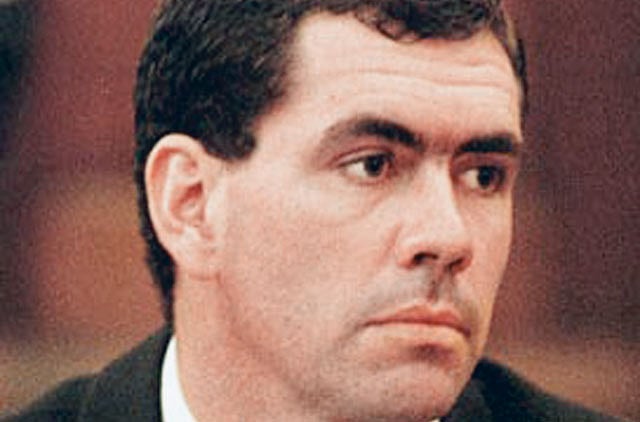
Dubai: Why is cricket prone to match fixing? For over a decade, the game had been struggling to wipe off this corrupt practice, but in vain.
Though the International Cricket Council (ICC) created the Anti Corruption Unit (ACU) to eradicate this menace it has not succeeded in its attempt. In fact, new forms of match fixing have emerged like spot fixing.
Haroon Lorgat, the ICC Chief Executive, has candidly admitted that the ACU does not have the power to arrest or seize or carry out a sting operation. So ICC will have to depend on the police to investigate or newspapers to reveal match fixing incidents.
In fact, South African skipper Hansie Cronje would not have been caught but for the India police who traced his phone calls to a bookie.
During the interview with the News of the World, bookie Mazhar Majid has admitted that he has been indulging in spot fixing for the last two and half years.
This proves that police have not bothered to really spot the cricketers indulging in corrupt practices and the ACU have not been able to expose any incident.
In Asian countries, the ACU will be helpless unless adequate support is given by the police. The interesting aspect is that except for Hansie Cronje and a few others, most of them have got away with their acts.
In the 1994-'95 season, the Australian team toured Pakistan and lost the Test series 1-0. After the series, three of the Australian players, Shane Warne, Tim May and Mark Waugh accused the then Pakistani captain, Salim Malek, of offering them bribes to bowl badly in a Test and a One-Day.
Insufficient evidence
The Pakistan Cricket Board (PCB) requested Justice (Retd.) Fakhruddin G. Ebrahim to hold an inquiry into the allegations by the Australian players against Salim Malek.
He submitted his report on October 21, 1995 in which he acquitted Malek of all the charges primarily on the basis of insufficient evidence on record.
Malek was finally found guilty of match fixing only in May 2000, along with Ata-ur-Rehman, and was banned for life. Unfortunately, ACU cannot generate evidence unless helped by the Police. Rehman's ban was lifted in 2006 and Malek's in 2008.
Similarly, Warne and Mark Waugh were given money by an Indian bookmaker in 1998 in return for pitch and weather information. They were fined and warned by their cricket board.
Indian skipper Mohammad Azharuddin's career was cut short after Cronje indicated that he was the man who introduced him to the bookies.
Though Azharuddin was banned for life it was revoked in 2006 and he is today a Member of Indian Parliament. Another promising cricketer Ajay Jadeja was also banned for five years but authorities could not provide sufficient evidence.
West Indies cricketer Marlon Samuels too got caught because of a police investigation into his involvement with a well known bookie. Actually he got caught as they were tracking the calls of the bookie. Samuels was banned for two years in 2008.
The amount of money that bookies were willing to give to cricketers was even as high as £300,000 (Dh1.7 million), as revealed by England cricketer Chris Lewis, who had to act as middle-man between an Asian businessman and Alec Stewart and bowler Alan Mullaly to drop catches during the third Test match against New Zealand in 1999. In 2007, Shoaib Akhtar claimed he was offered cash to underperform during an Indian tour but nothing came of it.
Doubts cast
This year, doubts were cast on Kamran Akmal for dropping catches during the Sydney Test against Australia, and Essex Police questioned Pakistan spinner Danish Kaneria for spot fixing in a county match.
Some cricket boards have also not bothered to act severely over those who have tainted the image of the game. Players who were involved in match fixing in the 90s were let off without severe action being taken against them, despite evidence. Only a joint effort by the cricket boards, the ACU and the police can wipe away corruption in cricket.
Match-fixing: Timeline
June 26, 2000: Cronje begs forgiveness for his involvement in illicit gambling deals after the first round of hearings of the King Commission closes. A former Commissioner of the Metropolitan Police, Sir Paul Condon, is appointed director of the ICC's anti-corruption investigation.
July 20, 2000: Indian income tax officials raid the homes of top cricket players and officials, including the then national coach Kapil Dev, former players Azharuddin, Ajay Jadeja, Nayan Mongia and Nikhil Chopra.
September 12, 2000: Kapil Dev steps down as coach of the Indian team as he faces a government inquiry into corruption.
October 11, 2000: The UCBSA imposes a life ban on Cronje.
October 31, 2000: Several players are named by bookmaker M.K. Gupta in the CBI report in India, among them Brian Lara, Dean Jones, Alec Stewart, Arjuna Ranatunga, Aravinda de Silva, Martin Crowe and Saleem Malek. The most damning indictment in the CBI report is of former captain Mohammad Azharuddin, who the report says confessed to fixing games with the help of colleagues Ajay Jadeja and Nayan Mongia. The CBI also says it has found no concrete evidence against Kapil Dev.
November 27, 2000: Azharuddin is found guilty of match-fixing, while Ajay Jadeja, Manoj Prabhakar, Ajay Sharma and former Indian team physio Ali Irani are found guilty of having links with bookies by the BCCI's anti-corruption commissioner.
December 5, 2000: India's cricketing authorities slap a life ban on Azharuddin, and Ajay Jadeja for five years for their role in match-fixing, confirming the interim bans imposed in November. Ajay Sharma is also banned from the game for life, while Manoj Prabhakar and the Indian team's former physio, Ali Irani, are barred from holding any official post in Indian cricket for five years. Jadeja's ban is overturned by the Delhi High Court in January 2003, saying there is no proof of his guilt.
December 10, 2000: Former West Indies captain Clive Lloyd is named as head of a three-member team to probe allegations of match-fixing in tournaments organised in Sharjah.
June 22, 2002: Pakistan's Bhandari Commission, instituted primarily to investigate the Pakistan-Bangladesh match in the 1999 World Cup, releases its report with little credible evidence to incriminate players.
August 17, 2004: Kenya's former captain, Maurice Odumbe, is banned for five years by the Kenyan Cricket Association after being found guilty of receiving money from bookmakers on several occasions.
May 13, 2008: West Indies player Marlon Samuels is banned for two years for allegedly passing on match-related information to an Indian bookie during West Indies' one-day series in India in 2007.
August 10, 2009: The ICC says that its Anti-Corruption and Security Unit (ACSU), on investigation, found "no substance" and "no evidence" to support suggestions that Pakistan players had contact with Indian bookies during their Sri Lanka tour.
August 18, 2009: The Australian team management files a report with the ACSU after one of their players says he was approached by a man suspected of links to illegal bookmaking, after Australia's defeat to England in the Lord's Ashes Test.
May 15, 2010: Essex cricket players Danish Kaneria and Mervyn Westfield are arrested following an investigation into betting irregularities but are not charged.
May 26, 2010: The Bangladesh captain confirms he received an approach, believed to be in March 2008, from an unknown person who Shakib believed wanted him to manipulate the result of a one-day international against Ireland.
Sign up for the Daily Briefing
Get the latest news and updates straight to your inbox
Network Links
GN StoreDownload our app
© Al Nisr Publishing LLC 2026. All rights reserved.